Explained: Katie Miller's unusual claim rekindles political debate over America's birthrate

The fastest way to kill the birth rate is mandating more car seats. Car seats make motherhood significantly more complicated and difficult, from vehicle width and anchors to traveling with them. I’m not alone in saying that a limiting factor on the number of children we have is car seats.
— Katie Miller (@KatieMiller) November 26, 2026
WASHINGTON, DC: Katie Miller’s recent theory on what is causing America’s falling birth rate has renewed the debate around demographic balance and the economic cost of babies.
“The fastest way to kill the birth rate is mandating more car seats,” Miller wrote on X in reaction to a California law for children between 8 and 16 years, requiring parents to use a five-step test to see if their children can stop using a booster seat.
“Car seats make motherhood significantly more complicated and difficult, from vehicle width and anchors to traveling with them. I’m not alone in saying that a limiting factor on the number of children we have is car seats,” she added.

Total fertility rate (TFR) is the number of children an average woman is expected to have in her lifetime.
According to several reports, the birthrate in America hit an all-time low in 2024. The country’s total fertility rate has trended mostly downward since the Great Recession of 2007 to 2009. It reached a historic low of 1.60 in 2024.
Reports say that 1.6 children per woman is far below the 2.1 needed to keep the population stable.
In 2025, only 53.1 babies were born for every 1,000 American women, the lowest number this country has ever recorded.
There was a 7% drop in teen birth rates last year, which many experts say is a very good thing.
How the US birth rate has changed since 1960
US experienced a birth rate boom in the 1950s and 1960s, but it did not last long, as the picture changed by the 1970s with the introduction of birth control, women in the workforce and delayed marriages.

It recovered a little in 2007, the year when the birthrate was recorded at 2.12. Since then, each decade has been lower than the one before it.
According to provisional data for 2026, the year is witnessing 1.59 children per woman, indicating the continued downward trend.
The birthrate numbers are not only a reflection of how Americans prefer their family lives or how many children women want to bear throughout their lives, but they also shape political debate and policies, as they have severe economic consequences.
The political fight over America's falling birthrate
The sharp decline in America's birth rate is set to shrink and age the national population, and the trend is changing politics.
President Trump at CPAC calls for baby bonuses for a new baby boom. "How does that sound? I want a baby boom. You men are so lucky out there." https://t.co/Wzf254ePdz
— MAGA War Room (@MAGAIncWarRoom) March 5, 2023
Some of the country's most high-profile conservatives, including President Donald Trump, Elon Musk and Vice President JD Vance, say they want to reverse this trend.
During an old interview, Trump said, "I'll be known as the fertilization president, and that's OK. That's not bad. That's not bad. I've been called much worse."
Trump urged his supporters to have more babies, declaring at the 2023 Conservative Political Action Conference (CPAC), “I want a baby boom,” before adding, “You men are so lucky out there.”
Vance, speaking at the March for Life in 2025, said: “I want more babies in the United States of America.”

Elon Musk, the world’s richest man and reportedly the father of 14, has been talking about the declining birthrate for a while. Musk has said that small family sizes present the biggest threat to civilization even before he entered the second Trump administration.
On the other hand, many progressives argue that falling birthrates are a result of inequality, economic barriers and also reflect personal autonomy rather than rejection of family. They reject the idea of increasing birth rates through pro-natalist pressure and treating the situation as an existential crisis.
What drives conservative pronatalism beyond the economy?
Beyond economic growth and pension sustainability, conservative pronatalist arguments generally center on cultural, demographic, social and geopolitical concerns.
Critics and observers note that some pronatalist pushes also aim to reinforce traditional gender roles and counter cultural shifts away from family formation.
Analysts note that national power, military capacity and global influence are often tied to population size and youth cohorts.
Conservatives’ anxiety over falling birthrates also stems from fear of a demographic shift and reliance on immigration.
Why falling birthrates can take a huge toll on the economy
Falling birthrates are traditionally seen as a threat to economic growth because they can shrink the workforce, reduce demand and investment and slow productivity.
A smaller workforce is often seen as a reason for weaker economic growth, as fewer people are available to contribute to production. A smaller population also means fewer consumers, which reduces overall demand in the economy.
With a shrinking population and workforce, investment is also traditionally discouraged.
Older workers are often assumed to be less productive and innovative than younger workers, raising concerns that an aging workforce could slow economic progress.
Can falling birthrates be beneficial for the economy?
A study by National Bureau of Economic Research (NBER) challenged some of these assumptions.
It found that lower birthrates were associated with higher GDP and wages per worker, faster productivity growth, more high-tech exports, greater patenting in labor-saving technologies and a shift toward high-tech and Research and Development-intensive industries.

It also found that capital stocks increased following declines in birthrates.
Where immigration fits into the birth rate debate?
Research from institutions including Brookings, Deloitte Insights and the Council on Foreign Relations indicates that reducing immigration while US birth rates remain below replacement level (around 1.6 to 1.8 children per woman, compared with the 2.1 replacement rate) would slow US economic growth, shrink the labor force and strain public finances.
At the same time, proponents of stricter enforcement argue that reducing unauthorized immigration could push wages higher and open roles for US-born and legal workers.
What is the Trump administration doing to increase the birthrate?
After returning to the White House for a second term in early 2025, President Trump has been fielding proposals aimed at persuading people to marry and have children, an effort aimed at increasing the nation's birthrate after years of decline.
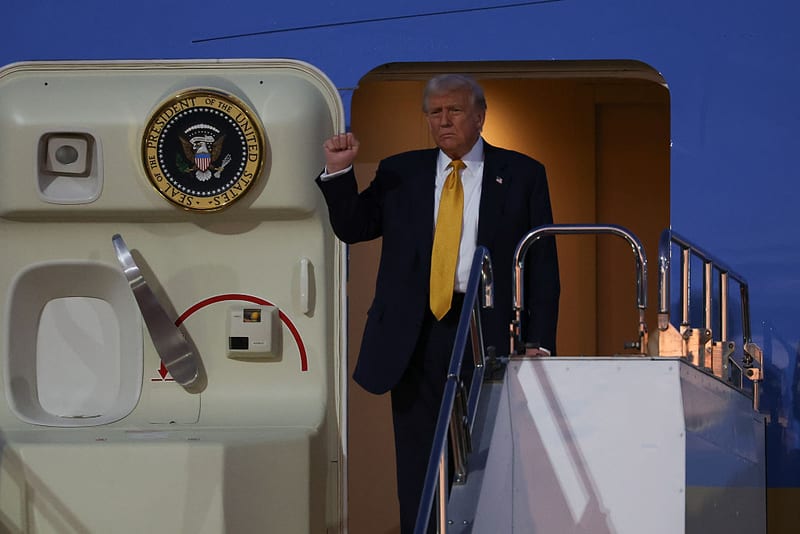
The administration had proposed a baby bonus of $5,000 to every American mother after she gave birth.
While the “baby bonus” could not be implemented, the administration has rolled out a $1,000 federal seed deposit for eligible newborns in Trump Accounts.
The administration also launched Moms.gov to centralize resources on fertility, prenatal and postnatal care and medicine discounts.