Fact Check: Does this image show a creepy 'spider' on Mars?
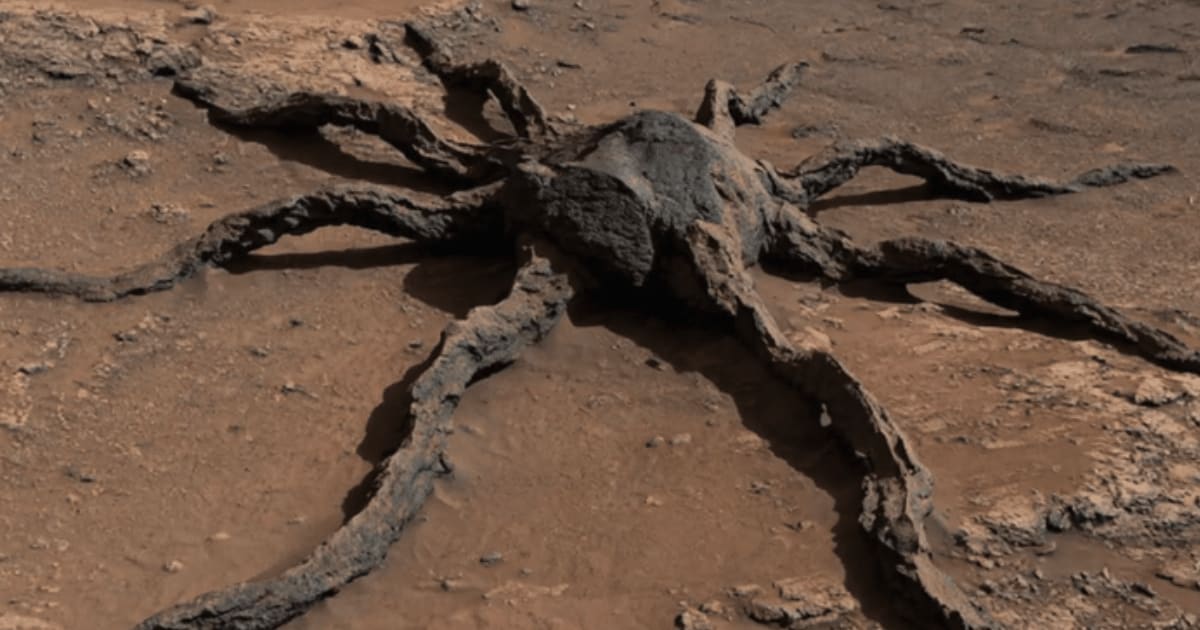
WASHINGTON, DC: A strange image appearing to show a spider-shaped rock formation on Mars has sparked speculation online. Some users have questioned whether the unusual shape could be evidence of something more than a natural rock. Let's fact-check the claim.
Claim: An image showed a spider-shaped rock formation on Mars
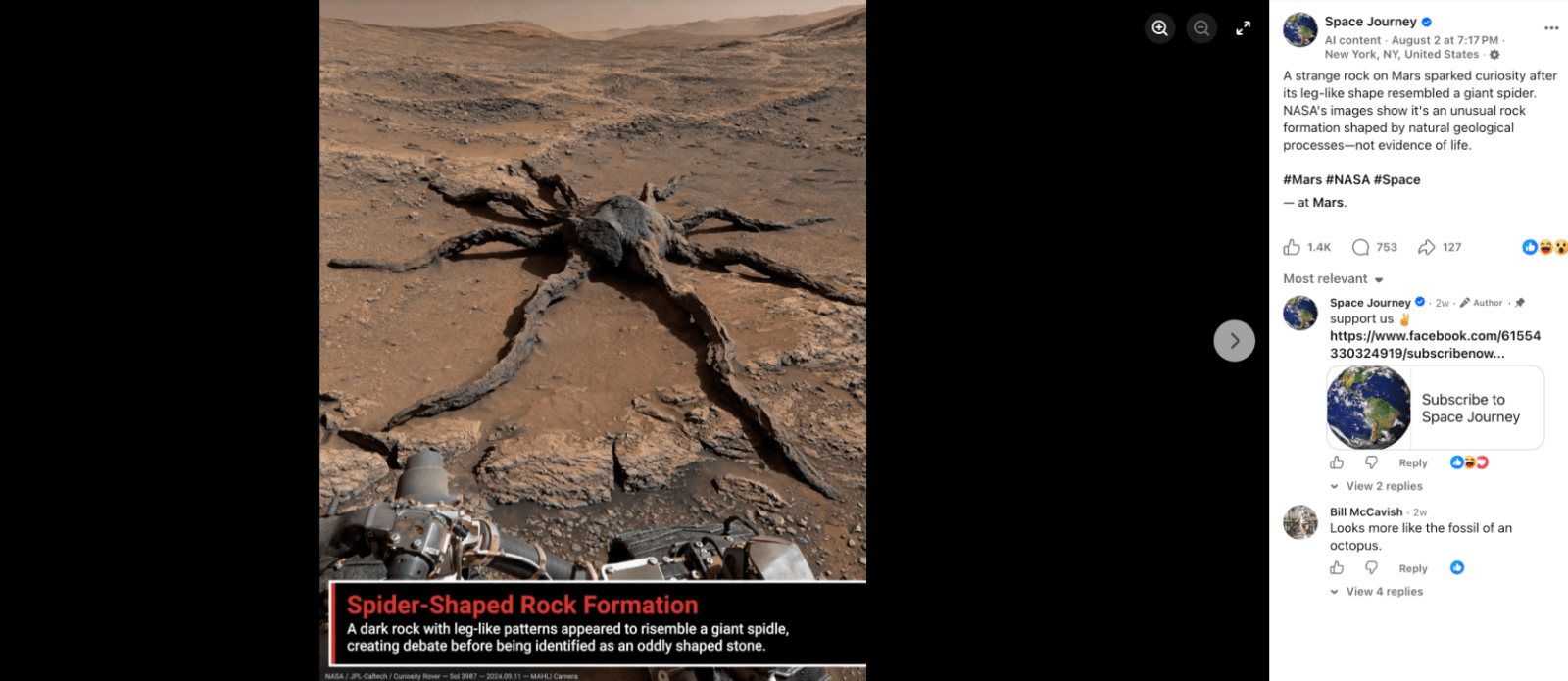
In August 2026, an image began circulating online that supposedly showed a spider-shaped rock formation on Mars.
The rumor originated on the Facebook page Space Journey, which shared the image on August 2, claiming that the unusual rock had a leg-like shape but resulted from natural geological processes.
The viral Facebook post shared the image with text describing it as a “spider-shaped rock formation.” The text claimed that a dark rock with leg-like patterns looked like a giant spider and sparked debate over whether it was simply an oddly shaped stone.
The post also claimed that the unusual rock on Mars had sparked curiosity because of its spider-like shape. It said, "A strange rock on Mars sparked curiosity after its leg-like shape resembled a giant spider. NASA's images show it's an unusual rock formation shaped by natural geological processes-not evidence of life. #Mars #NASA #Space - at Mars."
The image later appeared on other Facebook pages, Reddit and Instagram, where users described it as a possible “spider” on Mars.
Fact Check: The claim is false
The claim is false. A reverse image search using Google Lens did not find the image on NASA’s website or in other credible sources.
Searches on Google, Yahoo, and DuckDuckGo using terms such as “Mars spider rock formation” also found no reliable reports about the alleged discovery.
If the image had really come from NASA’s Curiosity rover, NASA would likely have published it, and major media outlets could have reported on the unusual formation. However, no credible source published the image or reported the alleged sighting.
The image appears to have been created using artificial intelligence. Facebook labeled copies of the image as “AI Content,” meaning its system detected signals linked to AI-generated material.
Meta’s AI identification tool also indicated that its generative AI tools created the image. However, AI detection tools can make mistakes, so these labels alone do not prove that an image is fake.
Other visual clues also support this conclusion. The image contains inconsistent shadows. The supposed spider-shaped rock casts a shadow, but the rover does not appear to cast one. This would be unlikely if both objects were actually in the same scene.
The image also claims that NASA’s Curiosity rover captured the scene on Sol 3987. Curiosity did send images back on that Martian day, but NASA’s records show that the actual images from Sol 3987 do not contain the alleged spider-shaped rock formation.
Therefore, the image does not show a genuine NASA photograph of a spider-shaped rock on Mars. The source of the AI-generated image remains unknown.