Govt Bigfoot files reveal strange footprints, hoax suspicions and hunters’ ‘very uneasy feeling’
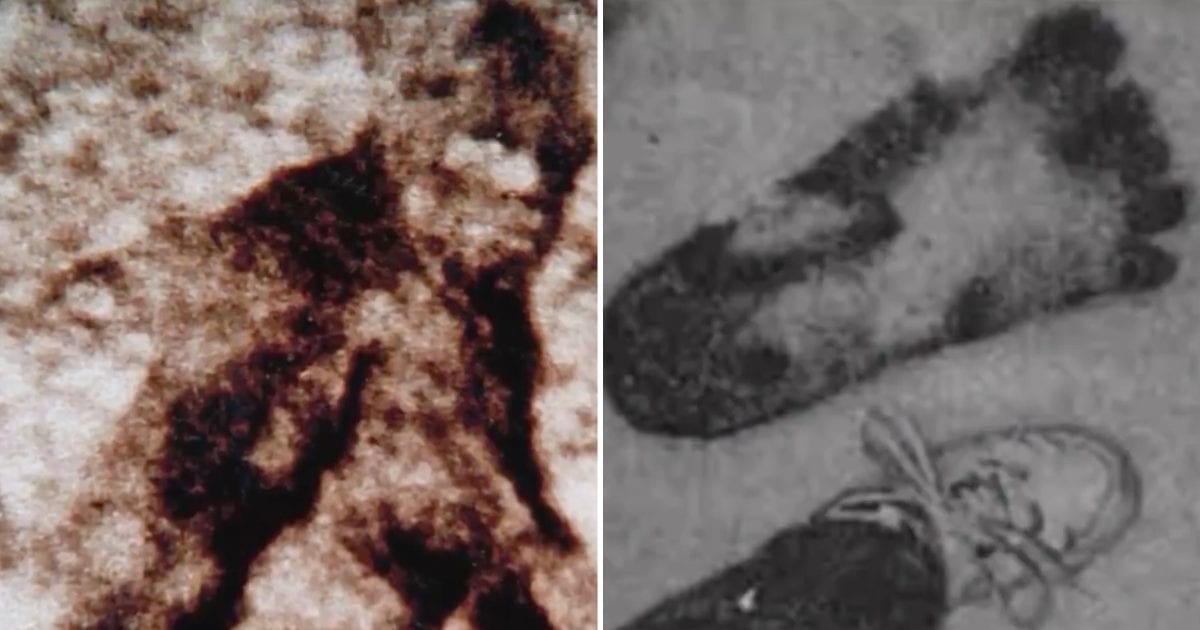
WASHINGTON, DC: The Trump administration has released three files documenting investigations and reported encounters involving Bigfoot, including an unusual case that dates back more than four decades. The documents were made public by the US Forest Service on October 15 and detail mysterious footprints discovered in Washington state in 1982.
The records include photographs, plaster casts, and a wildlife biologist's findings, along with accounts from people who claimed to have encountered possible Sasquatch tracks. While investigators suspected that some of the footprints were part of an elaborate hoax, one hunter's account described a particularly unsettling experience.
🚨 LMAO! They just dropped the government's BIGFOOT FILES. I'm not kidding. The Forest Service sent a team into the Washington woods in 1982 to examine 15-inch footprints. They made plaster casts and everything. Here's the best part. Their own biologist said the prints looked "VERY NATURAL." He still decided they were probably fake. Washington spent years telling us there was nothing to see. Now they admit they were out there measuring Sasquatch tracks. I'm not saying Bigfoot is real. I'm saying I'll never trust a government that hid this stuff for 40 years. UFOs, Bigfoot... what else is in the vault? Release it ALL.
— Gunther Eagleman™ (@GuntherEagleman) November 22, 2026
Trump administration releases government files on Bigfoot investigation
The three documents came from the US Forest Service's collection known as the "Bigfoot/Sasquatch Records." One of the most detailed accounts involves an investigation ordered by the US Department of Agriculture (USDA) in 1982.
Wildlife biologist Rodney L Johnson was assigned to investigate reported Bigfoot tracks in the Mill Creek Watershed of Washington's Umatilla National Forest. He later documented his findings in a six-page memo to the USDA.
According to Johnson, footprints had been discovered at three separate muddy locations. The tracks measured approximately 15 inches long and 7 inches wide and extended across distances of 25 to 40 feet.
He also noticed signs of disturbance in the thick brush, with vegetation appearing disturbed for another 30 to 40 feet. One footprint had a noticeable "deformation of [the] second toe."
Photographs of some of the tracks were included in the report, while investigators also made plaster casts of several footprints.
Johnson acknowledged that the marks were unusual, writing, "If the tracks were faked, someone went to a great deal of trouble and detail."
He also noted that some of the markings "would have to be very hard to duplicate" and "appear very natural."
However, despite these observations, the biologist was not convinced that the tracks belonged to Bigfoot.
With so many calling Patty FAKE, is FREEMAN next? The Forest Service just dropped three historical Bigfoot files: Leo Kinney’s 1940s Petty Creek, Montana account of a missing elk carcass, tracks, strong odor, and grunting; a 2003 Clark Fork Valley Press clipping about hundreds of large tracks near Plains, Montana; and Paul Freeman’s 1982 track case from the Mill Creek Watershed in Umatilla National Forest. Both the wildlife biologist (Rodney Johnson) and the Border Patrol tracker (Joel Hardin) concluded the prints were not made by a real Bigfoot. Johnson was less direct, stating they were not made by a 300-pound biped. Hardin called them a hoax outright. Dr. Grover Krantz examined the same casts and disputed those conclusions. I’m with Krantz. The dermal ridge detail wasn’t as easy to fake in 1982 as it is now that everyone’s aware of them. With so many now treating the Patterson-Gimlin film as closed, will Freeman become the next target? His 1992 Deduct Spring footage is still the second-strongest video evidence on record for me. The real-time audio, the breathing, and the “there he goes” are still just as compelling as the first time I saw them. Check out my earlier post for more details on this riveting encounter. What do you say? Is Freeman next? Or does the 1992 footage still hold? 👇 #Bigfoot #Sasquatch #PaulFreeman
— Bugs Finds Bigfoot 👣🪶 (@Bugimus) November 21, 2026
Wildlife biologist suspects mysterious Bigfoot footprints were a hoax
After examining the evidence, Johnson concluded that the footprints were unlikely to have been made by the large, two-footed creature often described in Bigfoot sightings.
"[I]t is my opinion that the tracks observed … were made by something other than a 300 pound plus two footed being," he wrote.
Johnson also explained why he believed someone could have staged the discovery.
He pointed out that the stride of the footprints did not change even when the tracks moved across different slopes. He also noticed that his own boots sank deeper into the mud than the supposed Bigfoot footprints.
Another detail that raised suspicion was the forest litter surrounding the tracks. Johnson observed that it appeared to have been deliberately brushed aside before the footprints were made.
A US Border Patrol official later shared a similar conclusion in a separate memo sent to the Forest Service office in Walla Walla, Washington.
The official suggested that the tracks were "a very clever attempt to penetrate a hoax," possibly involving the agency to give the discovery greater credibility among the public.
He ultimately believed the footprints were "man made by using some type of soft plaster or rubber coated foot."
Government Bigfoot files include chilling account from Montana hunter
The released records also contain accounts of other reported Bigfoot encounters, including a newspaper clipping from the Clark Fork Valley Press about alleged Sasquatch tracks discovered in Montana in 2003.
Another document is a letter from Leo Kinney, who recalled finding what he believed were Bigfoot tracks during a hunting trip in Montana in the 1940s.
Kinney claimed that he knew other hunters who had come across similar tracks. He also recalled hearing strange noises and noticing an unusual smell during the experience.
According to his account, the group detected a "strong odor" before hearing what he described as "a grunting type noise."
The experience left the hunters unsettled, and Kinney admitted they were not particularly interested in finding out what had made the sounds.
"We were not particularly anxious to catch up to whatever it was, and though we didn’t confess it at this time, in later conversations," he wrote.
Kinney added that the hunters eventually admitted they had all experienced the same feeling.
"We found out that we all had a very uneasy feeling and could feel chills running up and down our backs," he recalled.