Fact Check: Does 90% of healthcare spending treats chronic disease?

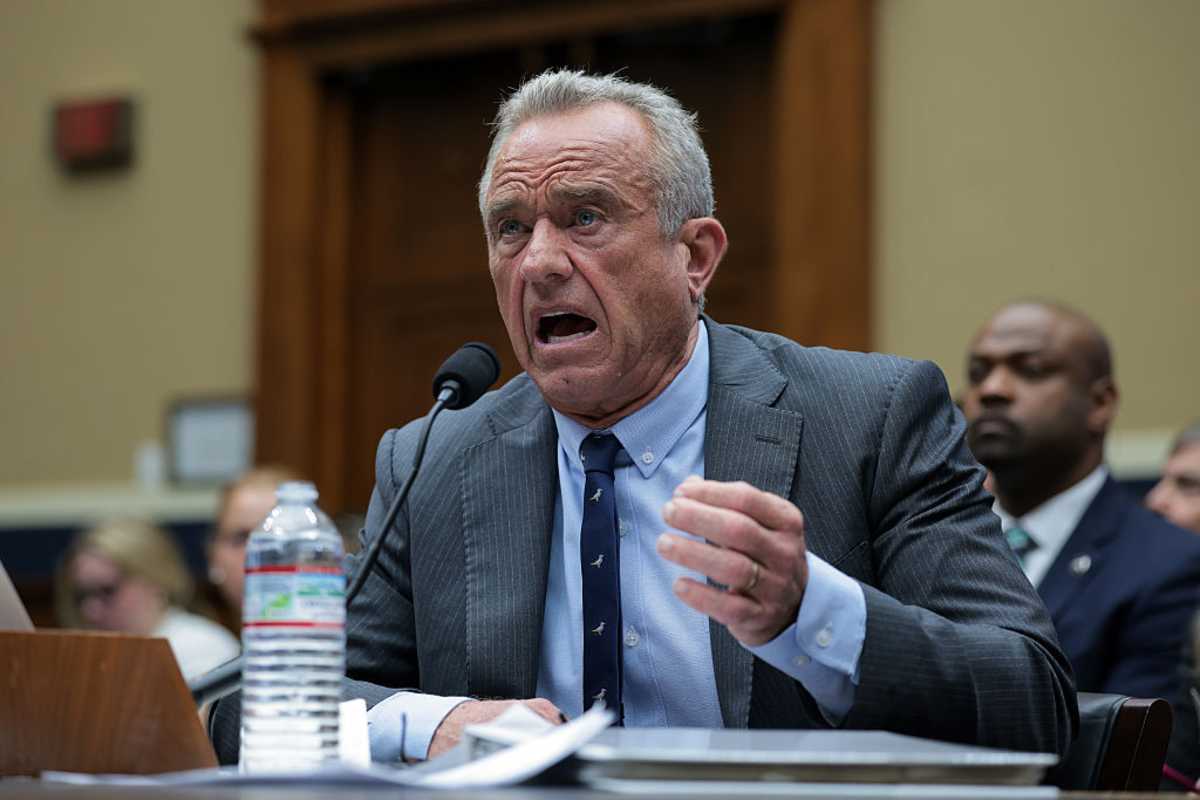
WASHINGTON, DC: In January 2026, Health and Human Services Secretary Robert F Kennedy Jr said during his announcement that the CDC reports that 90% of healthcare spending treats chronic disease.
Similarly, the 'Real Food' website also has the statistic that '90% of US healthcare spending goes to treating chronic disease — much of which is linked to diet and lifestyle.' But is there any truth to this? Let us find out below.
Claim: 90% of healthcare spending treats chronic disease
The statistic also appeared in the dietary guidelines of the 'Real Food' website. The line read, "The United States is amid a health emergency. Nearly 90% of health care spending goes to treating people who have chronic diseases."
"Many of these illnesses are not genetic destiny; they are the predictable result of the Standard American Diet — a diet which, over time, has become reliant on highly processed foods and coupled with a sedentary lifestyle," the statement added.
In the United States, Chronic illness includes any condition lasting longer than a year that requires restrictions or ongoing treatment. The most common types are asthma, anxiety, depression, hypertension, high cholesterol, Type 2 diabetes, and osteoarthritis.
Fact Check: False, statistic not based on spending on treatment
The claim that Robert F Kennedy Jr and his department made that 90% of healthcare spending is for treating chronic disease is not true. The stat mentioned is based on all health spending on people with chronic diseases, not spending on treatment itself.
The 90% figure comes from a 2017 report by the RAND Corp, a nonpartisan research organization. However, one of the researchers informed PolitiFact that the claim, as stated by Kennedy Jr and the 'Real Food' website, did not reflect their findings.

The report calculated all health spending on people with chronic illnesses, including a majority of Americans. Moreover, it did not isolate the total spending on treating chronic illness itself.
As per the report, spending on 60% of people with one or more chronic conditions led to 90% of all spending. Meanwhile, the remaining 40% with no chronic illnesses required 10% of the spending.

Christine Buttorff, a Rand health policy researcher and study co-author, informed PolitiFact, "A person in a year spends or incurs health care costs for multiple related things. It could be their chronic disease, but it also could be something as simple as an acute illness where they had to go to the doctor or go to the emergency room for something totally unrelated to the chronic disease. So our estimates lump all of that together."
Buttorff added that the claim that 90% of US healthcare spending goes to treating chronic disease is 'not an accurate reflection of our report'.