Iran’s supreme leader warns US against attack, citing risk of wider Middle East war
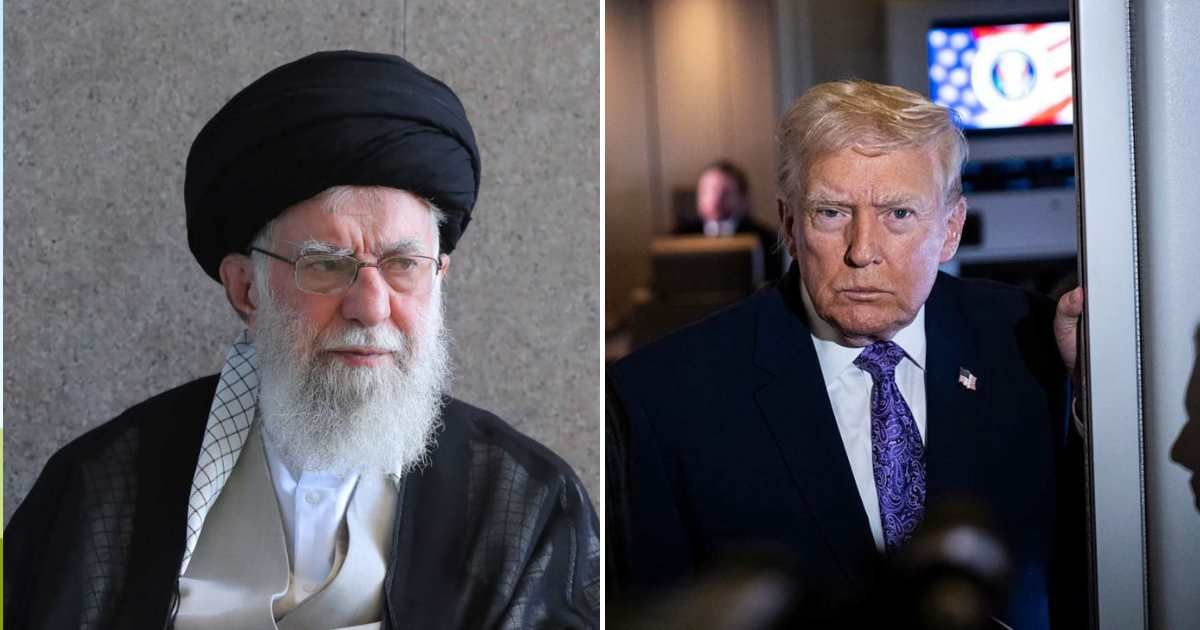
TEHRAN, IRAN: Supreme Leader Ayatollah Ali Khamenei issued his most serious warning to the United States on Sunday, stating that any American military action against Iran would escalate into a broader regional conflict.
Speaking at his Tehran compound during events commemorating the anniversary of Iran’s 1979 Islamic Revolution, Khamenei accused Washington of seeking to exploit Iran’s natural resources and attempting to reassert control over the country.
His remarks come as US naval forces, including the aircraft carrier USS Abraham Lincoln, operate in the Arabian Sea following weeks of unrest inside Iran.
“The Americans must be aware that if they wage a war this time, it will be a regional war,” Khamenei said.
The Americans should know if they start a war, this time it will be a regional war.
— Khamenei.ir (@khamenei_ir) February 1, 2026
He added that Iran was not seeking confrontation but would respond forcefully if attacked.
“We are not the instigators, we are not going to be unfair to anyone, we don’t plan to attack any country,” he said.
“But if anyone shows greed and wants to attack or harass, the Iranian nation will deal a heavy blow to them.”
Khamenei reiterated his warning on X later.
We are not the initiators of war. We do not seek to oppress anyone. We do not seek to attack any country. However, anyone who seeks to attack or cause harm will face a decisive blow from the Iranian nation.
— Khamenei.ir (@khamenei_ir) February 1, 2026
Khamenei labels protests as 'coup'
Khamenei intensified his rhetoric regarding the nationwide protests that began late December, characterizing the unrest as an organized attempt to destabilize the country rather than a genuine popular uprising.
“The recent sedition was similar to a coup. Of course, the coup was suppressed,” he said, accusing protesters of targeting state institutions, security forces and religious sites.
He alleged that demonstrators attacked police stations, Revolutionary Guard facilities, banks and mosques and burned copies of the Quran.
The protests initially erupted over economic grievances, including the collapse of Iran’s currency, but soon escalated into direct challenges to Iran’s leadership.

Iranian authorities have conducted a widespread crackdown in response to the recent crackdown.
The US-based Human Rights Activists New Agency reports that over 49,500 people have been detained and at least 6,713 killed, mostly demonstrators.
Those figures cannot be independently verified, as Iran has cut off internet access nationwide.
In contrast, Iranian officials have acknowledged a far lower death toll of 3,117, describing many of those killed as “t*****ists.”
That Americans sometimes talk about war - saying we will come with warships and aircrafts - is nothing new. The Iranian nation is not affected by such talk. They shouldn't try to intimidate the Iranian nation with such things.
— Khamenei.ir (@khamenei_ir) February 1, 2026
Military drills and rising pressure in the Gulf
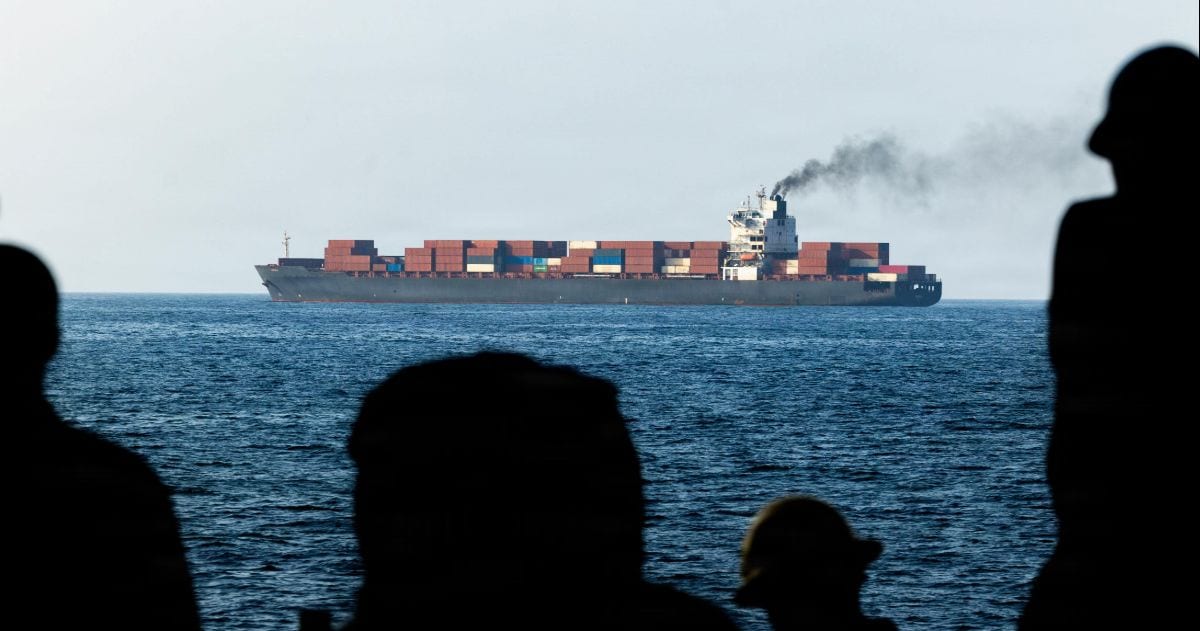
Iran also announced live-fire military drills in the Strait of Hormuz, the narrow waterway through which roughly one-fifth of the world’s traded oil passes.
The US military has warned Iran against threatening American forces or disrupting commercial shipping during the exercises.
US President Donald Trump has repeatedly warned that mass executions of detained protesters or the killing of civilians would cross red lines for Washington.
Additionally, he has also renewed pressure on Iran over its nuclear program, following US strikes on three Iranian nuclear sites during last year’s brief war with Israel.
While Trump has not confirmed whether he has decided on military action, he indicated that Iran was engaging with the United States diplomatically.
Trump on Iran:
— OSINT Spectator (@osint1117) February 1, 2026
You could make a negotiated deal that would be satisfactory, with no nuclear weapons, and they should do that. But I don’t know that they will.
They are talking to us — seriously talking to us.pic.twitter.com/Us5WH1ChcU
“They are talking to us. Seriously talking to us,” Trump said Saturday, while adding that he was unsure whether negotiations would succeed.

Iran targets Europe after Guard designation
Separately, Iran’s parliament speaker Mohammad Bagher Qalibaf announced that Tehran now considers all European Union militaries to be terrorist organizations, responding to the EU’s designation of Iran’s Revolutionary Guard as a terror group over its role in suppressing protests.
Qalibaf made the announcement as lawmakers wore Revolutionary Guard uniforms in a show of support.
The Guard, which reports directly to Khamenei, controls Iran’s missile program and holds vast economic influence.
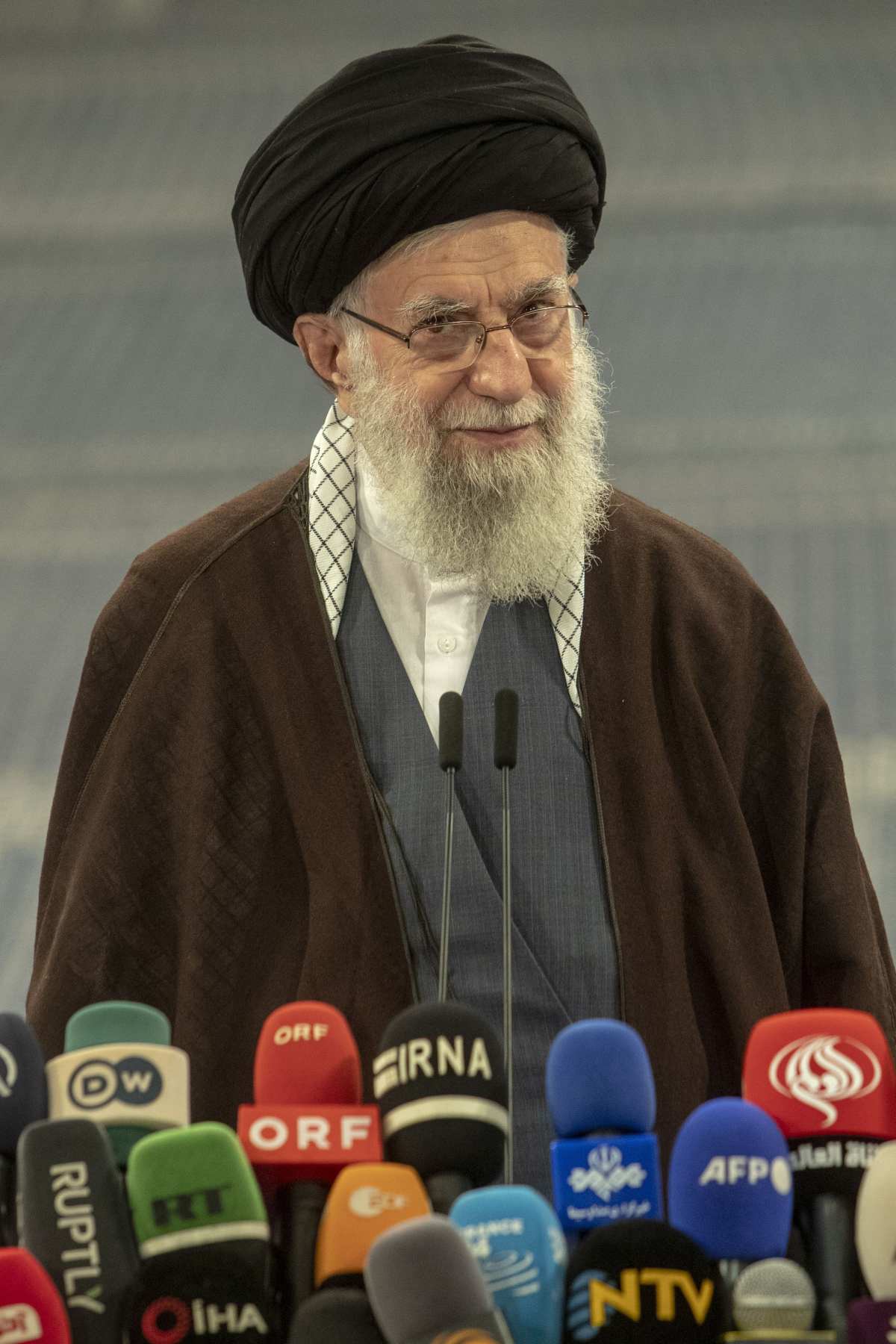
“By seeking to strike at the Revolutionary Guard, Europeans have in fact shot themselves in the foot,” Qalibaf said, accusing European governments of acting at Washington’s direction.
Lawmakers reportedly later chanted “Death to America” and “Death to Israel” inside parliament.