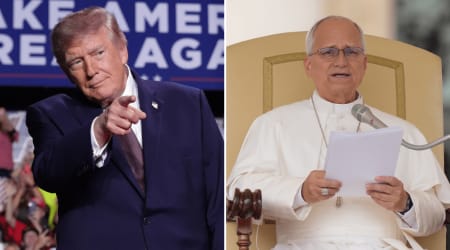
Trump announces security plan to end 'era of mass migration', names China as key threat

WASHINGTON, DC: President Donald Trump unveiled a sweeping new national security blueprint on Friday, December 5, declaring that "the era of mass migration is over" and positioning China as the central threat to American interests.
The 33-page document set the stage for a significant foreign policy overhaul, emphasizing a "vigilant posture" abroad and strict border enforcement at home.
"This document is a roadmap to ensure that America remains the greatest and most successful nation in human history, and the home of freedom on earth," Trump wrote in the letter introducing the strategy.
The president asserted that in the coming years, the administration will continue to "develop every dimension of our national strength."

Border security defined as the primary element of defense
The blueprint places border enforcement at the very forefront of national defense, arguing that those allowed inside the country will "inevitably define the future" of the nation.
The document asserts that nations throughout history have successfully prohibited unregulated migration and employed strict standards for citizenship.
"In countries throughout the world, mass migration has strained domestic resources, increased violence and other crime, weakened social cohesion, distorted labor markets, and undermined national security," the document reads.

It explicitly states, "The era of mass migration must end. Border security is the primary element of national security."
The administration highlights specific dangers associated with uncontrolled borders, including t********, d***s, espionage, and human t******king.
Reversing 'mistaken assumptions' about China
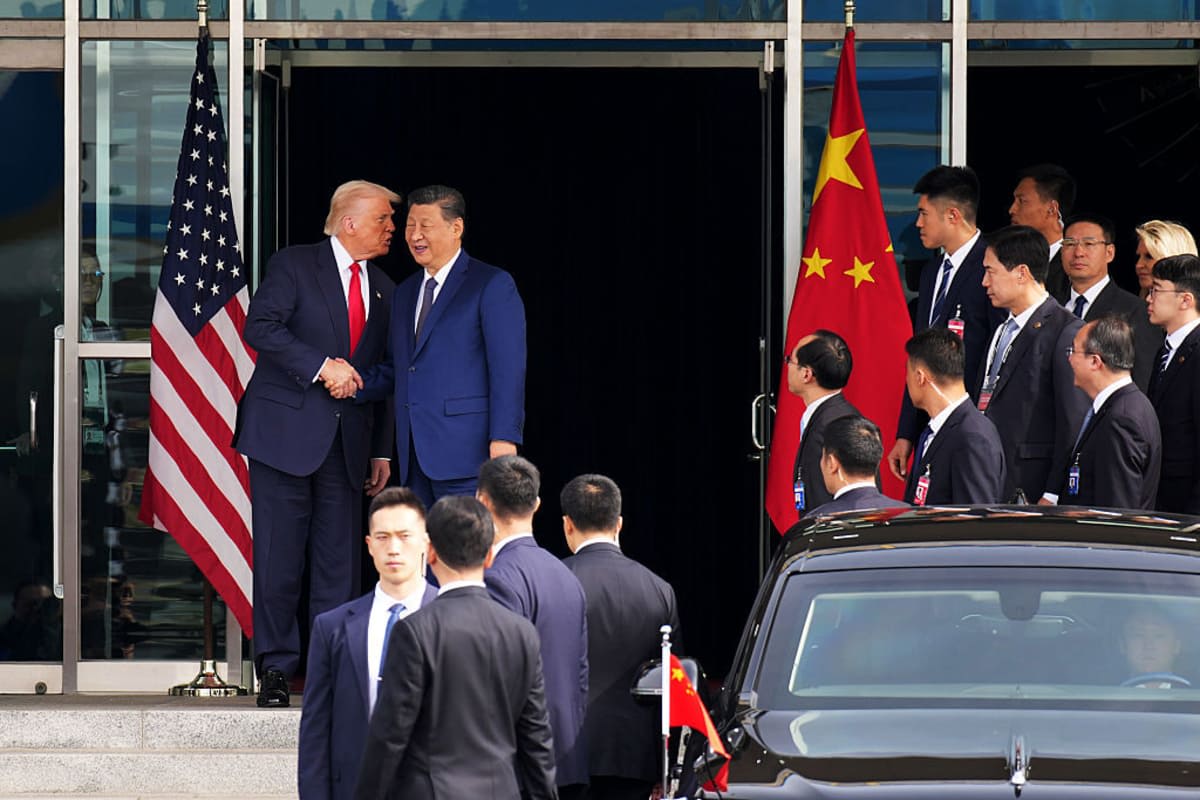
While securing the homeland is the domestic priority, the blueprint identifies China’s global ambition as the key external threat.
The document outlines a strategy to reverse "more than three decades of mistaken American assumptions about China," specifically the previous belief that economic engagement would lead Beijing to join the "rules-based international order."
Instead, the administration argues, these policies enriched Beijing and allowed it to use its wealth "to its considerable advantage."

"Going forward, we will rebalance America’s economic relationship with China, prioritizing reciprocity and fairness to restore American economic independence," the document states.
The roadmap points out that the trade relationship has been "fundamentally unbalanced" since 1979 and notes that Chinese exports often enter the US through proxy countries, including Mexico.
Economic growth and alliance building
The administration predicts that a corrected, mutually beneficial relationship with China could propel the US economy from its allegedly present $30 trillion to $40 trillion by the 2030s.
However, the strategy emphasizes that the US cannot do this alone and requires the involvement of treaty allies.
The document calls on the US to work with partners - including Europe, Japan, Korea, and Australia- to add another alleged $35 trillion in economic power to combat "predatory economic practices."
It explicitly urges these nations to adopt trade policies that force China to rebalance its economy toward household consumption, noting that "Southeast Asia, Latin America and the Middle East cannot alone absorb China’s enormous excess capacity."
Military deterrence in the Indo-Pacific
Beyond economics, the blueprint outlines a strategy for deterring military threats, specifically touching on the strategic importance of the South China Sea.
While stating that deterring a conflict over Taiwan is a priority, the document clarifies that the US is not changing its fundamental stance toward the island nation.
"Preventing conflict requires a vigilant posture in the Indo-Pacific, a renewed defense industrial base, greater military investment from ourselves and from allies and partners," the document says.

The strategy concludes by emphasizing the goal of winning the "economic and technological competition over the long term" while putting US interests above those of other nations.