Trump blasts 'fake news' over Iran blockade, says Tehran nearing collapse after 100 days of pressure

President Trump said media outlets ignored the US naval blockade's impact, claiming it had weakened Iran's economy and military funding
President Donald Trump has increasingly tied his Middle East strategy to economic pressure rather than military escalation (Getty Images)

WASHINGTON, DC: President Donald J Trump has reignited his long-running feud with national media, accusing major news organizations of deliberately downplaying what he described as the most successful naval blockade in modern military history.

In a Truth Social post published Wednesday, June 10, Trump argued that coverage of the ongoing confrontation with Iran has ignored the economic consequences of the US-led maritime campaign.

The president claimed that Tehran's financial position has deteriorated dramatically as the blockade enters its fourth month, turning a foreign policy dispute into another high-profile clash with the press.


"The Fake News Media refuses to report how EFFECTIVE the US Naval BLOCKADE is," Trump wrote, asserting that Iran has been effectively cut off from critical commercial activity.

Trump links blockade to collapse

The president portrayed the naval operation as the defining pressure point of the 100-day conflict, insisting that maritime restrictions have crippled Iran's ability to conduct normal business operations.

According to Trump, the blockade has prevented significant economic activity and placed severe strain on government finances. He claimed Iran was no longer generating sufficient revenue to fund military obligations or meet broader financial commitments.
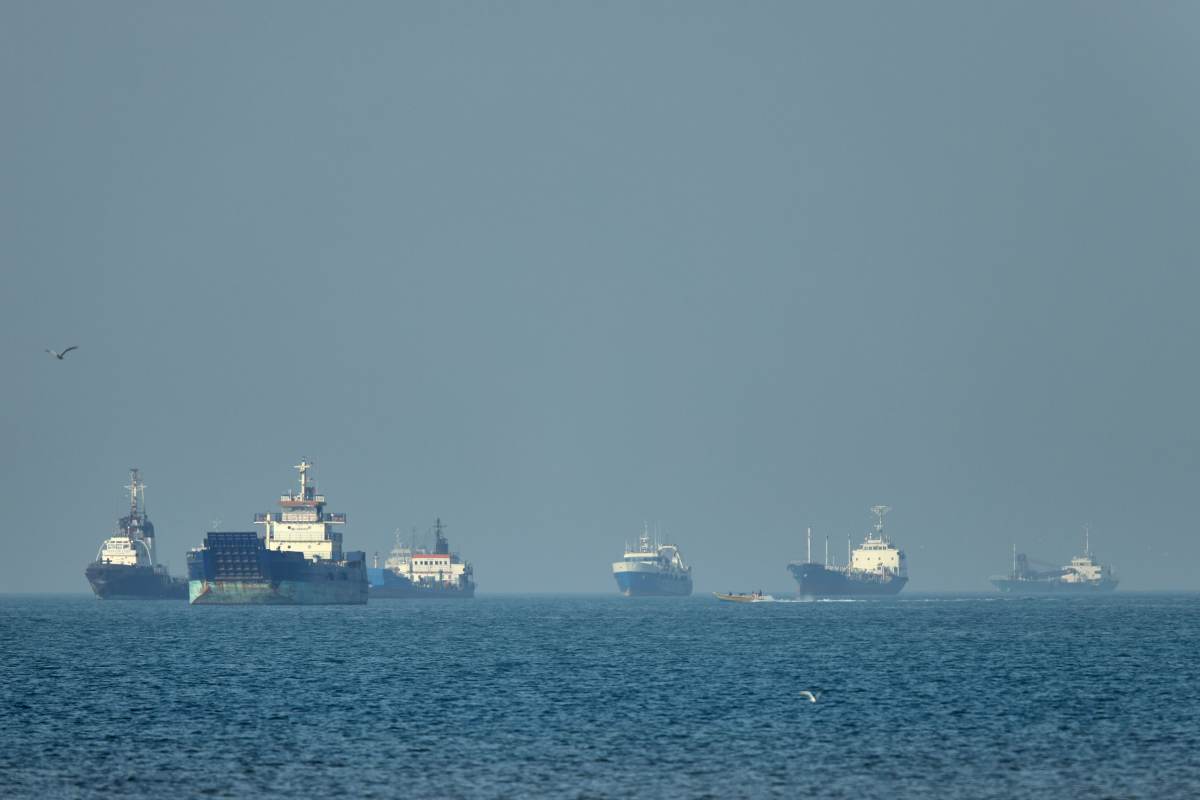
Cargo ships, including bulk carriers and general cargo vessels, sit at anchor offshore as a small motorboat passes in the foreground, in the Strait of Hormuz off Bandar Abbas, Iran, Monday, May 4 , 2026.(Amirhosein Khorgooi/ISNA via AP)
Trump argued that maritime restrictions severely limited Iran's ability to conduct normal commercial activity (Amirhosein Khorgooi/ISNA via AP)

Trump described the operation as a "steel wall," arguing that the sustained enforcement effort has created conditions that leave Tehran with few viable options outside a negotiated settlement.

Media battle meets foreign policy

The remarks add a new political dimension to one of the most consequential national security confrontations of Trump's presidency.

For months, the administration has maintained that economic isolation remains its most powerful source of leverage in negotiations with Iran. Trump has repeatedly argued that financial pressure can achieve results that prolonged military escalation cannot.

NEW YORK, NY - SEPTEMBER 13: The CBS Broadcast Center stands in Manhattan on September 13, 2018 in New York City. The popular television network has been under scrutiny since allegations of sexual misconduct forced out Jeff Fager, the longtime executive producer of
Trump claims that news outlets are overlooking what he considers a major strategic achievement in the conflict (Spencer Platt/Getty Images)

His latest comments place the media directly at the center of that argument. Rather than focusing solely on Iran, Trump accused news organizations of refusing to acknowledge what he views as a major strategic success.

As ceasefire discussions continue and diplomatic efforts remain uncertain, the president is increasingly framing the blockade as both a foreign policy achievement and evidence that his administration's approach is producing results that critics have failed to recognize.
RELATED TOPICS US STRIKES IRAN

GET BREAKING U.S. NEWS & POLITICAL UPDATES
STRAIGHT TO YOUR INBOX.

MORE STORIES

Donald Trump jokingly asked Stephen Miller if he wanted to run for president, calling him 'the most powerful man in the world'
2026-11-21T04:18:53.000Z
The allegations have surfaced after Republicans lost both chambers of Congress in the midterm elections, with the Iran war emerging as a key factor
2026-11-21T03:32:37.000Z
JD Vance insisted that he 'absolutely' believed that the United States should work to keep Iran from having a nuclear weapon
2026-11-21T03:15:05.000Z
In a letter, Democratic Rep Jim Himes pressed Intelligence Chief Jay Clayton for answers on repeated Starshield slowdowns in Ukraine
2026-11-20T20:44:23.000Z
President Trump agreed with JD Vance that the war hurt Republican candidates' vote share, but said the US would 'absolutely' fight Iran if necessary
2026-11-20T20:08:42.000Z
President Trump did not question Xi Jinping about an alleged Chinese spy despite reports linking Jensen Huang's extramarital partner to espionage
2026-11-20T19:11:01.000Z
Zohran Mamdani cited data showing Rikers detainees spent nearly four times longer in custody and faced eight times more assaults than at similar jails
2026-11-20T17:30:02.000Z
Ukraine's security remained tied to NATO nations as its bid to join the alliance stood at the center of Moscow's aggression
2026-11-20T16:23:42.000Z
The Senate vote came after Republicans lost control of both chambers of Congress in the midterm elections, with the Iran conflict emerging as one of the issues blamed for the party’s electoral setback
2026-11-20T06:35:19.000Z
Kirkland & Ellis completed $12 million in pro bono work but rejected requests tied to the Kennedy Center and Trump's triumphal arch
2026-11-20T05:41:23.000Z