Trump told Lula he ‘won’t invade Cuba,’ Brazilian president claims after White House meeting

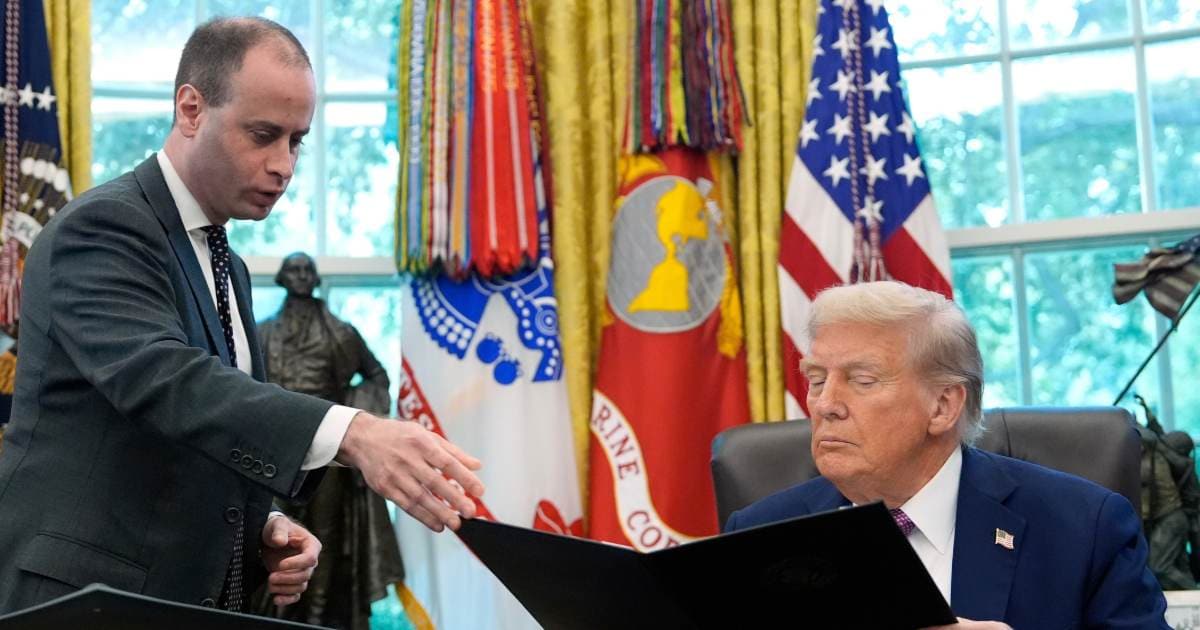
WASHINGTON, DC: Brazilian President Luiz Inacio Lula da Silva claimed President Donald Trump privately told him the United States has “no intention” of invading Cuba during a White House meeting that has fueled fresh debate over Trump’s approach toward the communist island nation.
The disclosure came after Lula met Trump in Washington for more than two hours as both leaders attempted to reset relations despite years of political tension and ideological differences.
Encontro com o presidente dos Estados Unidos, @POTUS, em Washington.
— Lula (@LulaOficial) May 7, 2026
🎥 @ricardostuckert pic.twitter.com/bfg2qqYxIg
Lula says Trump told him US would not invade Cuba
Speaking after the meeting, Lula told reporters that Trump made clear he was not planning military action against Cuba despite growing speculation surrounding the administration’s increasingly hardline posture toward Havana.
“I heard, though I’m not sure if the translation was accurate, that he said he has no intention of invading Cuba. That’s what the interpreter said, and I think that’s a very positive sign,” Lula said.
⚠️⚠️#Ahora. Según Lula da Silva, Trump afirmó que no piensa invadir Cuba.
— Mag Jorge Castro🇨🇺 (@MagJorgeCastro) May 7, 2026
Lula también dijo que “Cuba quiere diálogo” y encontrar una solución para poner fin al embargo de EE.UU. pic.twitter.com/Gb1T4JfNMs
“If you need help discussing the situation in Cuba, I’m entirely at your disposal. If the translation was accurate, he said he has no intention of invading Cuba, and I think that’s a very positive sign, especially since Cuba wants to engage in dialogue and find a solution to end a blockade that has never allowed the country to be completely free,” Lula said, per Poder 360.
The Brazilian leader described Trump’s comments as a positive signal at a time when tensions surrounding Cuba have escalated sharply.
Trump has spent months tightening restrictions on the island while pressuring countries and companies tied to Cuban oil supplies. The administration has also expanded sanctions connected to Venezuela, one of Havana’s key allies.

“I am available should Brazil need to discuss the issue of US interference in Cuba or Iran with any country. But I came here specifically to discuss Brazilian issues, and I didn’t want to shift the focus,” Lula added.
Trump and Lula discuss trade, tariffs, and Cuba at White House
The meeting marked a notable diplomatic moment between two leaders who often stand on opposite ends of the political spectrum.
Lula, a longtime leftist leader, has repeatedly criticized US sanctions on Cuba and previously condemned the American embargo as “illegal.”
Saio de Washington com a ideia de que demos um passo importante na consolidação da relação democrática histórica que o Brasil tem com os Estados Unidos. Foi uma reunião muito importante com o presidente Donald Trump. O Brasil está preparado para discutir qualquer assunto com… pic.twitter.com/CKEjhm5RTQ
— Lula (@LulaOficial) May 7, 2026
“I am leaving Washington with the impression that we have taken an important step toward strengthening the historic democratic relationship between Brazil and the United States. It was a very important meeting with President Donald Trump,” Lula wrote on social media.
“Brazil is prepared to discuss any issue with any country in the world: tariffs, foreign trade, critical minerals, and the fight against organized crime and the trafficking of drugs and weapons.”
Trump also described the meeting positively in a Truth Social post, saying discussions focused on trade, tariffs, and broader diplomatic matters.
‘The meeting went very well’ — Trump on meeting with Lula
— RT (@RT_com) May 7, 2026
‘We discussed many topics, including Trade and, specifically, Tariffs’
‘Additional meetings will be scheduled over the coming months’ https://t.co/GzXo61E1vy pic.twitter.com/Kqj5zp30mP
“We have no veto and no off-limits topics. The only thing we will not compromise on is our democracy and our sovereignty. In the coming days, our ministers will continue negotiations to make progress on the issues we addressed today,” Lula concluded.
In April, while appearing alongside German Chancellor Friedrich Merz during an official visit to Hanover, Lula condemned any potential US military action against Cuba and called for respect for the “self-determination of the people.”
He also described Cuba as the “victim” of an “ideological blockade” imposed against the ruling communist government.