UPS crash probe focuses on engine part that failed on another aircraft more than a decade before
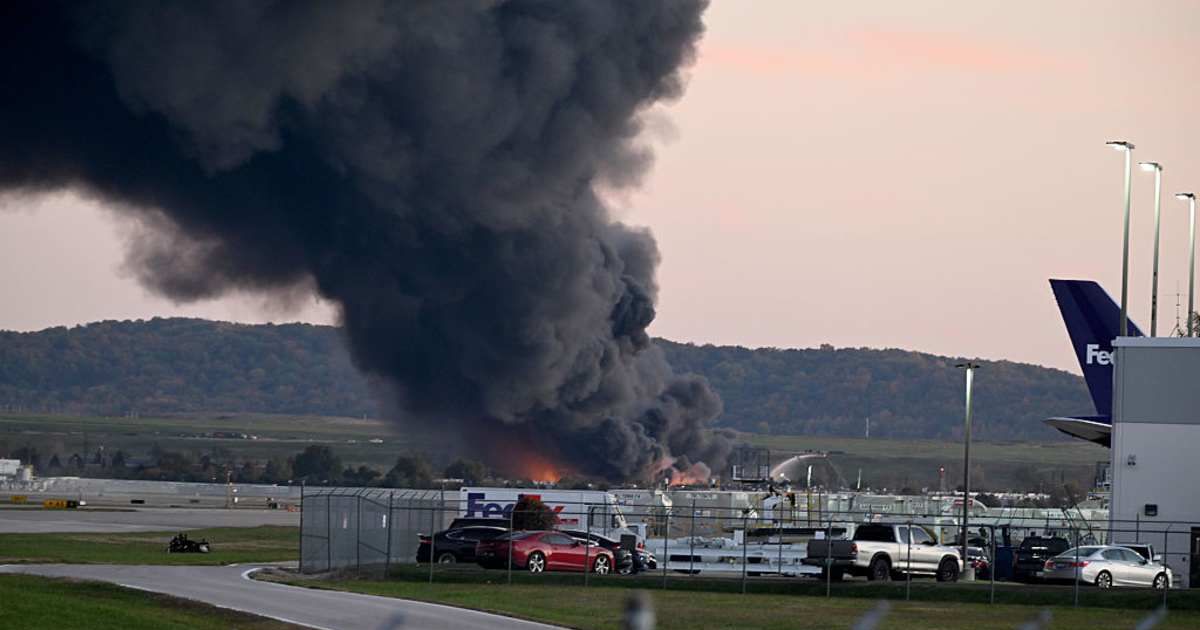
LOUISVILLE, KENTUCKY: Federal investigators say a key engine mount component that broke during last year’s deadly UPS cargo plane crash had failed at least four times on other aircraft years earlier, sharpening scrutiny of long-standing warnings and maintenance practices.
The National Transportation Safety Board (NTSB) disclosed on Wednesday, January 14, that Boeing had documented previous failures of the same part more than a decade before the crash, though it did not require mandatory repairs.
The finding has become a central focus of the ongoing investigation into the fatal crash involving a UPS MD-11 cargo plane.
NTSB: UPS MD-11F Crash Caused by Structural Fatigue Reported in 2011
— AirwayBuzz (@AirwayBuzz) January 15, 2026
The NTSB announced that the crash of UPS Flight 2976 in Louisville in November 2025 was caused by a fatigue-related failure of a 3-inch bearing seat in the left engine pylon. Boeing had notified operators of… pic.twitter.com/9HdN7YtAvi
Investigators focus on engine mount component
According to the NTSB, the part in question is a spherical bearing race that helps secure the MD-11’s engine to the wing. Investigators believe the failure of this component contributed to the separation of the engine from the aircraft during the crash.
WHAT WE KNOW about the Kentucky plane crash:
— Matthew Cappucci (@MatthewCappucci) November 4, 2025
— Aircraft is a 34-year-old MD-11 owned and operated by UPS since 2006 with tail number N259UP.
— Preliminary signs point to mechanical/maintenance issue. Aircraft was on fire (left wing); unclear if issue with left engine. Fuel… pic.twitter.com/UV7VO1Y4C0
Boeing warned aircraft operators in a 2011 service bulletin that the bearing had failed four times across three different planes. However, the manufacturer determined at the time that the issue did not rise to the level of a “safety of flight condition,” meaning it did not require urgent corrective action.
The MD-11 aircraft involved in the UPS crash was originally built by McDonnell Douglas, which later merged with Boeing.
Cracks missed during routine inspections
After examining the wreckage, investigators found cracks in the lugs that hold the engine mount in place. The spherical bearing race itself was recovered, broken into two pieces.
Those cracks had not been detected during routine maintenance inspections, raising questions about whether the inspection schedule for aging cargo aircraft was sufficient to identify known risks.
Records show the engine mount components were last closely inspected in October 2021. Under the maintenance program in place, the aircraft was not scheduled for another detailed inspection for approximately 7,000 additional takeoffs and landings.
The NTSB said it is reviewing whether that inspection interval was adequate given the aircraft’s age and known component issues.
Experts question severity of Boeing’s warning
Former FAA and NTSB investigator Jeff Guzzetti said the history of prior failures makes the 2011 service bulletin particularly significant.
“I just think it raises questions regarding the adequacy of the severity of the 2011 service letter, and it also raises questions about how UPS incorporated that information and acted upon it,” Guzzetti said.

Unlike an FAA airworthiness directive, Boeing’s service bulletin did not require mandatory repairs. While it recommended replacing the bearing with a redesigned version less prone to failure, it also allowed operators to replace defective parts with older bearings that had already demonstrated a tendency to fail.
Former federal crash investigator Alan Diehl said that flexibility may have limited the effectiveness of the guidance.
“As the investigation continues, the NTSB will have to address whether this service bulletin was an adequate solution to a known problem which could have had catastrophic results,” Diehl said.
Historical parallels raise concern
The crash has drawn comparisons to a 1979 American Airlines DC-10 disaster in Chicago, when an engine separated from the aircraft during takeoff, killing 273 people. The DC-10 was the predecessor to the MD-11.
Seeing some remarks discussing AA191, which crashed on takeoff from ORD on May 25, 1979, killing 273 people.
— Matthew Cappucci (@MatthewCappucci) November 5, 2025
That was a DC10 — different aircraft type.
In that case, improper maintenance caused separation of the left (#1) engine, slat retraction and a stall of the left wing. pic.twitter.com/OjH5T9JHDG
That incident led to the worldwide grounding of DC-10 aircraft. However, the NTSB later determined the crash was caused by improper maintenance practices rather than a fundamental design flaw.
Guzzetti noted that McDonnell Douglas issued a service bulletin in 1980 identifying failures of the same spherical bearing race as a “safety of flight condition,” making Boeing’s later assessment in 2011 notable.
Investigation ongoing
The NTSB said it has not determined whether additional failures of the bearing occurred after 2011 and has not stated definitively what caused the engine to detach from the UPS aircraft. Officials emphasized that the investigation remains ongoing and that conclusions about responsibility or causation have not yet been reached.
For now, investigators say the repeated failure of a known component is a key line of inquiry as they continue working to determine what led to the deadly crash.