Alabama drops majority-Black district after Supreme Court allows ‘intentionally discriminatory’ map
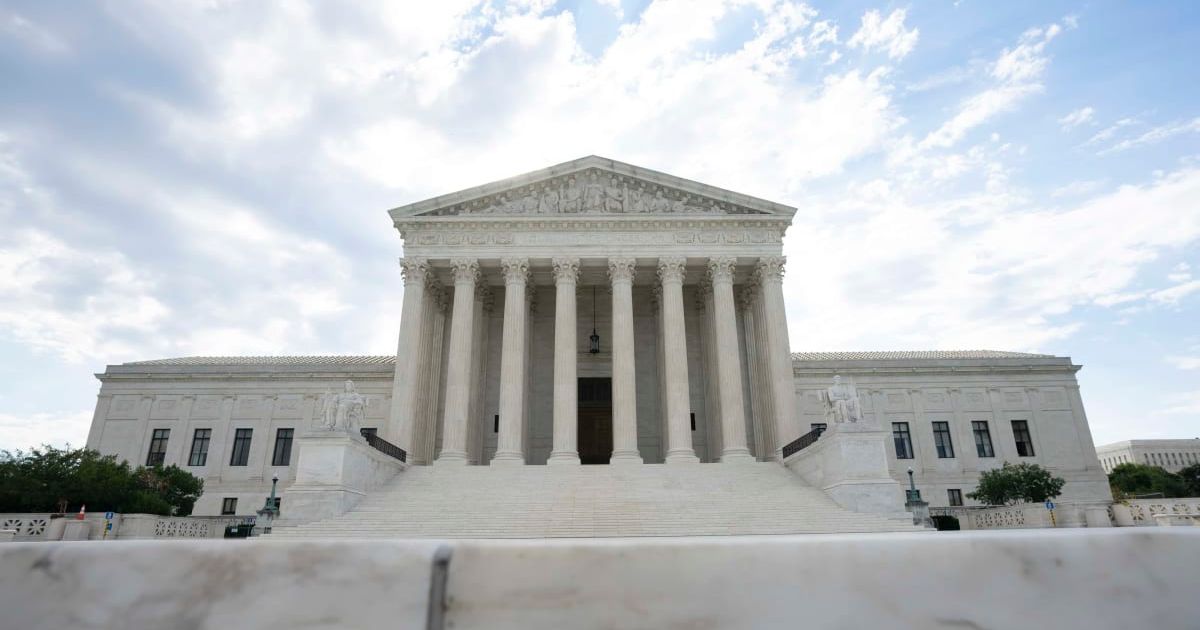
WASHINGTON, DC: The battle for control of the House of Representatives took another turn on Tuesday, June 2, as the Supreme Court allowed Alabama to use a congressional map expected to give Republicans an additional seat in the state.
Republicans currently hold a narrow majority in the House, and court fights over congressional boundaries have become a key front in the run-up to November’s midterm elections. Alabama is the latest state where redistricting litigation could alter the political balance. In a 6-3 unsigned order, the Supreme Court lifted a lower-court ruling that had blocked Alabama’s GOP-drawn map.
Supreme Court allows map despite lower Court’s discrimination finding
The ruling overturned a decision by a three-judge federal panel that had unanimously concluded Alabama’s map was unconstitutional and violated federal voting protections.
The lower court wrote, “ultimately, we cannot see our way clear to requiring Alabamians to cast their votes in the 2026 elections under a districting plan tainted by intentional race-based discrimination.”
That panel, which included two judges appointed by President Donald Trump and one appointed by former President Bill Clinton, found Alabama had “intentionally discriminated based on race” when drawing the map.

Yet the Supreme Court allowed the plan to move forward. In its order, the majority said the lower court improperly intervened in Alabama’s election process as the state prepared for upcoming elections.
BREAKING: The Supreme Court ALLOWS Alabama to readopt a congressional voting map that limits the power of Black voters to elect candidates of their choice. Justices Sotomayor, Kagan & Jackson dissent. #SCOTUS https://t.co/iwl08CIbIo pic.twitter.com/ziT4s2dEBZ
— Katie Buehler (@bykatiebuehler) June 3, 2026
“The District Court interposed itself into Alabama’s ongoing efforts to conduct its imminent 2026 congressional elections under maps that its elected representatives selected,” the justices wrote.
#SCOTUS Justice Sonia Sotomayor writes for the liberals that the decision to allow Alabama to use a congressional map that has previously been deemed intentionally discriminator against Black voters "disregards both democratic values and the rule of law." https://t.co/iwl08CIbIo pic.twitter.com/5nfzbk0pPd
— Katie Buehler (@bykatiebuehler) June 3, 2026
Justice Sonia Sotomayor, joined by Justices Elena Kagan and Ketanji Brown Jackson, dissented sharply. “Yet just as Alabama doubled down on racial discrimination, the court today doubles down on chaos,” Sotomayor wrote.
Impact on house control and national redistricting battles
Under the current court-drawn map, Alabama has a 5-2 Republican advantage, including two districts represented by Black Democrats, Rep Shomari Figures and Rep Terri Sewell.
The newly approved map effectively dismantles one of the state’s two majority-Black districts, placing Figures’ seat at risk and likely restoring a 6-1 Republican advantage in Alabama’s House delegation.
The decision arrives amid a broader national redistricting fight that has intensified since the Supreme Court’s April 29 ruling in Louisiana v Callais. That decision significantly raised the threshold for bringing voting rights challenges, making it more difficult for plaintiffs to prove racial vote dilution under the Voting Rights Act.
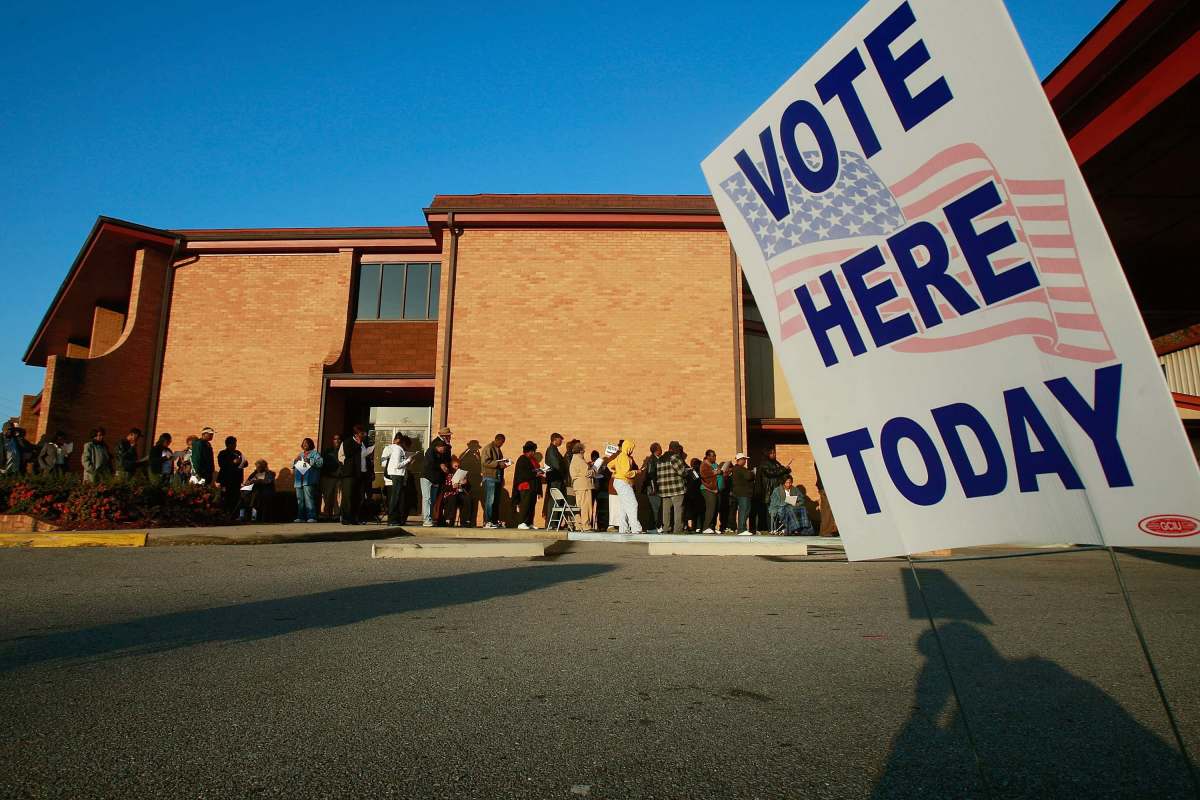
Since that ruling, the Supreme Court has become involved in congressional map disputes in Louisiana, Texas, Alabama, Virginia and California. Separately, Florida and Tennessee have advanced redistricting changes expected to benefit Republicans.
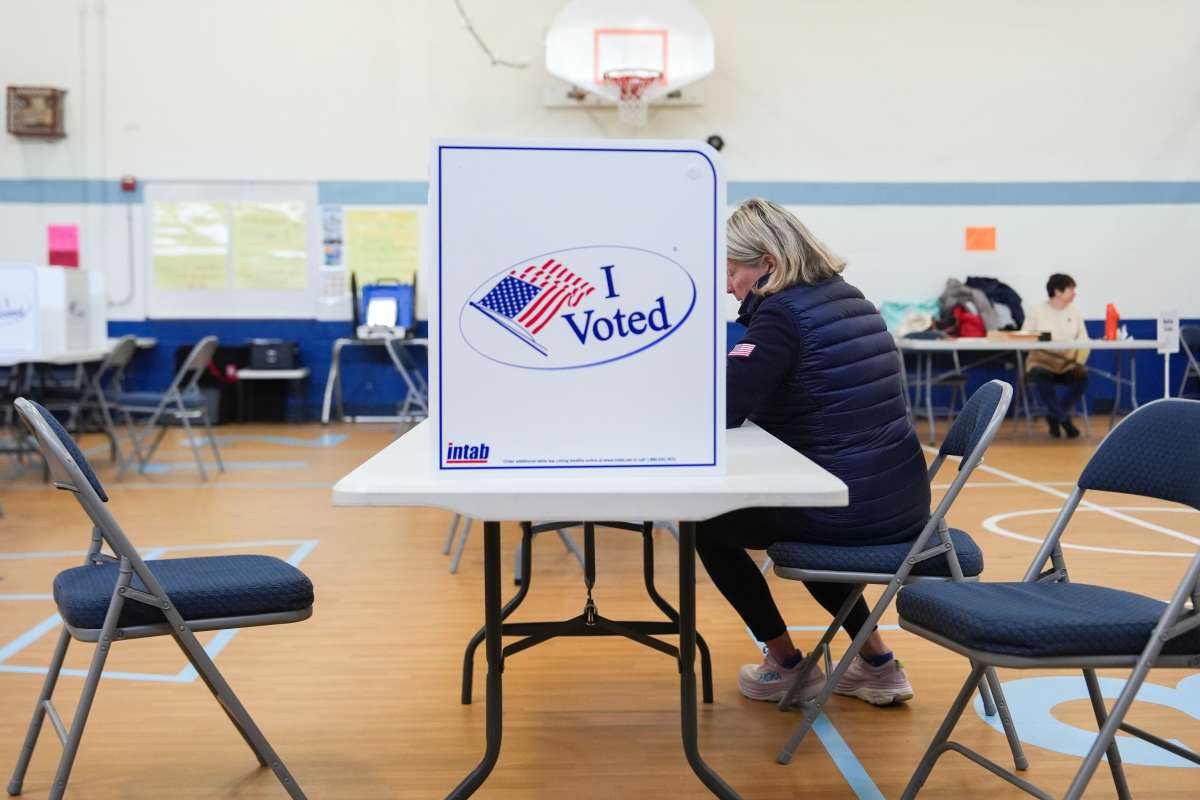
The cumulative effect could be significant in a closely divided House. Analysts estimate Republicans could gain several seats through the current wave of redistricting, with Alabama representing one of the clearest pickup opportunities. Given the narrow margins in Congress, a single seat could prove important in determining House control.
Democrats and voting rights advocates have condemned the ruling, arguing that it weakens protections for minority voters and contradicts findings made by lower courts. Republicans, meanwhile, have defended the map as a lawful exercise of legislative authority.