Supreme Court redraws 'racial' standard for voting districts in 6-3 Louisiana ruling
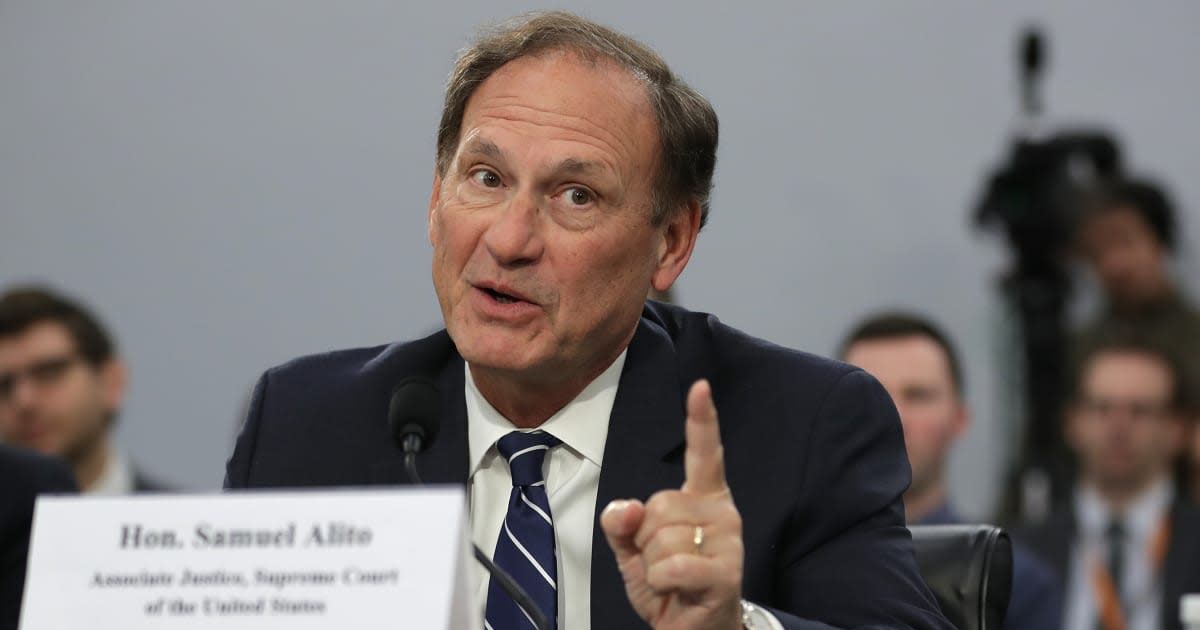
LOUISIANA: The Supreme Court on Wednesday, April 29, significantly narrowed a central provision of the Voting Rights Act, ruling that Louisiana’s congressional map with two majority-Black districts was unconstitutional.
The 6-3 decision marks the latest rollback of protections under the landmark civil rights-era law and could reshape how states draw electoral maps nationwide.
The ruling comes as redistricting battles intensify ahead of the 2026 midterm elections, with both Republicans and Democrats seeking political advantages through revised congressional boundaries.
At issue was Section 2 of the Voting Rights Act, which for decades has been used to challenge maps that dilute minority voting power and, in some cases, require states to create majority-minority districts.

Court narrows use of race in congressional mapmaking
The case, Louisiana v Callais, centered on whether Louisiana could maintain two majority-Black congressional districts after evidence of disparities in previous maps.
Writing for the majority, Justice Samuel Alito said the legal standard for using race in redistricting had not been met.
“Because the Voting Rights Act did not require Louisiana to create an additional majority-minority district, no compelling interest justified the State’s use of race,” Alito wrote. “That map is an unconstitutional gerrymander, and its use would violate the plaintiffs’ constitutional rights.”

Alito said past racial disparities alone were not enough to justify race-conscious redistricting unless those circumstances created what he called a “strong inference of racial discrimination.”
The ruling creates new legal uncertainty for states that have relied on Section 2 to defend or create majority-minority districts.
Louisiana’s current map, which had been expected to remain in place for the 2026 midterms, could now face further legal challenges.
The decision also reflects the court’s evolving approach to redistricting following its 2019 ruling that partisan gerrymandering claims are beyond the reach of federal courts.
Alito noted that political motivations are often intertwined with race in modern mapmaking and warned against misuse of voting rights claims for partisan purposes.
Justice Kagan:
— Kyle Griffin (@kylegriffin1) April 29, 2026
"I dissent. The Voting Rights Act is—or, now more accurately, was—'one of the most consequential, efficacious, and amply justified exercises of federal legislative power in our Nation's history.' It was born of the literal blood of Union soldiers and civil rights…
“Failing to account for political considerations in redistricting … can allow plaintiffs to undo a State’s legitimate, non-racial decisions under the banner of Section 2,” he wrote.
Liberal justices warn ruling weakens minority protections
The court’s three liberal justices dissented, with Justice Elena Kagan sharply criticizing the majority’s reasoning and warning that the decision would weaken protections for minority voters.
“Under the Court’s new view … a State can, without legal consequence, systematically dilute minority citizens’ voting power,” Kagan wrote.
She argued that the ruling effectively dismantles the 1982 amendment to the Voting Rights Act, which Congress passed to make it easier to challenge discriminatory maps without proving explicit racial intent.
“Of course, the majority does not announce today’s holding that way,” Kagan wrote. “Its opinion is understated, even antiseptic.” But she said the court’s changes “eviscerate the law” and amount to the “demolition of the Voting Rights Act.”
The decision is the latest in a series of rulings under Chief Justice John Roberts that have scaled back key parts of the Voting Rights Act, once considered one of the strongest federal protections against racial discrimination in elections.
The ruling’s broader political implications could be significant. Both parties are aggressively pursuing mid-cycle redistricting efforts in multiple states, with control of the House of Representatives likely to hinge on newly drawn districts.