Virginia redistricting fight, court backs Democrats, GOP appeal heads to Supreme Court
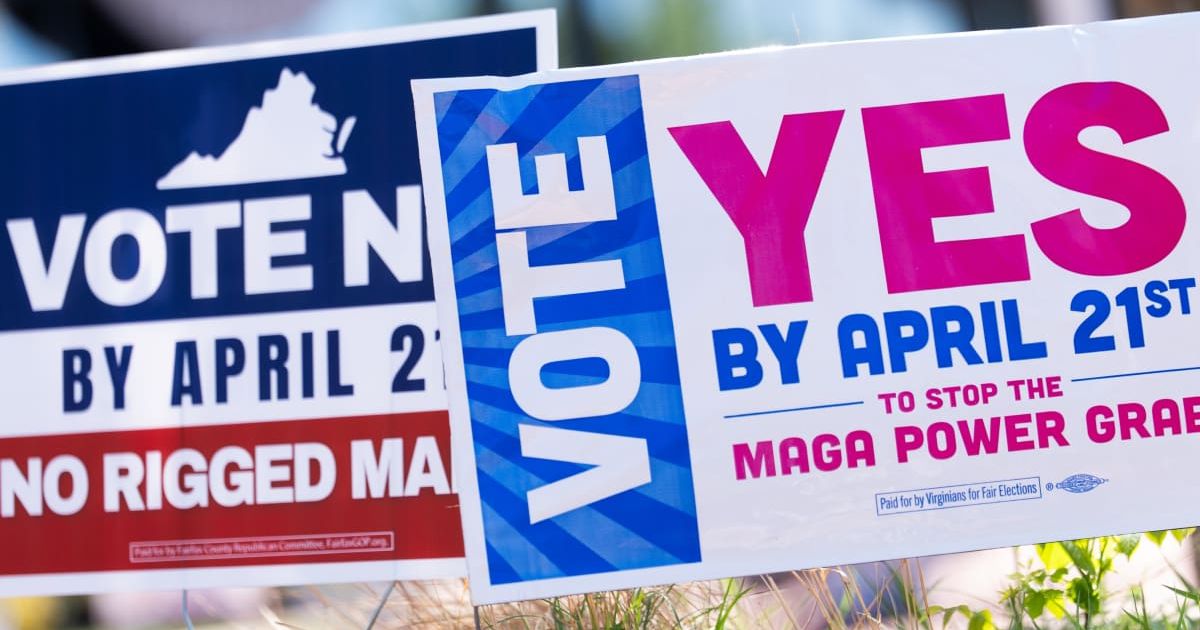
RICHMOND, VIRGINIA: A Virginia court on Monday, April 27, ruled in favor of Democrats in a closely watched congressional redistricting dispute, allowing newly approved House district maps to remain in place for now.
The ruling denied a Republican effort to halt implementation of the voter-backed map, which could significantly shift the state’s congressional balance in Democrats’ favor.
The case now moves to the Virginia Supreme Court, where the broader legality of the referendum process will be decided.
The decision is one of the latest developments in a broader national fight over congressional maps, as both parties seek electoral advantages ahead of the November midterms.
Court rejects GOP bid to block new map
Richmond Circuit Court Judge Tracy Thorne-Begland denied the Republican National Committee, the Virginia GOP and allied plaintiffs’ request to block the new congressional map approved by voters last week.
The referendum passed narrowly and would create four additional competitive districts for Democrats.
Virginia’s current congressional delegation stands at 6-5 in favor of Democrats, but the newly approved district lines could reshape that balance to a potential 10-1 Democratic advantage, according to projections cited in the legal dispute.
In his ruling, Thorne-Begland said the court’s role was limited to assessing constitutional compliance rather than evaluating political wisdom. “...This Court knows its role is clear. It is not to assess the wisdom of public policy nor to engage in policy making from the bench,” the judge wrote.
“Instead, it is to decide if those with whom we have entrusted power have exercised that power in conformance with their constitutional mandate.”
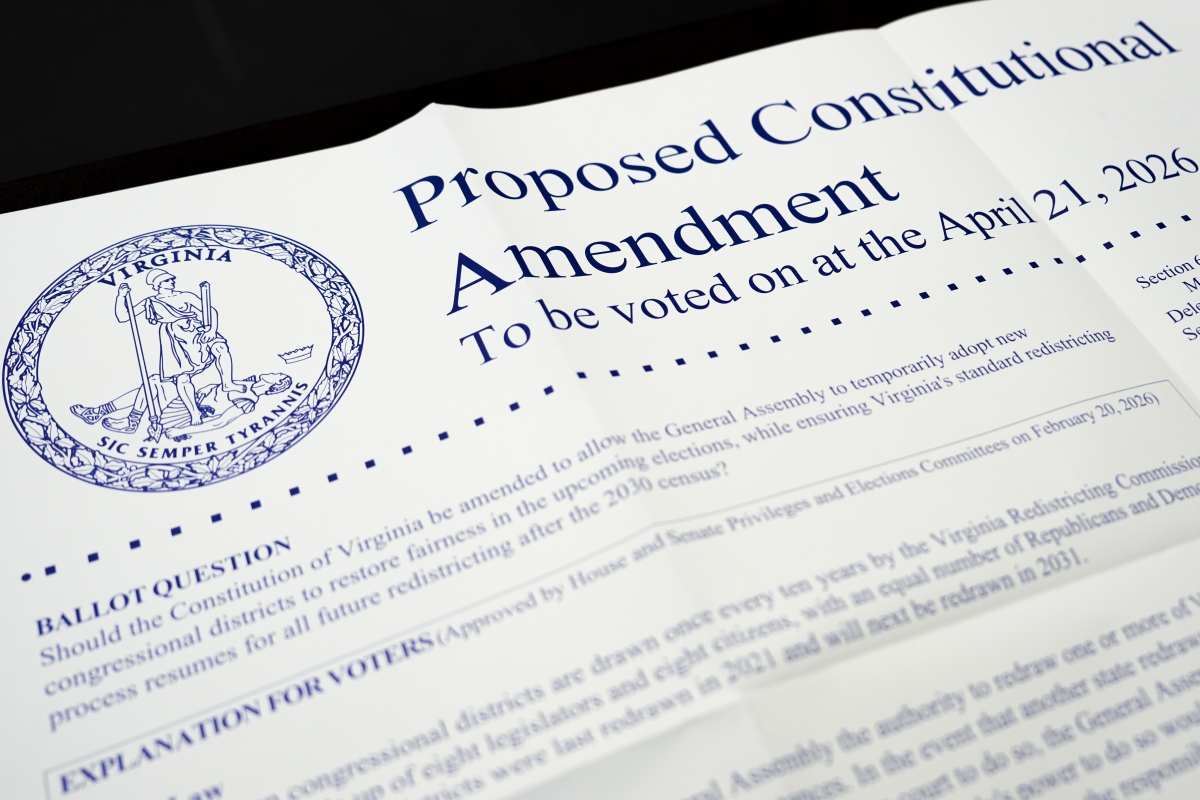
Republicans argued the map violated Virginia’s Constitution, claiming it lacked compactness and was adopted without proper legal authority.
In their filing, GOP plaintiffs described the map as an “extreme partisan gerrymander” that divided communities to serve political objectives.
The judge acknowledged the districts were less compact and partisan in nature, but said Republicans were unlikely to prevail on those claims.
He pointed to expert testimony presented by Boston University political scientist Maxwell Palmer, whose methodology the court found more credible than the Republican-backed expert witness.
Virginia SC to decide next phase of redistricting battle
While the ruling preserves the map for now, the legal fight is far from over.
The Virginia Supreme Court heard oral arguments on Monday, April 27, on whether lawmakers followed constitutional procedures in placing the redistricting referendum before voters.
Republicans contend the Democratic-led General Assembly failed to properly approve and publish the constitutional amendment authorizing lawmakers to redraw districts mid-decade.
A lower court in Tazewell County earlier ruled the amendment process was invalid, but the state Supreme Court temporarily paused that decision to allow last week’s vote to proceed.

The case carries major political implications beyond Virginia. President Donald Trump has backed similar redistricting efforts in Republican-led states, including Texas and Florida, as both parties seek to strengthen their House positions ahead of the midterms.
If the Virginia Supreme Court upholds the referendum, Democrats could gain a significant structural advantage in the race for control of the US House.