Coca-Cola bottle, iPhone, DNA archive sealed away until 2276 in America's 250-year time capsule
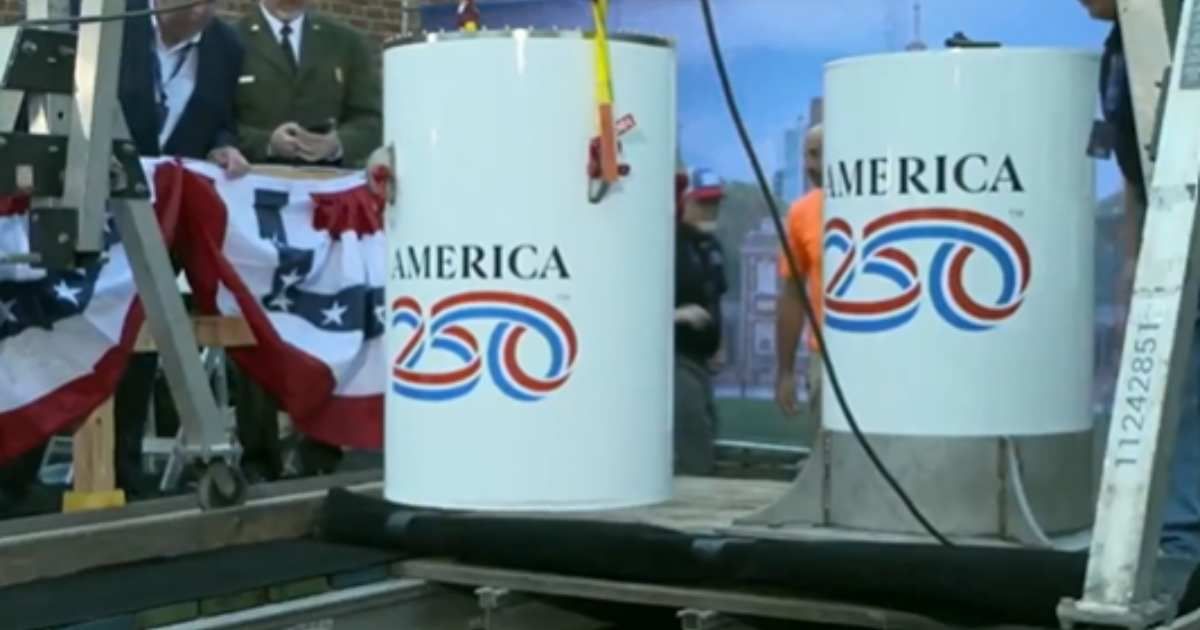
PHILADELPHIA, PENNSYLVANIA: On Saturday, July 4, while millions of Americans celebrated the nation's 250th Independence Day with fireworks and parades, another tribute to the country's history was quietly placed beneath the ground in Philadelphia.
A nearly one-ton time capsule packed with modern-day treasures, including a Coca-Cola bottle, an iPhone, priceless historical records preserved in synthetic DNA and artefacts from every corner of the country, has been sealed for the next 250 years.
It is not expected to be opened until America's 500th birthday in 2276.
NOW: America is burying a nearly one-ton time capsule beneath Philadelphia's Independence National Historical Park as part of the nation's 250th birthday celebration.
— Fox News (@FoxNews) July 4, 2026
Inside are nearly 200 artifacts from all 50 states, Washington, D.C., the U.S. territories, all three branches… pic.twitter.com/woDGt6cnc4
A gift to Americans centuries from now
The capsule was buried at Independence National Historical Park during the nation's semiquincentennial celebrations, turning one of America's most historic locations into the resting place of a message for future generations.
Rather than focusing only on famous documents or political milestones, organizers assembled a collection intended to answer a simple question: What did America look like in 2026?
Once sealed underground, the waterproof capsule will remain untouched for two and a half centuries before it is finally opened in 2276.
On Saturday July 4th at 8:30am, items from all 50 states and American territories will be buried in a time capsule near Independence Hall with a re-opening date of 2276, 250 years from now pic.twitter.com/UuZ2XBwFY5
— Jimmy King (@Jimmyking35) July 3, 2026
An art installation inspired by Benjamin Franklin's famous "Join, or Die" illustration now marks the burial site.
The time capsule contains nearly 200 artefacts representing all 50 states; Washington, DC; the five inhabited US territories; all three branches of the federal government; and contributions from everyday Americans.
The contents reflect both everyday American life and the country's technological achievements.
Join, or Die., a 1754 political cartoon by Benjamin Franklin published in The Pennsylvania Gazette in Philadelphia, addresses the disunity of the Thirteen Colonies during the French and Indian War.
— History Calendar (@HistoryCalendar) July 2, 2026
Several decades later, the cartoon resurfaced as one of the most iconic symbols… pic.twitter.com/lg1XbIPnLF
Among the most recognizable items is a commemorative Coca-Cola glass bottle, included alongside memorabilia celebrating one of America's most iconic global brands.
Sitting beside it is an iPhone 17 Pro Max, chosen to represent the technology that shaped everyday life during the country's 250th anniversary.
The collection also includes a crystal from the 2026 Times Square New Year's Eve Ball, a commemorative American flag from the 2026 Rose Parade, student essays and artwork, sports collectibles, and numerous personal contributions from citizens across the nation.
A 900-pound time capsule filled with items from all 50 states has been sealed for America’s 250th anniversary. It will be buried in Philadelphia on July 4, 2026, and reopened in 2276. pic.twitter.com/zkdSpr5TSI
— Breaking911 (@Breaking911) July 3, 2026
Instead of creating a museum of famous political artifacts, organizers sought to preserve the objects that ordinary Americans interacted with every day.
Tiny DNA capsule protects priceless history
Perhaps the most remarkable object inside the time capsule is one few people would even notice at first glance.
The Library of Congress contributed a tiny metal vial containing synthetic DNA capable of storing digital copies of priceless historical records.
Rough draft of the Declaration of Independence, by Thomas Jefferson, with copy edits by Benjamin Franklin, John Adams, and others. pic.twitter.com/yTBmCg0fsU
— Orin Kerr (@OrinKerr) July 4, 2026
Encoded inside are some of the nation's most treasured materials, including Thomas Jefferson's draft of the Declaration of Independence, an 1898 recording of the anthem performed by John Philip Sousa's band, a three-dimensional rendering of Abraham Lincoln's hand, and several other rare archival items.
The microscopic storage device demonstrates how modern science can preserve enormous amounts of information in an incredibly small space for generations to come.