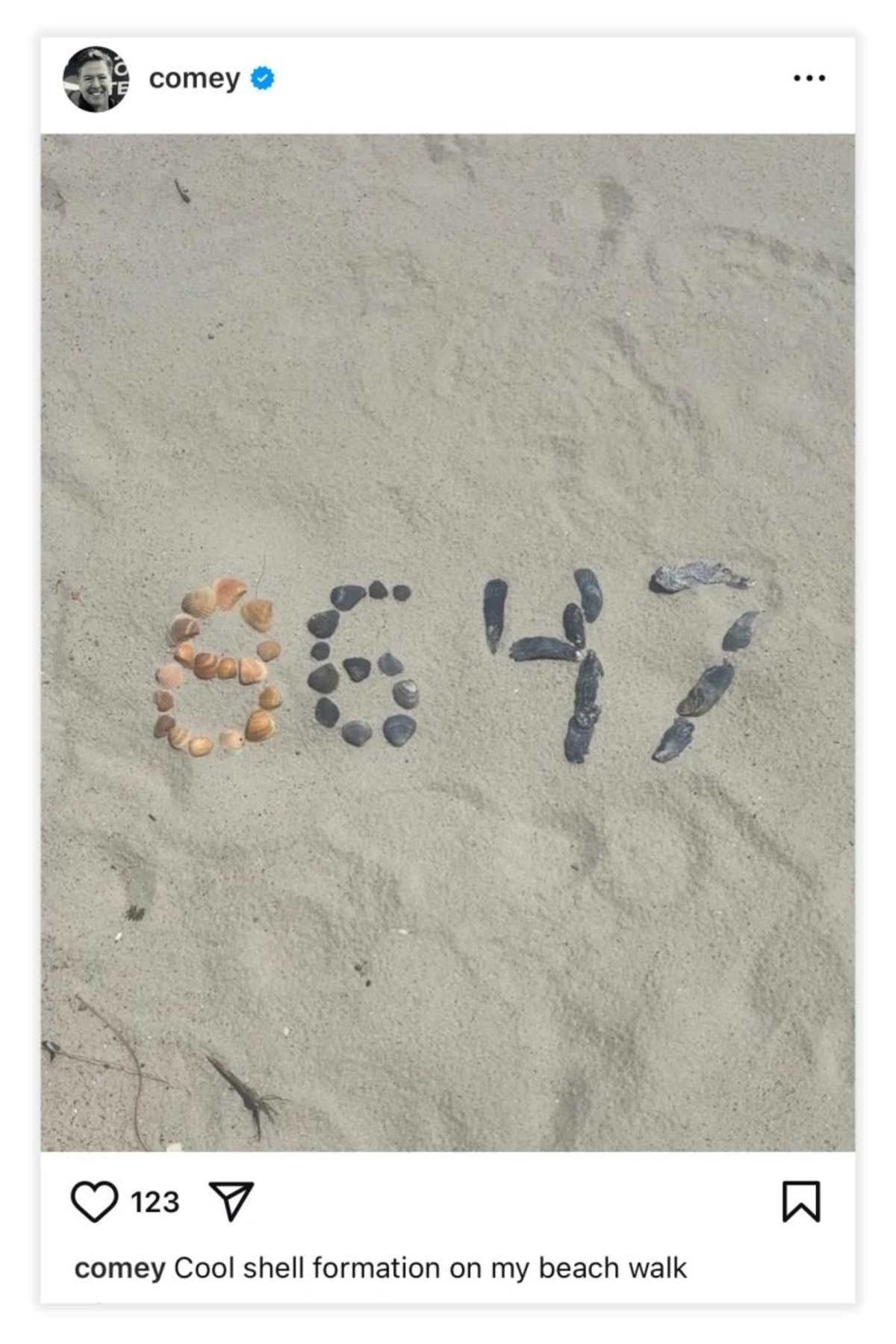
Comey's '86 47' case takes new turn as judge delays arraignment until 2027

WASHINGTON, DC: Former FBI Director James Comey's unusual federal case over an Instagram photograph of seashells spelling '86 47' has been pushed into 2027, giving his legal team more time to challenge the indictment before the case reaches trial.
US District Judge Louise Wood Flanagan granted a request to move the proceedings after Comey’s lawyers said they needed additional time to address pending motions and prepare for the case.
Judge moves arraignment with trial date still unset
Comey was scheduled to be arraigned September 30 in federal court in New Bern, North Carolina, with a jury trial previously scheduled for October 21.
His lawyers asked to move both dates, seeking a January 2027 arraignment and a trial during the February 2027 term.
Judge Louise Wood Flanagan granted the arraignment delay but did not set a February trial date.
Her order says the court will establish a new trial date after the January arraignment if Comey enters a not-guilty plea.
Flanagan wrote that “the ends of justice served by granting the requested continuance and setting arraignment in January 2027 outweigh the best interests of the public and defendant in a speedy trial.”
She added that “the gravity of the charges, pending motions, and the need to provide defense counsel additional time to prepare for trial promote the need for continuance.”
The Justice Department did not oppose the delay, although prosecutors told the court they would be ready to proceed under the existing schedule.
Comey’s lawyers said they needed additional time because of extensive dismissal motions, responses to government filings and other pretrial work.
Defense and prosecution clash over evidence and motive
Comey’s lawyers have argued that the prosecution is part of a broader effort by Trump to punish their client over his criticism of the president.
In court filings, they described the indictment as retaliation for protected speech and alleged a campaign driven by Trump’s personal hostility toward Comey.

Prosecutors have directly rejected that argument.
In their response, the Justice Department said Comey “does not allege (let alone show) that the prosecutorial decision makers in this case had improper motives.”
Prosecutors argued that Comey was required to provide actual evidence of vindictive prosecution rather than connect the indictment to alleged hostility from others.
The government has separately argued that the “86 47” post can constitute a true threat when considered alongside its surrounding circumstances.
Prosecutors say “86” can mean getting rid of someone, while “47” refers to Trump as the 47th president.

Comey’s lawyers dispute that interpretation and argue the post was protected political expression.
For now, there is no February 2027 trial date on the court’s calendar.
The next major proceeding is Comey’s January arraignment, after which Flanagan is expected to determine the trial schedule if the case survives his pending dismissal motions.