Fact Check: Did Donald Trump take out a full-page newspaper ad slamming US foreign policy in 1987?

WASHINGTON, DC: In yet another case of history repeating itself, a decades-old claim about President Donald Trump’s stance on US foreign policy has made a comeback this year—just as he settles back into the Oval Office.
This time, an image of a 1987 newspaper ad that Trump allegedly paid for has gone viral. The commercial criticized America's role in defending allies who, in his words, "can afford to defend themselves".
The ad first gained attention in 2015 during Trump’s initial presidential campaign, with outlets like BuzzFeed News reporting on its existence.
In 1987 Trump spent about $100k taking out a full page ad in the NYT that was a letter to the American people arguing that the USA could solve its foreign policy issues with "backbone." He's nothing if not consistent, and Colombia, Mexico etc are seeing now what "backbone" is. pic.twitter.com/d8419XTcMU
— FischerKing (@FischerKing64) February 4, 2025
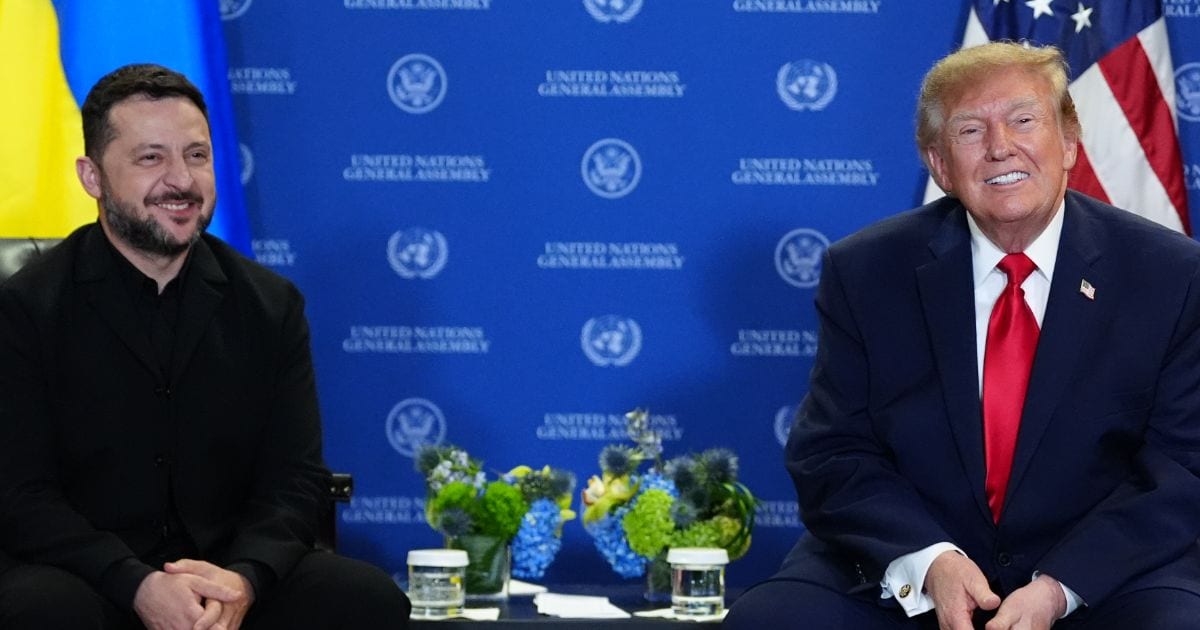
But in the wake of Trump's latest controversies on the international front—including his tense meeting with Ukrainian President Volodymyr Zelenskyy and ongoing debates about America’s NATO commitments—the ad appears to have made its way back into public discourse.

Fact Check: True
Unlike many rumors floating around online, this one is completely true. Donald Trump did take out a full-page advertisement criticizing US foreign policy. The ad ran on September 2, 1987, in three major newspapers, namely The New York Times, The Washington Post, and The Boston Globe, Snopes confirmed.

At the time, Trump was already a household name in America, famous for his real estate empire and larger-than-life persona. But this move was more than just a wealthy businessman airing grievances—it was his first real dip into political waters.
The ad itself was an open letter to the American people, urging the government to stop footing the bill for Western Europe and Japan’s military defense. According to digital archives, The New York Times ran the ad on Page A28, while The Boston Globe placed it on Page 48.
Trump reportedly spent $94,801 on the campaign, a price tag confirmed by both The Associated Press and Trump’s then-spokesperson Daniel Klores.
Donald Trump’s early hints at political aspirations

Even back in 1987, Donald Trump’s public statements left many wondering whether he had greater ambitions beyond business. Media outlets picked up on the ad's implications right away.
The Washington Post ran a piece by journalist Howard Kurtz titled, "Between the lines of a millionaire's ad," which read: "Donald J Trump, the multimillionaire developer who has gotten into some well-publicized spats with city officials here, is using his cash to wade into the more exotic waters of foreign policy. In full-page advertisements running Wednesday in The Washington Post, The New York Times, and The Boston Globe, Trump argues that the United States should present Western Europe and Japan with a bill for America's efforts to safeguard the passage of oil tankers in the Persian Gulf. When a prominent private person spends $94,801 to publicize such a message, it raises the age-old question: What's he running for?"
At the time, Trump’s camp denied any political aspirations. Klores, speaking on Trump’s behalf, told The Associated Press, "Right now, Donald Trump has no ambition to seek political office of any kind."
Yet, as history has shown, that statement didn’t hold up for long.
Donald Trump’s ‘America First’ policy was decades in the making
Political historians point to this ad as one of the earliest indicators of Donald Trump’s “America First” ideology—a philosophy that would later define his presidency.
In their 2017 book 'Donald Trump: The Making of a World View', authors Charlie Laderman and Brendan Simms described how Trump’s worldview was shaped by the Iran hostage crisis of the late 1970s, a widespread perception of US decline during that era and a belief that America’s allies were exploiting its generosity.

An excerpt from the book reads, "Like so many Americans of his generation, Trump's world view was shaped by the trauma of the hostage crisis and the sense of US decline in the late 1970s and 1980s. He also shared the widespread sense that America's allies were not pulling their weight in Europe, Asia, and the Middle East and that these "friends" were taking unfair advantage of the United States with respect to trade. In September 1987, Trump paid almost $95,000 to take out a full-page newspaper advertisement that ran in the New York Times and several other outlets to air his grievances with America's leaders and its allies. The advert was an open letter to the American people that criticised successive US governments for 'paying to defend countries that can afford to defend themselves.' Already famous in the US and around the world as a multi-millionaire real estate developer, this letter was the opening gambit in Trump's first flirtation with running for high office."
The ad’s central message—that US allies should pay their fair share—remains a core principle of Trump’s foreign policy today. His longstanding skepticism of NATO, confrontations with international leaders, and demands for more financial contributions from allied nations all stem from the ideas he publicly expressed in 1987.