Fact Check: Did Paul Thomas Anderson dedicate his Oscar award to Charlie Kirk?
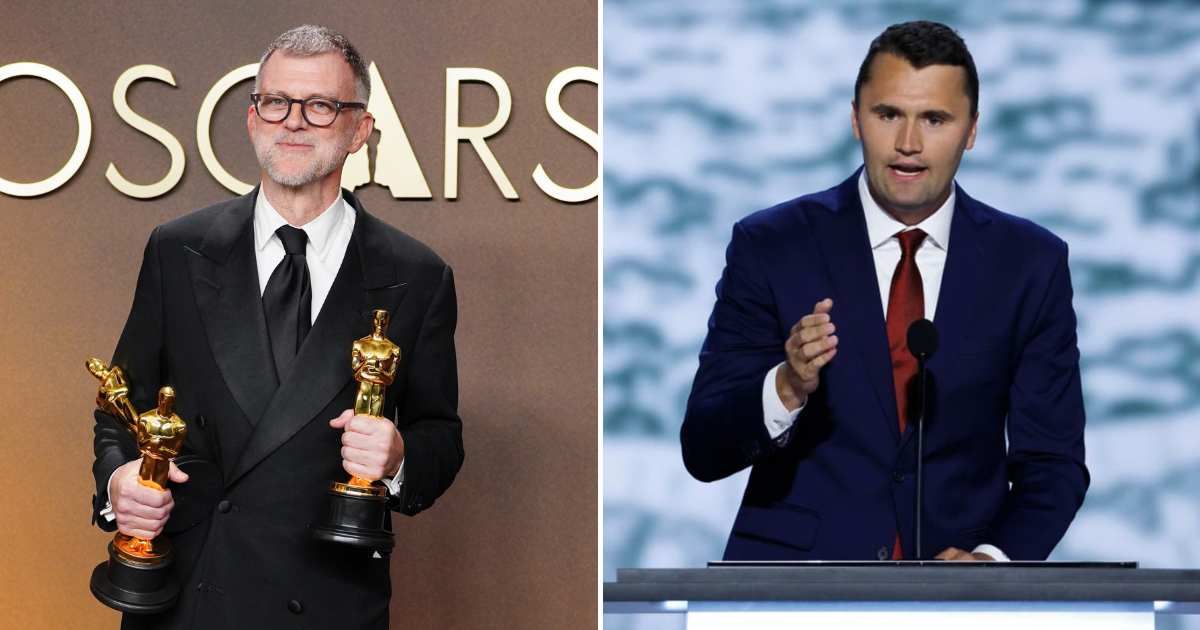
LOS ANGELES, CALIFORNIA: In the wake of the 98th Academy Awards, a claim has been circulating online that filmmaker Paul Thomas Anderson, who won the award for Best Director, dedicated it to slain conservative activist Charlie Kirk, sparking speculation about the claim's authenticity. Let us fact-check the viral claim.
Claim: Paul Thomas Anderson dedicated his award to Charlie Kirk
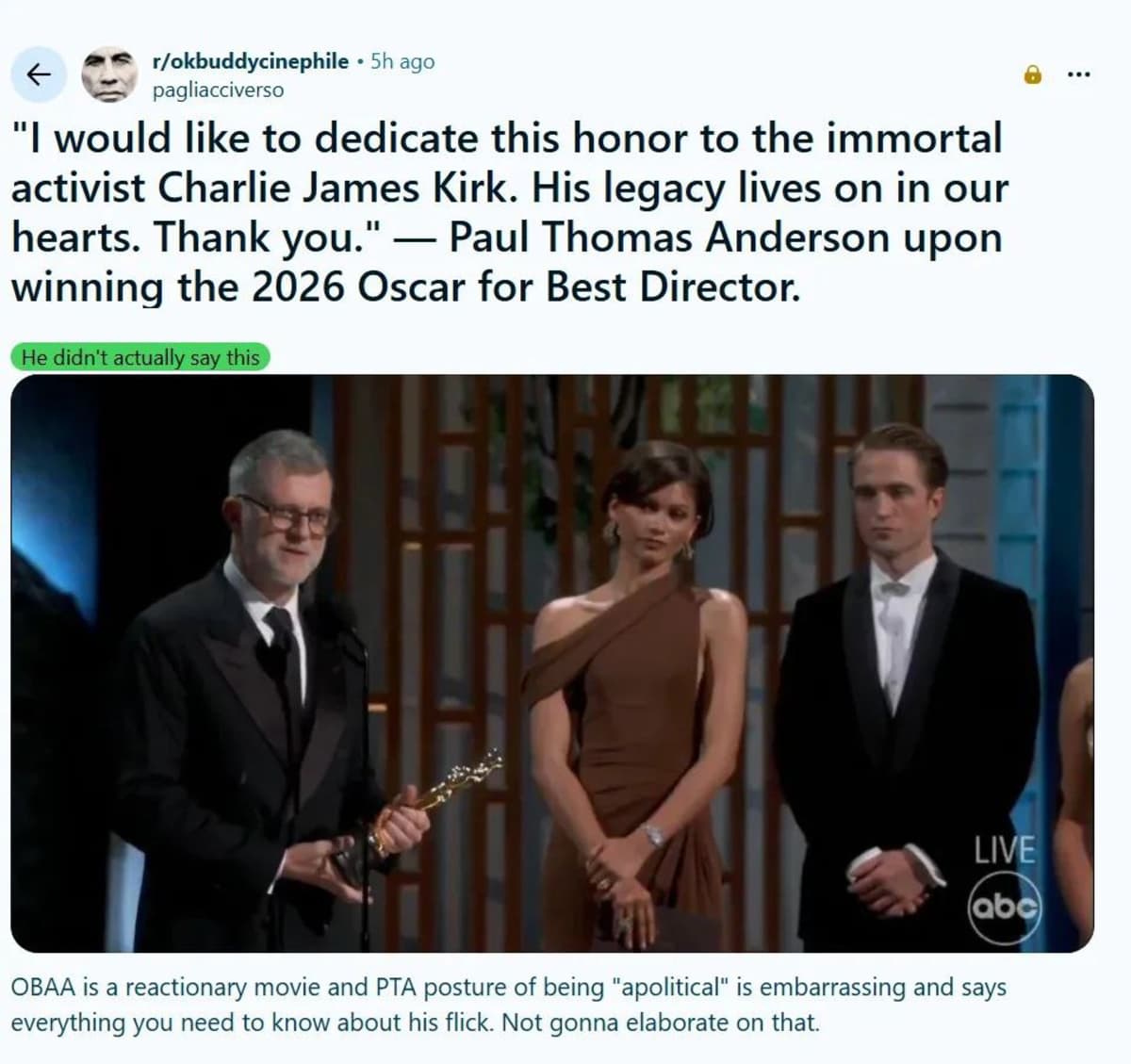
The claim surfaced on Reddit after Anderson won the award for ‘One Battle after Another,’ where users and commentators claimed that the filmmaker dedicated his Oscar or subtly referenced the late Turning Point USA co-founder during his acceptance speech and made vague remarks about the state of the world.
“I would like to dedicate this honor to the immortal activist Charlie James Kirk," the post from user pagliacciverso quoted Anderson.
The claim has sparked confusion and criticism amid debate over the film's political meaning.
Fact Check: False, claim originated as a satire
However, there is no evidence that Anderson dedicated his Oscar to Kirk or referenced him in any way during his acceptance speech at the 2026 Academy Awards.
Also, the quote falsely attributed to Anderson was posted by a satirical account called /okbuddycinephile.
"I wrote this movie for my kids, to say sorry for the housekeeping mess that we left in this world we’re handing off to them. But also with the encouragement that they will hopefully be the generation that brings us some common sense and decency," Anderson said about the film.
The film deals with political issues, including authoritarian nationalism, immigration, and abuse of power, which contradict Charlie Kirk’s conservative politics.
Paul Thomas Anderson avoids linking his film to present politics
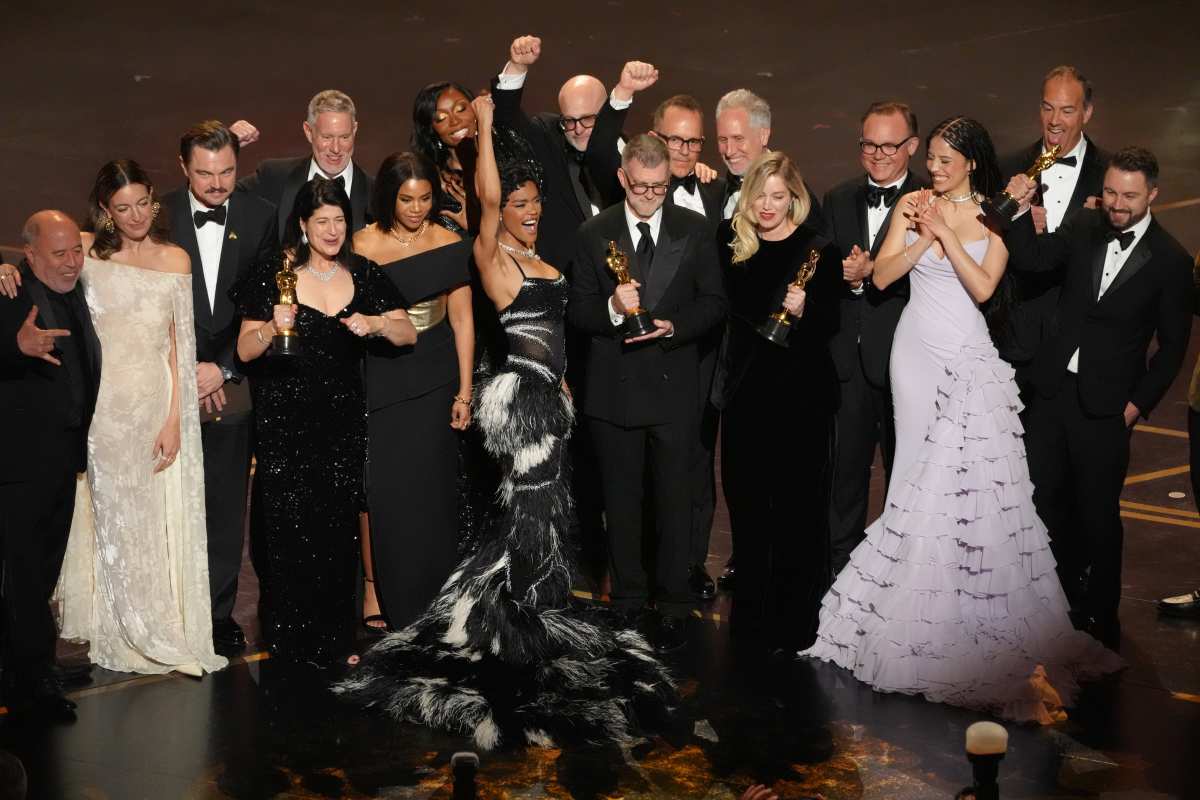
Anderson has also faced criticism for declining to explain how ‘One Battle After Another’ relates to contemporary politics, despite the film’s themes of political violence, authoritarianism, and social unrest.
When a reporter asked how the film reflects the direction society is heading, Anderson responded, “I thought we were supposed to be partying?”
The film is loosely based on the 1990 novel 'Vineland' by Thomas Pynchon. Anderson has previously downplayed links between the story and the rise of right-wing politics in the United States, saying the film could have been made in any historical period.