Fact Check: Is Donald Trump single-handedly responsible for a quarter of the national debt?

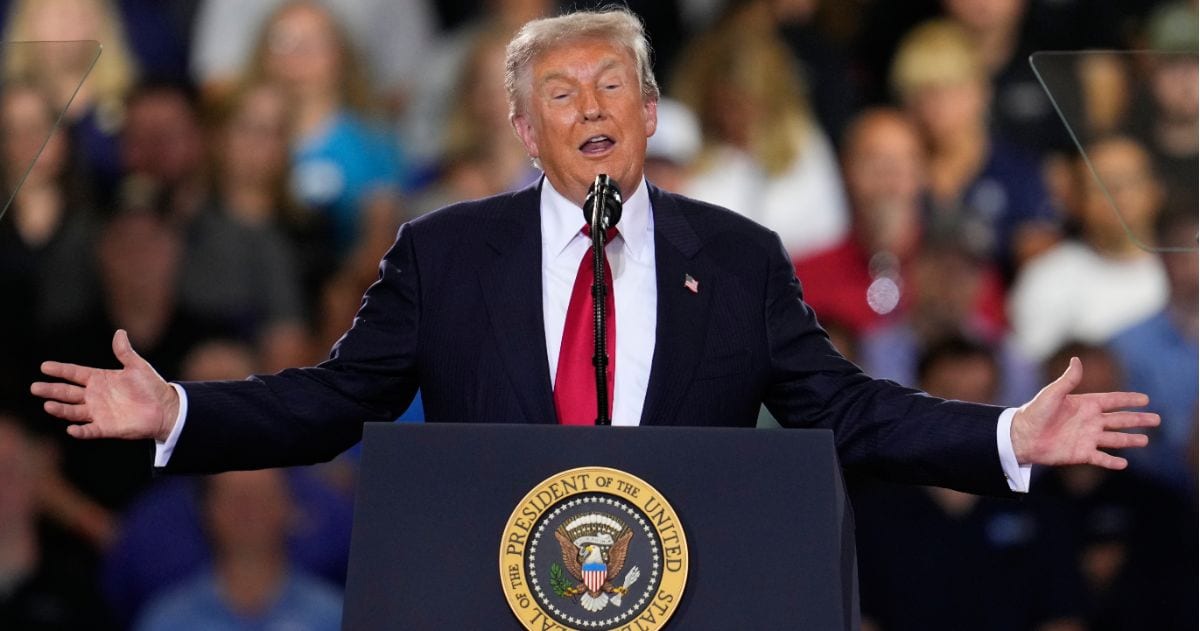
WASHINGTON, DC: Amid rising gas prices and inflation driven by geopolitical tensions, a rumor is circulating on social media platforms claiming that President Donald Trump is single-handedly responsible for more than a quarter of the national debt, sparking criticism and speculation. Let us analyze the origins of the viral claim and fact-check it.
Claim: Donald Trump is responsible for 27.7% of the national debt

As the national debt has become a topic of mounting concern and now exceeds the economy itself, a viral social media post has claimed that Trump is now single-handedly responsible for 27.7% of the national debt and that it is dramatically higher than that of any president in American history.
The claim has been shared on multiple social media platforms, including X, Facebook, and Instagram, garnering more than a million views and triggering criticism against the president and his administration.
Fact Check: No credible evidence proves Donald Trump's responsibility

Despite defending the escalating national debt, there is no evidence that the president is responsible for more than a quarter of the national debt. Although Trump’s contribution to the debt is unclear, calling him single-handedly responsible is exaggerated.
A search on Google for the claim yielded no credible reports or economic data that support the rumor. If the claim were true, prominent news media outlets would have made sure to report it, making headlines and sparking nationwide debates and criticisms.
Moreover, presidents do not unilaterally set spending or debt levels. Congress appropriates funds, and debt accumulates from structural deficits that predate any single administration.
National debt surpasses 100% of GDP

Earlier this month, the US crossed a grave economic threshold, with the national debt officially surpassing 100% of the country’s gross domestic product (GDP) for the first time since the aftermath of World War II.
According to the data released by the Bureau of Economic Analysis, the debt reached 100.2% of GDP at the end of the first quarter.
In recent months, the fiscal situation has deteriorated rapidly, with the total national debt climbing above $39 trillion in March, a staggering $1 trillion increase in just five months.
According to the Congressional Budget Office (CBO), the long-term outlook remains grim, which warns that current spending trajectories will push the debt held by the public to 108% of GDP by 2030 and 120% by 2036.