LaGuardia runway warning system failed moments before Air Canada crash: NTSB
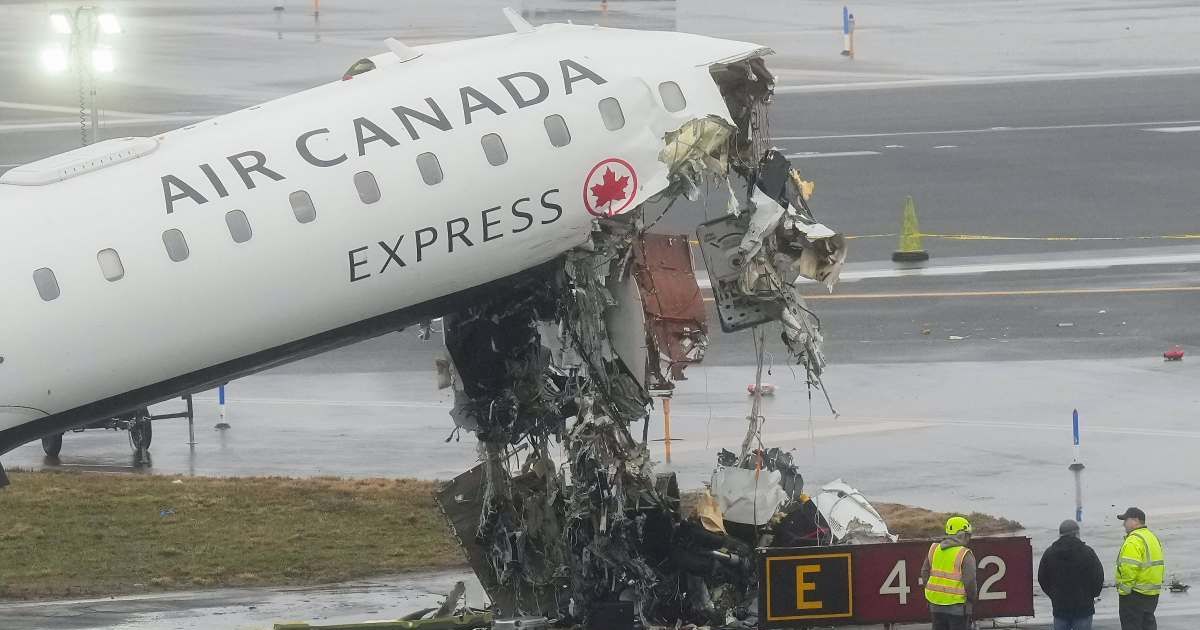
NEW YORK CITY, NEW YORK: A critical runway safety system at LaGuardia Airport failed to alert air traffic controllers before a deadly collision between an Air Canada jet and an airport vehicle, according to the National Transportation Safety Board.
The crash, which occurred late Sunday night, March 22, killed both pilots and left dozens injured, raising urgent questions about how multiple safety layers failed simultaneously.
#UPDATE
— SLCScanner (@SLCScanner) March 24, 2026
Runway Warning System Failed in Deadly LaGuardia Plane-Fire Truck Collision
NEW YORK — A runway warning system at LaGuardia Airport failed to alert controllers moments before an Air Canada jet collided with a fire truck while landing late Sunday night, killing both… pic.twitter.com/q3AwezYksw
NTSB says runway system did not generate an alert
NTSB Chair Jennifer Homendy confirmed that the airport’s surface tracking system did not issue any warning before the collision.
The system, designed to monitor aircraft and vehicle movement on the ground, “did not alert,” she said during a Tuesday briefing.
According to the NTSB, the system failed because it could not properly track the fire truck involved in the crash.
15/
— GeoTechWar (@geotechwar) March 24, 2026
NTSB says the fire truck in the deadly LaGuardia plane crash lacked a transponder that would’ve triggered warnings. Chair Jennifer Homendy called the 2026 collision proof of “an old air traffic control system,” urging urgent upgrades at the NYC airport. https://t.co/kCy7djpwjU pic.twitter.com/BZRMG4pCQh
“The system did not generate an alert due to the close proximity of vehicles merging and unmerging near the runway, resulting in the inability to create a track of high confidence,” Homendy explained.
Officials added that the fire truck did not have a transponder – a device that helps tracking systems identify vehicles – and it is not currently required for such trucks, though some airports do use them.
Collision kills two pilots, injures dozens
The crash occurred shortly after an Air Canada flight landed from Montreal around 11:45 pm.
The aircraft, operated by Jazz Aviation, was carrying 72 passengers and four crew members when it struck a rescue-and-firefighting vehicle responding to another aircraft.
The two pilots killed were identified as Antoine Forest and Mackenzie Gunther.
🚨BREAKING: New footage shows the moment of the deadly crash at LaGuardia Airport in New York City where an Air Canada jet collided with a firetruck on the runway. pic.twitter.com/lQyGPmGH8A
— Off The Press (@OffThePress1) March 23, 2026
At least 41 people were taken to hospitals following the crash.
One flight attendant, Solange Tremblay, was thrown from the aircraft and suffered leg fractures. Her daughter later described her survival as a “miracle.”
Preliminary data showed the plane was traveling between 93 and 105 mph at the time of impact.
Investigators examine final moments and control tower actions
The NTSB is now closely reviewing the final moments before the crash, including cockpit recordings and air traffic control communications.
Homendy said two controllers were on duty at the time, which is standard for the midnight shift at LaGuardia.
Although fatigue has been a concern in past investigations, she noted there is “no evidence of fatigue” so far in this case.
NTSB Chair Jennifer Homendy on the collision at LaGuardia:
— The Post Millennial (@TPostMillennial) March 24, 2026
“It is not clear who was conducting the duties of the ground controller. We have conflicting information.”
pic.twitter.com/byqwex8ZN6
Investigators are also examining the actions of the fire truck and whether it tried to stop or change direction before the impact.
“We have to do some further investigation on that,” Homendy said, adding that interviews with the firefighters on board are ongoing.
The agency is also investigating a shift change that occurred earlier that night and why a controller remained on duty for several minutes after the crash.
Survivor recalls impact as airport slowly resumes operations
Passengers onboard described a sudden, violent moment just before the collision.
“Right before the impacts, we felt something, maybe like an emergency brake…before we hit the truck,” one passenger, identified only as Joe, said.
He recalled how passengers quickly moved to evacuate the aircraft.
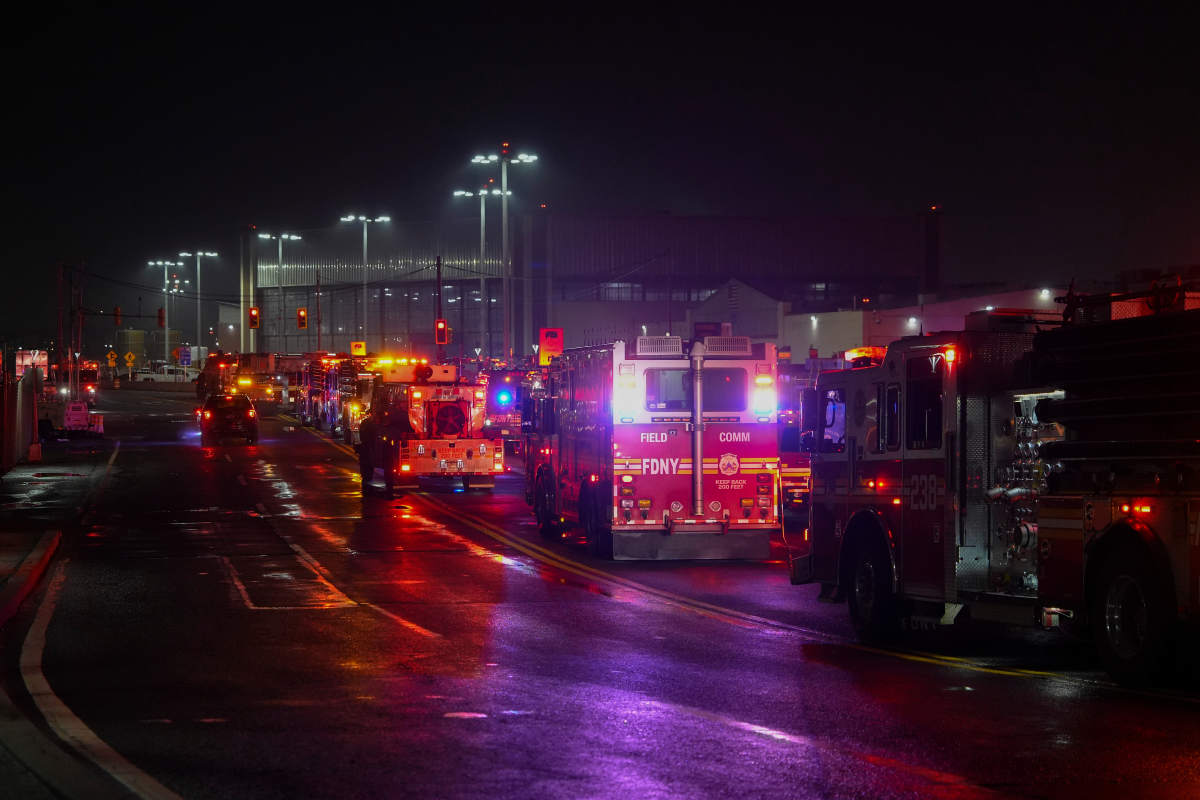
“Somebody in the plane had shouted, ‘Emergency exits open,’” he said. “A few of us had exited through the emergency exit onto the wing.”
Joe said he and others were later guided off the aircraft by emergency responders.
Still shaken, he added that his thoughts remain with the victims.
“I believe the pilots saved many lives on that flight and my heart's just broken for them,” he said.
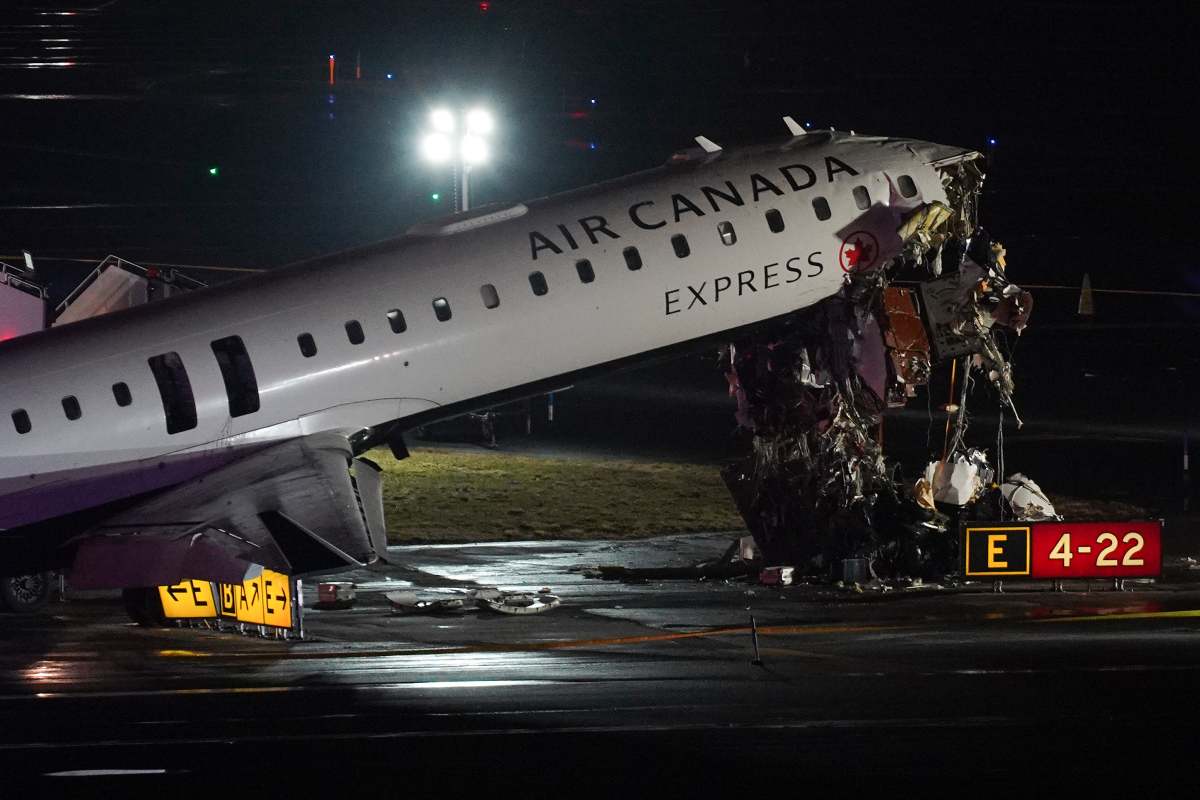
Following the crash, LaGuardia was shut down for more than 12 hours before gradually reopening Monday afternoon. The affected runway is expected to remain closed for several more days as investigators continue their work.
Homendy stressed that major aviation accidents are rarely caused by a single failure.
“Our aviation system is incredibly safe because there are multiple, multiple layers of defense built in to prevent an accident,” she said, adding that investigators are now working to understand how those layers broke down in this case.