Midterms 2026: 5 Senate races that could shape Trump’s agenda for his final two years
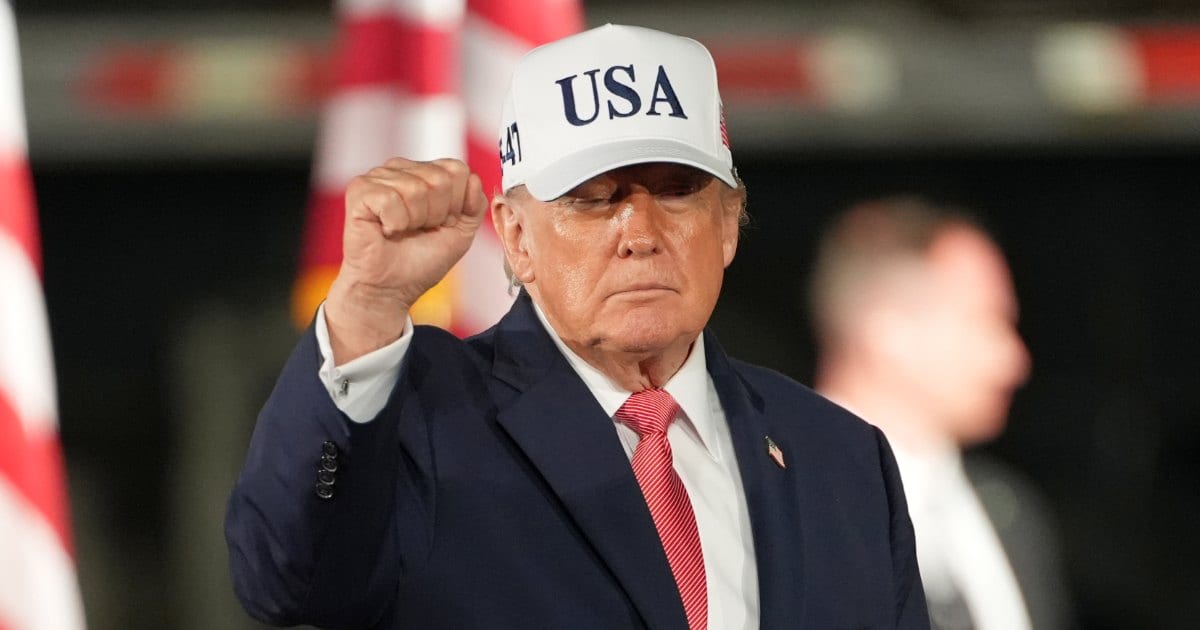
WASHINGTON, DC: With the 2026 midterm elections less than two weeks away, both parties are gearing up to win control of Congress. Several races have become particularly heated and contentious as lawmakers struggle to retain long-held seats.
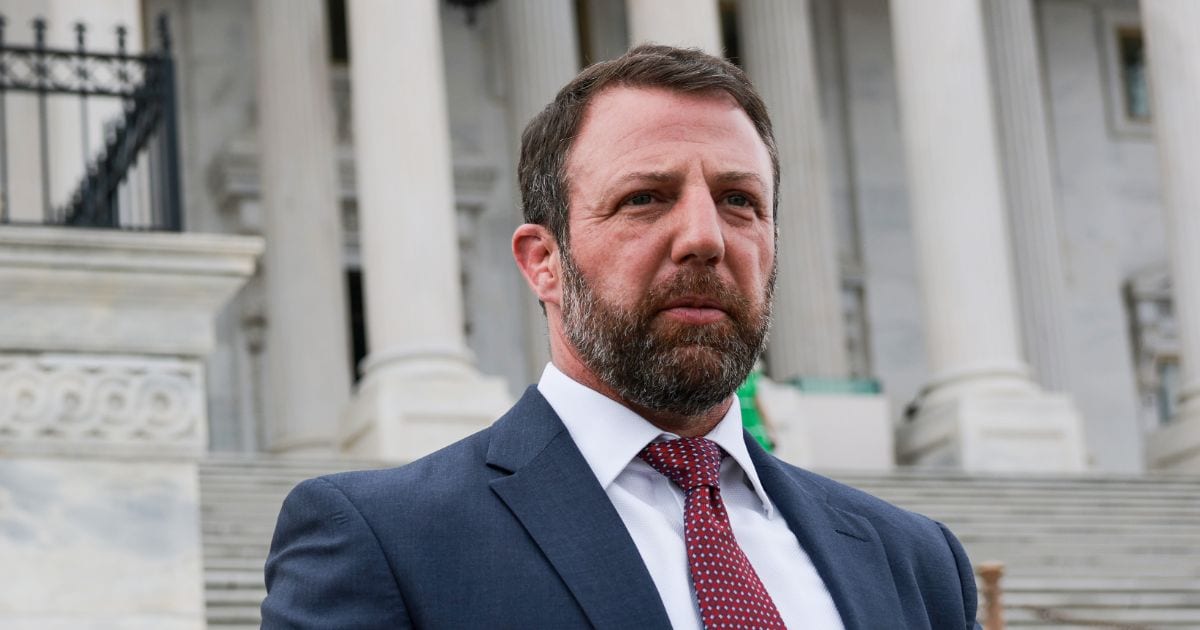
In Kansas, for instance, Republican Senator Roger Marshall is fighting to retain his seat in a state that has not elected a Democratic senator since 1932.
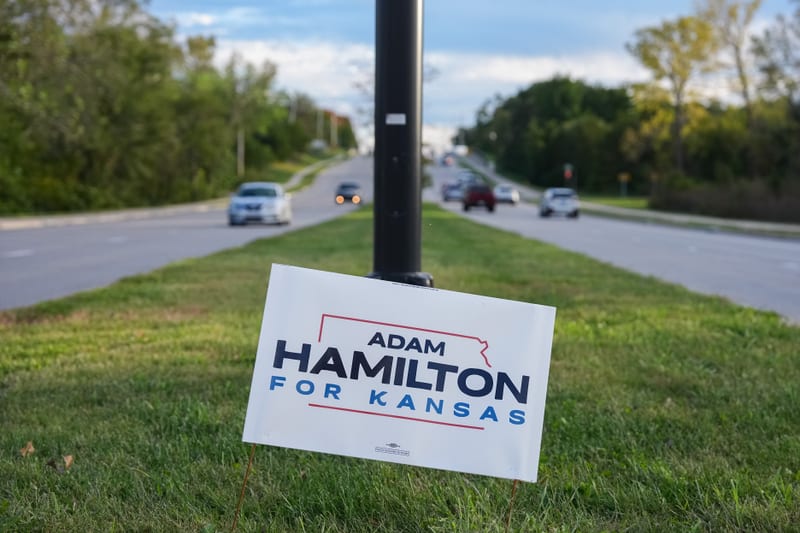
Marshall's Democratic challenger, Adam Hamilton, is now polling close enough to attract significant national spending and attention, turning a race once considered relatively safe for Republicans into a potential battleground.
Similar contests in Texas, Ohio, Maine and Alaska are testing the Republican Party's ability to maintain its Senate majority as President Donald Trump's approval rating falls and Democrats gain ground in national polling.
Why five Senate races could shape Trump's agenda
Republicans currently hold a 53-47 majority in the Senate and must defend a growing number of competitive seats.
Democrats need a net gain of four seats to take control, while Republicans can afford to lose three seats and retain the chamber through the vice president's tie-breaking vote. In the House, Democrats also need a net gain of four seats to win the majority.
However, winning a Senate seat does not determine control of the House, and neither chamber's outcome is guaranteed by the results in a single state.
A change in control could nevertheless have significant consequences for Trump.
A Republican Senate majority would help the president advance legislation and confirm nominees, while a Democratic majority could make those priorities more difficult to achieve.
A Democratic-controlled House, meanwhile, would expand congressional investigations into the administration, in line with the party's current plans.
These could include questions about whether Trump has used the presidency for personal enrichment. Impeachment could also become part of the political debate if Democrats regain control of either chamber.
Two weeks out from the midterms, Polymarket has Democrats at 64.5% to sweep both the House and the Senate. Back in the summer that number was under 20%. Now the split Congress scenario, Republicans holding the Senate and Democrats taking the House, is down to 26.5%. A Republican sweep sits at just 7.5%. Are the markets right, or is everyone about to get surprised again on November 3rd?
— USA NEWS 🇺🇸 (@usanewshq) October 21, 2026
Current polling shows Democrats leading the generic congressional ballot, while Cook Political Report's latest ratings also identify Republican-held Senate seats in Alaska, Iowa, Kansas, Maine, Ohio and Texas as toss-ups.
The five states below illustrate why Republicans are having to defend territory that might otherwise have been expected to remain within their reach.
Kansas Senate race puts Roger Marshall at risk
Kansas is among the most consequential races because its political history has long made it a reliable Republican stronghold.
No Democrat has won a Senate election in the state since 1932, but Marshall is facing a challenge from Hamilton, a United Methodist pastor, in a contest that has tightened considerably.
A New York Times/Siena poll conducted earlier this month showed the candidates tied at 45% each.

The candidates' final debate on Wednesday, October 21, also reflected the national stakes.
Marshall urged voters to associate Hamilton with the Democratic Party's national leadership, repeatedly invoking Senate Minority Leader Chuck Schumer.
“This guy is funded by Chuck Schumer,” Marshall said. “He’ll be beholden to Chuck Schumer forever.”
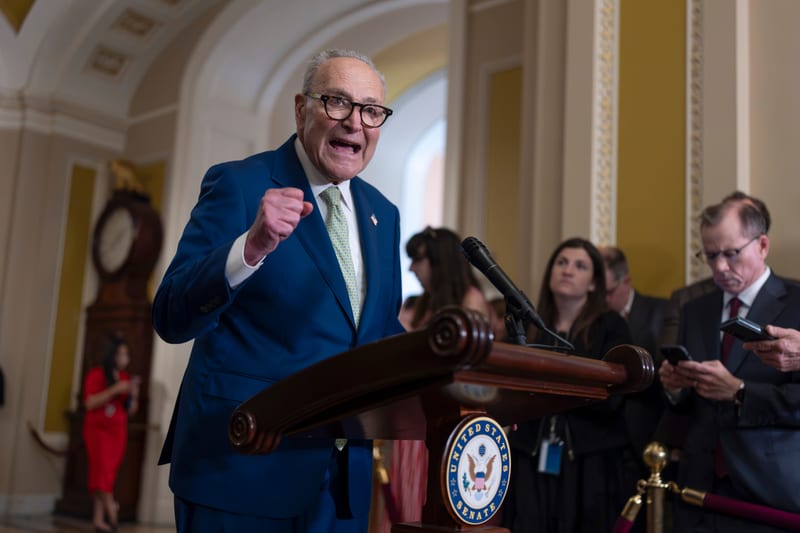
However, Hamilton has sought to distance himself from national Democrats, saying he would not support Schumer for another leadership term.
The Democratic candidate has also criticized the Biden administration's border policies, declaring that “the Biden policies when it came to the border were a disaster. I believe in strong and secure borders.”
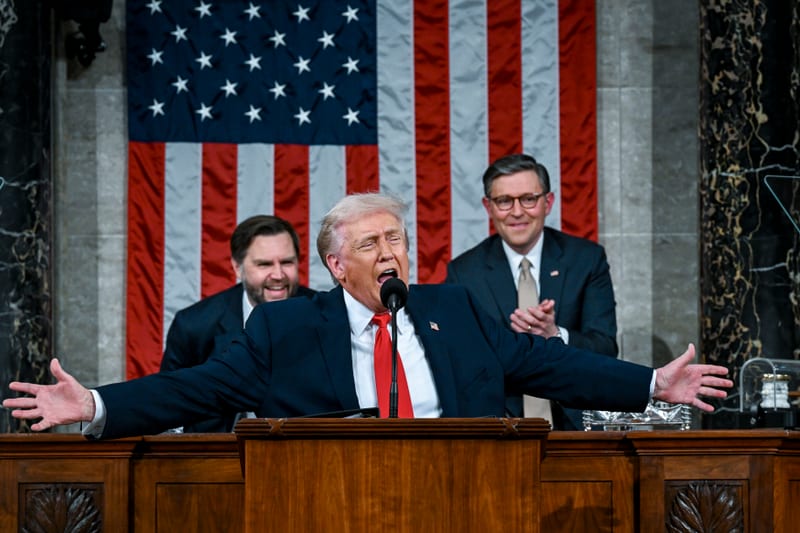
The candidates differ sharply on Trump's tariffs and the war in Iran, both of which have implications for prices and the economy.
Hamilton called the tariffs “an unpredictable tax on Kansans” and said that “this is creating instability, chaos and corruption."
Marshall defended the policy, saying that “we are bringing these jobs back home.”
National party organizations are investing heavily in the contest, and a political action committee associated with Schumer has contributed $5 million to the race.
Kansas also has a large pool of unaffiliated voters, making their decisions particularly important.
A Democratic victory would not, by itself, hand the party control of the Senate, but it would deliver a significant blow to Republican hopes of retaining the majority.
Texas Senate race draws Trump and GOP donors
Texas presents a different challenge for Republicans, who are defending a state that has not elected a Democrat to statewide office since 1994.
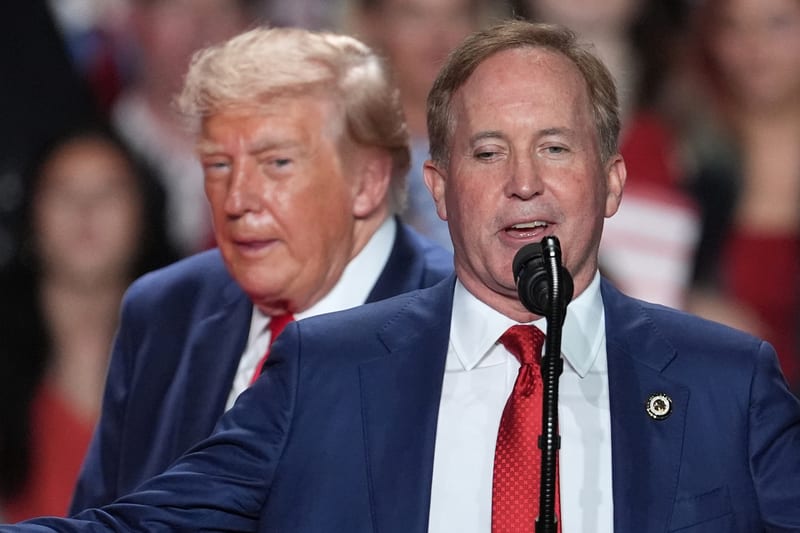
Republican candidate Ken Paxton is facing Democrat James Talarico in a Senate race that has become competitive despite the state's longstanding Republican lean.
A Fox News survey put the candidates at 49% each, while an Emerson College poll from October 22 showed Talarico leading 49% to 48%.
The contest has attracted substantial national spending. Elon Musk contributed $75 million to the Senate Leadership Fund on September 9 and another $83 million on September 23, according to Federal Election Commission filings.
The group transferred matching amounts to a Texas PAC the day after each contribution. The Texas PAC has reported more than $100 million in spending to support Paxton and oppose Talarico.

Trump also used his MAGA Inc super PAC to donate $10 million to Paxton's campaign in September, the largest amount he has spent on any race this year.
He also traveled to Texas three times in less than a month to campaign for Paxton.
A Paxton loss would cost Republicans a seat in a state they have long relied on, complicating their efforts to preserve the Senate majority.
Ohio Senate race threatens Republican majority
Ohio, which Trump won by 11 percentage points in 2024, is another state where the Senate race is particularly close ahead of the upcoming elections.
Former Democratic Senator Sherrod Brown is challenging Republican Jon Husted, who was appointed to the seat after JD Vance became vice president. A Fox News survey from October 22 showed Brown leading 52% to 47%.
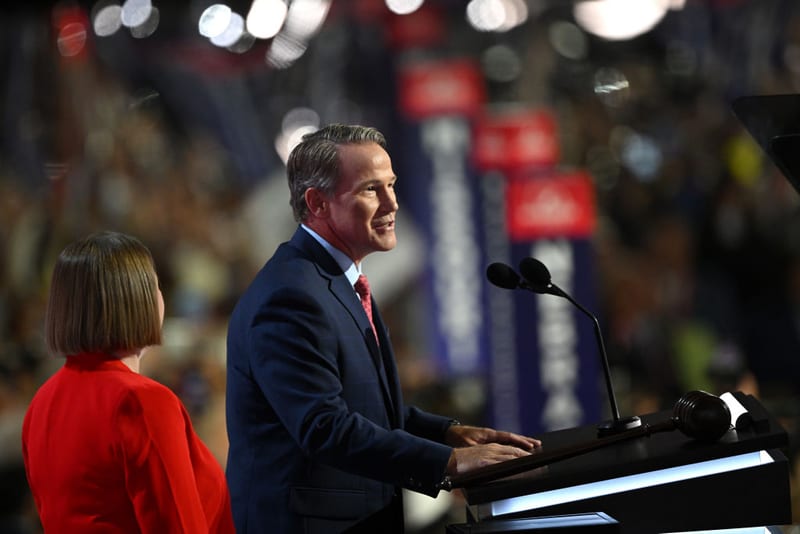
The race is unfolding amid voter concerns about affordability, tariffs and the war in Iran.
Republicans have spent heavily on advertising promoting Trump's tax legislation, including provisions that reduce taxes on tips and overtime pay.
Republicans reportedly spent $19 million on advertising in competitive Ohio races through October 12, the largest amount devoted to the issue in any state with competitive contests.
However, voters have indicated that the tax provisions have not offset their broader concerns about the economy and the administration's policies.
Husted has defended the legislation, saying it has helped workers keep more of their earnings.
Brown, who lost his seat in 2024, is seeking to turn concerns about prices and the country's direction into support for his return to the Senate.
Fox News (Beacon/Shaw) poll | 10/15-10/19 LV Ohio statewide races 2026 (LV) US Senate 🟦Sherrod Brown 52% 🟥Jon Husted 47% (incumbent) — (RV) 🟦Sherrod Brown +7 (53-46) —— (LV) Ohio Governor 🟦Amy Acton 50% 🟥Vivek Ramaswamy 48% — (RV) 🟦Amy Acton +4 (51-47) Link to poll: https://t.co/nK7HcHVtCB
— Politics & Poll Tracker 📡 (@PollTracker2024) October 21, 2026
Ohio is particularly important because Republicans regained a majority in the state's congressional delegation in 2024 after a long period in which Democrats held the advantage.
A Brown victory would reverse that Republican gain and leave the party with less room to lose seats elsewhere.
Susan Collins faces a tough Maine Senate race
In Maine, Republican Senator Susan Collins is defending her seat against Democrat Troy Jackson, a former state Senate president and logger.
A Suffolk University poll from October 14 showed Jackson leading Collins 49% to 47%, underscoring the vulnerability of an incumbent who has repeatedly won support from voters willing to split their tickets between parties.
Lewiston, Maine's second-largest city, offers a glimpse into that shift. In 2020, Collins won the city even as Trump lost it by 14 percentage points.
This year, some former Collins supporters are backing Jackson, citing dissatisfaction with the senator's relationship with the president and concerns about household costs.
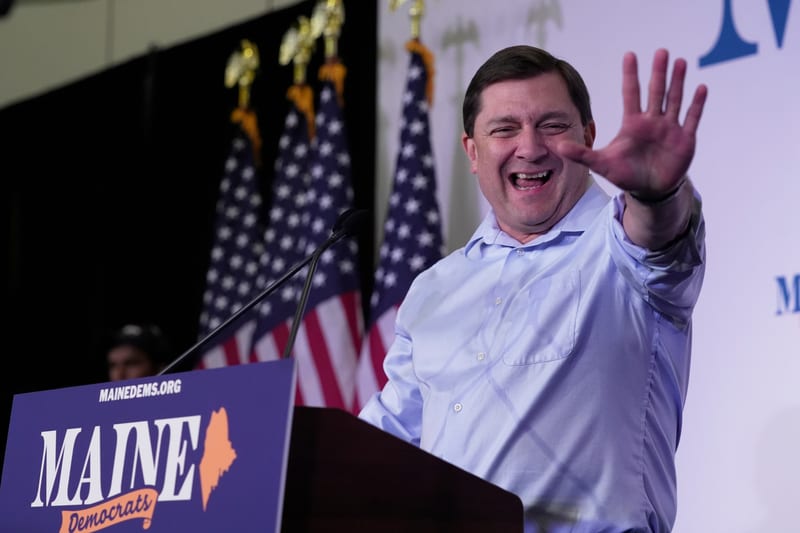
In her campaign, Collins is emphasizing her seniority and influence as chairwoman of the powerful Senate Appropriations Committee, pointing to federal funding she has secured for housing and other projects across Maine.
Jackson, meanwhile, is campaigning on his working-class background and his support for labor.
His response to the 2023 mass shooting in Lewiston and his opposition to the Trump administration’s immigration enforcement operations have also featured in his appeal to local voters.
Susan Collins crashed by 6 points on Polymarket in the last 24 hours. Maine Polls are much closer with FiftyPlusOne at +2.2 D 🔵Jackson 49.2% 🔴Collins 47.0% With 2 weeks to election day this is great news for Troy Jackson.
— Donk Media ♻️™ (@donkoclock) October 20, 2026
The contest highlights a central question for Republicans: whether incumbents can retain voters who previously supported them despite opposing Trump, or whether dissatisfaction with the administration will carry over into Senate voting.
Alaska Senate race faces ranked-choice voting challenge
Alaska's Senate contest pits Republican incumbent Dan Sullivan against former Democratic Rep Mary Peltola in a state where the voting system itself has become part of the campaign.
Under Alaska's ranked-choice voting system, voters can rank candidates in order of preference, with subsequent choices counted if no candidate wins a majority of first-choice votes.

Republicans are concerned that another candidate, retired teacher Dan J Sullivan Jr, could draw votes away from the incumbent because their names are similar.
The candidates are distinguished on the ballot by their middle initials and party affiliations. Republican operatives fear some voters could confuse the two candidates or fail to rank the incumbent as a backup choice.
I’ve spent my life fighting for all Alaska communities – including Alaska Native communities like the one I grew up in – because rural Alaska deserves a fighter who understands our way of life, will take on skyrocketing costs, and will fight to save our fisheries. https://t.co/yZBUbOjII5
— Mary Peltola (@MaryPeltola) October 22, 2026
“Even if he gets a percent or 2% or 3% percent with the phony ranked choice stuff, you never know what they’re going to do with it,” Trump said at a rally in Wasilla, referring to the same-name challenger.
The president added that the votes “could be the difference.” Recent polling has also shown Peltola ahead of both candidates.
🚨 JUST IN: Donald Trump is EXPOSING the Ranked Choice Voting fraud system in Alaska after Dems plant a fake "Dan Sullivan" on the ballot, taking votes from Sen. Dan Sullivan (R) END RCV, ALASKA! "So we have two Dan Sullivans on the ticket. We, of course, go to the court and the court essentially rules against us. So we have a Dan Sullivan and a Dan Sullivan and a Democrat!" "Now, do you think that's fair?!" LISA MURKOWSKI supports this VERY SYSTEM that could harm our Senate majority. Suspicious. Vote to repeal it in November!
— Eric Daugherty (@EricLDaugh) October 20, 2026
Sullivan and his allies have responded with voter education efforts, including ballot examples, door-knocking, phone outreach and a radio jingle urging supporters to rank the incumbent first.