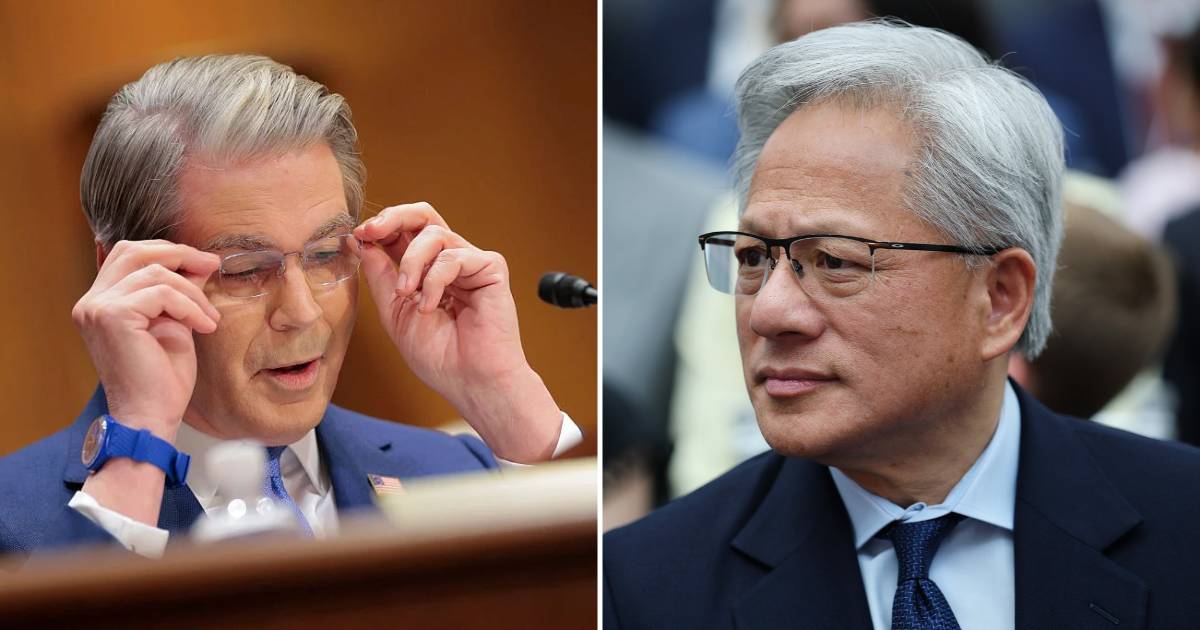
Sean Duffy dodges apology over FAA shutdown as NBC’s Kristen Welker puts him on the spot
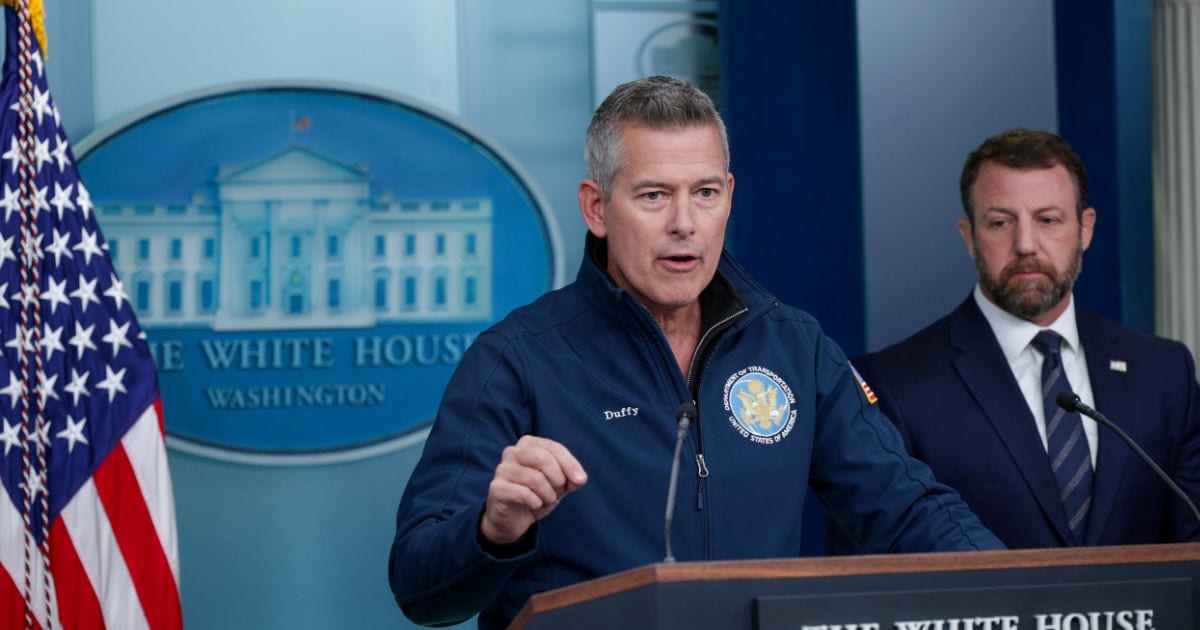
WASHINGTON,DC: Transportation Secretary Sean Duffy faced pointed questions on NBC's 'Meet the Press' on Sunday, November 15, after a nationwide aviation disruption left thousands of travelers stranded and airlines struggling to restore their schedules.
Host Kristen Welker challenged him over the government's responsibility for the breakdown, asking whether he owed the public an apology.
Duffy acknowledged that the crisis happened during his tenure but refused to accept blame for the failures behind it.
Kristen Welker: And joining me now is Transportation Secretary Sean Duffy. Secretary Duffy, welcome back to Meet the Press. Sean Duffy: Thank you. Kristen Welker: I know it's been a busy stretch. Thank you for joining us. So the question on everyone's mind, when will U.S. air travel be back to normal? Sean Duffy: So by the end of today, end of tomorrow, I think we'll be back to normal. What happens when you have a ground stop, like what happened on Friday, is we have airplanes and air crews that are out of position. It takes some time for the airlines to re-choreograph all of their crews and aircraft. We're going to start seeing things get better today, but I think back to normal tomorrow. Kristen Welker: Okay, and obviously we are about 11 days away from Thanksgiving. This is a very busy travel season, Mr. Secretary. I don't have to tell you that. Is it safe to fly right now? Sean Duffy: Of course it is. It is the safest air system in the world, bar none. But just to that point, I think it's important, we have to acknowledge, when we saw these inconsistencies on Friday with our telecom and with our radar, that concerns us. And so because we care most about American safety, we want them to go from point A to point B, safely get home to their loved ones, we issue the ground stop. And we safely were able to land over 3,500 planes. But that is our mission, and when we see issues, we take sometimes pretty remarkable measures to keep you safe. So it is safe, it's going to remain safe, but let's not lie to each other. We have to make investments into a network that has been neglected for decades. We need to put money into it to make sure it's still resilient for the future. Kristen Welker: And we're going to get to that discussion in just a moment, but first let me just ask you what exactly caused this ground stop? What triggered it? Sean Duffy: Yeah, so we were doing work in a remote location in El Dorado, Arkansas. It's a remote radio facility. There was an old fiber line that was going to be decommissioned by our telecom provider. We were moving over to fiber, and what we saw when we turned this facility on was that the router we used was flooding the rest of our network with data. Now, by the way, the routers in the system that was getting flooded, they were purchased in 2001, they were obsolete in 2006, and in 2026 we still used the routers that were giving us these issues in our network. Once we were able to isolate that it was coming from El Dorado, we removed that system from the network, and everything came back online, and we were able to open up the airspace. Kristen Welker: Can you guarantee that what happened on Friday won't happen again, Mr. Secretary? Sean Duffy: Well, first we have to figure out what happened. Was this a faulty installation by L3Harris that was doing the work for us? Was it a fault of the router itself? We have to do that investigation and make sure we take precautions. We don't want to shut down the airspace. You look at the gridlock that happened and how people are trying to find rooms on a Friday night, and are they renting cars or taking Amtrak, great disruption to the American people. We don't want that to happen, so we're going to figure out what was the root cause and then move forward from there fixing how we do business at the FAA. Kristen Welker: Are you planning to cut ties with the firm that you say is behind this disruption? Sean Duffy: I'm sorry, ask that question again. Kristen Welker: Are you going to cut ties with the contractor, L3Harris, which is behind this work that caused the disruption? Sean Duffy: I can't, and the reason is that L3Harris decades ago got the contract to run and own the network that operates communication for the FAA. They own the network, which is why I'm asking for billions of dollars from Congress to build a brand-new architecture of a network by the best companies in the world, including AT&T, Verizon, and Lumen. I have the architecture ready. These companies are ready to deploy tomorrow. All I need is the money to tell them to start, and we can build this within the next couple of years. So I want to get away from L3Harris and get to a new one, but they own the network. So I can't cancel the network that they own and I operate on. Kristen Welker: And very quickly, can you categorically say this was not a cyberattack or a hack or a malicious activity of any kind? Sean Duffy: So President Trump had a whole-of-government approach. He brought on NSA, DNI, FBI. Everybody was on a phone call together, and we asked, are we seeing chatter? Are we seeing footprints of foreign actors invading our network? We have great teams in the federal government. No one has seen that or indications that this was a foreign actor or an attack on our network. So as we looked at what happened, we think it was the install or the router, so we don't have an indication that this was an attack. We think it was a network issue. But listen, we're going to continue to work with the FBI. If that information changes, we'll provide that to you and the rest of the country. Kristen Welker: You are asking for more funding. If this has been such a pressing issue, why haven't we seen sufficient action from this Congress, this Republican-led Congress, which has been in control for the past two years? Sean Duffy: Well, I think we have to be honest. The President, since he came to office, has been pushing for modernization of the airspace. Before I was even sworn in, he brought this up. The President was able to get $12.5 billion in one big, beautiful bill, a historic investment in aviation, by the way. But the Congress was very specific in how I spend that money. I have a certain allotment for radar, a certain allotment for radios, a certain allotment for building new infrastructure for my centers for air traffic controllers. They didn't give me money for telecom. They didn't give me money for new software. So a historic investment by President Trump, but it wasn't the full investment, which is why I'm coming back to Congress and the American people to explain all the great work we're doing right now. We're going to spend that $12.5 billion by the end of 2028. But I need the rest of the money for software and a new telecom architecture that will be way more resilient. I need that money so I can start that build so this all can be done by the end of 2028, start of 2029, and the American people have the most amazing state-of-the-art air traffic control system, best in class, best in the world. But I can't do that without money. Kristen Welker: The FAA administrator apologized to the American people during the news conference that you all held yesterday. You are, of course, the transportation secretary. Do you feel you also owe an apology to the American people? This happened on your watch. Sean Duffy: Listen, it happened on my watch, but we have to be clear. I am moving at an incredible speed that no one has done at the FAA or the DOT in decades, and I'm proud of the work we're doing, the attention we're bringing to this issue. But I can't apologize for what was passed off to us. And I can't blame Republicans or Democrats because it's all of them. It goes back 25, 30 years of a lack of investment, a lack of, you know, waving the flag to say, "Hey, this is a problem. Let's fix it." Why they didn't do that, I don't know. But they gave me a system that needs to be fixed, and President Trump and I are going to fix it. I'm well on my way, but I need more money to do it. I don't want to see these disruptions happen. I want to make sure people are safe. I'm going to level with the American people, and that's what I'm doing here on your show today. But I don't apologize for shutting down the airspace and keeping people safe. If there's risks, those are the actions I'm going to take. Because then the follow-up question is, is the airspace safe? And what I did on Friday with this ground stop tells you how seriously I take this issue. There's a small club of people who have family members who have died in aviation. I don't want that club to grow, and I'll do everything I can pushing a bipartisan bill to give me more money, make sure we close the airspace, we do a ground stop. I'm doing all I can to keep people safe, but I'm also telling you, if you don't give us the resources, we can't complete the job. And this is, of all the partisanship, this is the most bipartisan thing in all of Washington. Democrats, Republicans, the President, everyone agrees on this. Let's just do it. Do it for the American people. Kristen Welker: Well, we are going to continue to track it very closely. Thank you so much. Secretary Sean Duffy, we really appreciate your time this morning. Thank you. SOURCE: NBC News
— corgo (@wordsdematthew) November 15, 2026
Sean Duffy refuses to apologize
Welker brought up the apology issued by Federal Aviation Administration Administrator Bryan Bedford during a news conference the previous day and asked Duffy whether he, as transportation secretary, also owed one to the American public.
“Listen, it happened on my watch, but we have to be clear,” Duffy replied, before pointing to what he described as decades of neglect of the country's air traffic infrastructure.
He said the problems predated his tenure and argued that successive administrations had failed to address the ageing systems.
“I can't apologize for what was passed off to us,” he told Welker.
He also rejected the idea of assigning responsibility to either political party, saying the lack of investment stretched back 25 to 30 years.
Duffy maintained that ordering the nationwide ground stop was the right decision because officials had detected problems affecting the communications and radar systems used by air traffic controllers.
“I don't apologize for shutting down the airspace and keeping people safe,” he said. “If there's risks, those are the actions I'm going to take.”
Welker also asked whether Americans could be assured that a similar breakdown would not happen again.
Duffy declined to make that guarantee before investigators establish what went wrong.
Asked whether he would terminate the company's contract, Duffy said that was not immediately possible because L3Harris owns and operates the network on which the FAA depends.
He said he wanted to move away from that arrangement but would need funding to build a replacement system with other telecommunications companies.
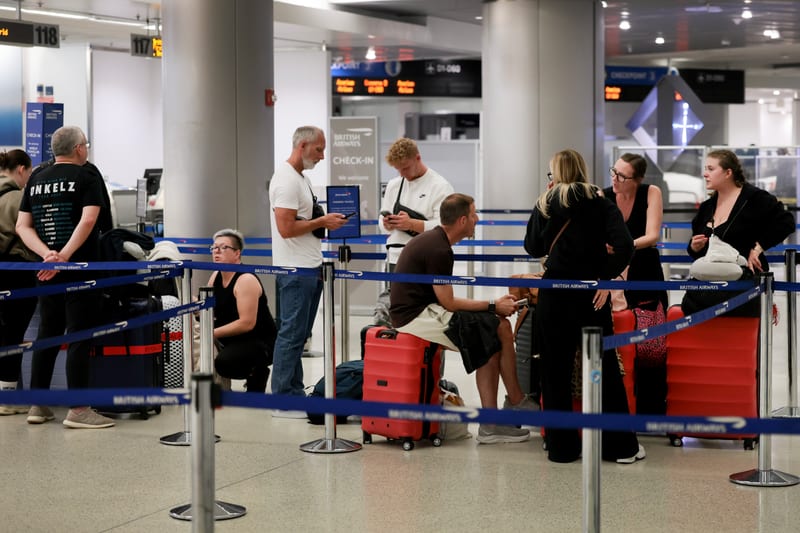
FAA ground stop disrupts travel
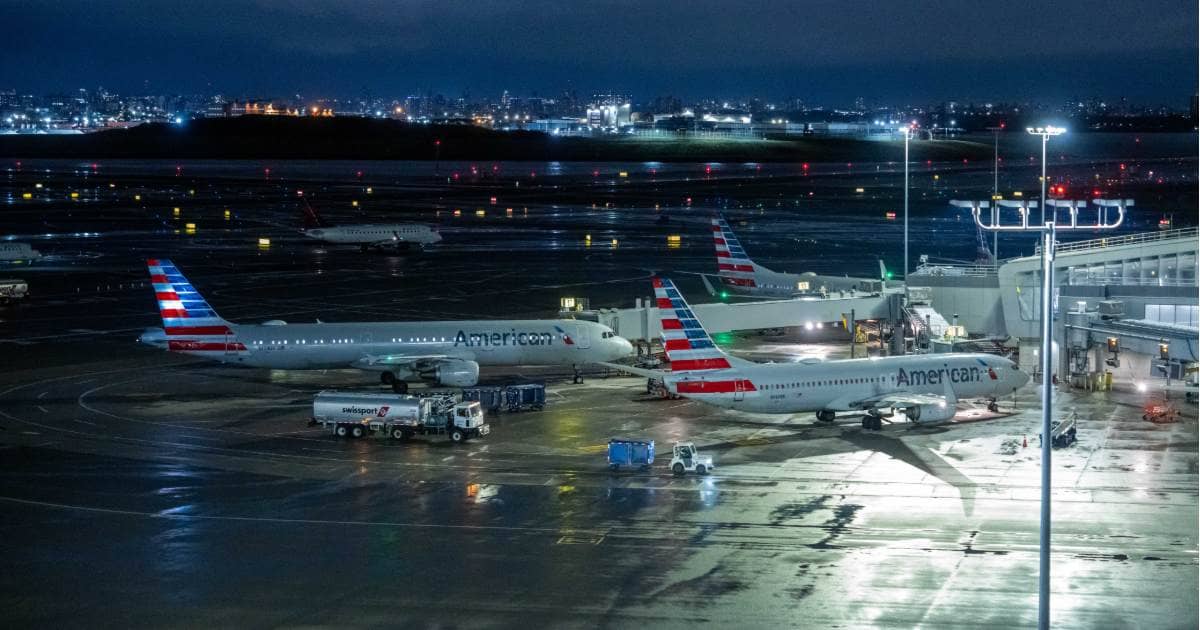
The remarks followed Friday's nationwide FAA ground stop, which halted departures across the United States for more than four hours.
The agency took the step after technical problems affected telecommunications equipment supporting communications and radar feeds used by air traffic control.
The airspace reopened at approximately 8:15 p.m. Eastern time, but the disruption left aircraft and crews out of position, complicating airline schedules well after departures resumed.
The secretary also addressed concerns about a possible cyberattack.
He said the officials had found no indication of such an attack, although the investigation was continuing.
By Sunday, flights had resumed nationwide, but the knock-on effects were still being felt.
Airlines were dealing with cancellations and delays as they repositioned aircraft and crews.
Duffy predicted that operations would improve through Sunday and return largely to normal by Monday.
The Transportation Department also warned travelers to expect some lingering disruption.