Supreme Court backs New Hampshire’s student ID voting ban less than two weeks before election
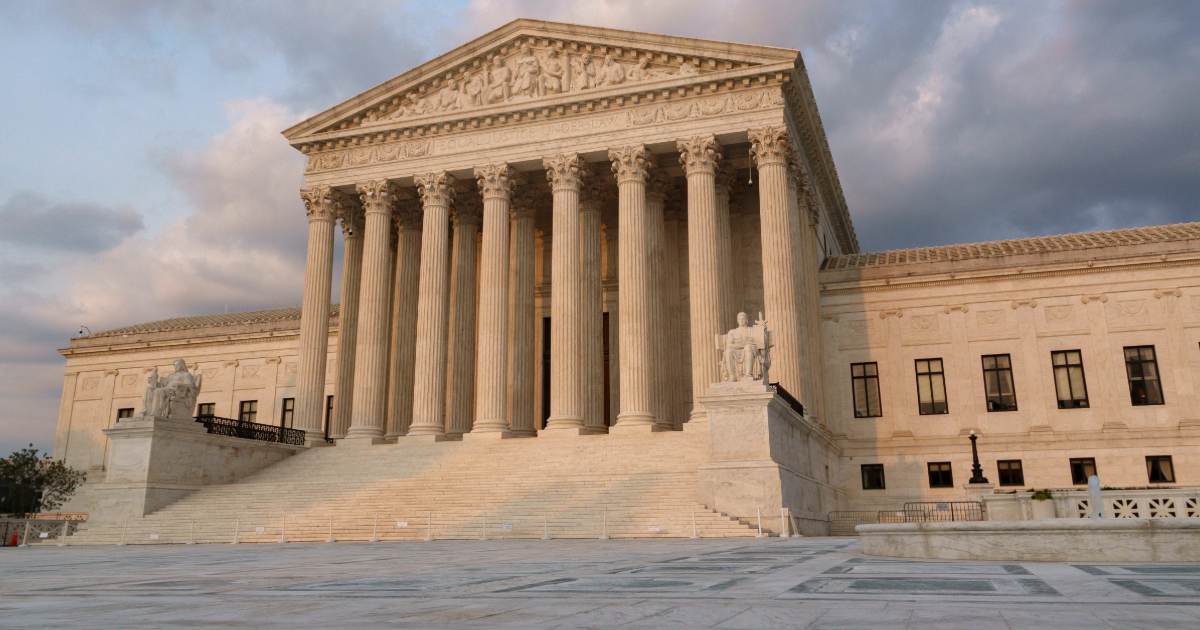
WASHINGTON, DC: The US Supreme Court on Thursday, October 22, cleared the way for New Hampshire to prohibit student IDs from being used as backup proof of voter identity in the November midterm elections, granting an emergency appeal backed by Republicans.
The unsigned ruling blocked a lower court order that had allowed election officials to consider student IDs under a provision for voters unable to provide other acceptable photographic identification. The decision comes less than two weeks before New Hampshire voters head to the polls for a closely contested US Senate race.
Supreme Court cites election rule against last-minute court changes
The justices relied on the “Purcell principle,” which holds that federal courts should generally avoid changing election rules close to an election. The court quoted a previous ruling stating that it “has repeatedly emphasized that lower federal courts should ordinarily not alter the election rules on the eve of an election.”
The majority said that the lower court “did not point to anything that would justify deviating” from that principle. The ruling also followed an emergency appeal by New Hampshire officials, supported by the Republican National Committee, after a federal judge blocked part of the state’s implementation guidance.
BREAKING: The Supreme Court allowed New Hampshire to continue enforcing voter ID guidance excluding student IDs as evidence of identity, citing Purcell to stay a contrary lower court ruling. Justice Jackson dissented. https://t.co/8UoAekug6I
— SCOTUS Wire (@scotus_wire) October 22, 2026
New Hampshire enacted a law this year removing student IDs as an expressly accepted form of identification for obtaining a ballot. Republican Governor Kelly Ayotte signed the legislation, while Secretary of State David Scanlan issued guidance preventing election officials from considering student IDs as backup evidence of identity.
The Coalition for Open Democracy, a New Hampshire-based nonprofit, however, challenged that law, arguing that it imposed unnecessary burdens on young voters while addressing what the group described as a “non-existent problem” of nonresident voter fraud.
In early October, US District Judge Joseph Laplante declined to block the law itself but ruled that Scanlan’s guidance went further than the legislation allowed. Laplante prohibited enforcement of the directive insofar as it “prohibits or discourages election officials from considering student IDs as evidence of voter identity” under the state’s safety-valve provision.
🪪 HEADS UP NEW HAMPSHIRE: Can you use your student ID to vote in the midterms? Mostly no. A federal judge refused to block the state’s student ID ban for November. But if you have no other way to prove your identity, election officials can still consider your student ID as evidence: https://t.co/dzWQcdTOmD
— Democracy Docket (@DemocracyDocket) October 6, 2026
Laplante also directed the secretary of state to issue revised guidance for the midterms. State officials subsequently appealed to the Supreme Court, arguing that the lower court’s intervention risked creating confusion shortly before voting.
Justice Ketanji Brown Jackson dissents, argues lower court sought to prevent confusion
Justice Ketanji Brown Jackson was the only justice to publicly dissent from Thursday’s decision. Jackson questioned whether the "Purcell principle" was applied because the lower court had left the state’s voting law intact and sought to address how election officials communicated the rules to voters.
“It seems to me that a case involving a court order like the one at issue here, which left the state election rule untouched, does not necessarily fall within the ambit of Purcell and its concern about federal courts 'changing the election rules' at the last minute,” Jackson wrote.

She also argued that the lower court’s intervention could help voters understand the rules rather than create uncertainty. “When a federal court determines that material misrepresentations are being made about a State’s election rules, an injunction to prohibit that conduct does not contribute to public confusion, it prevents that very problem,” she wrote.