Trump has days to avoid Carter's Iran trap, the Reagan playbook that could save him
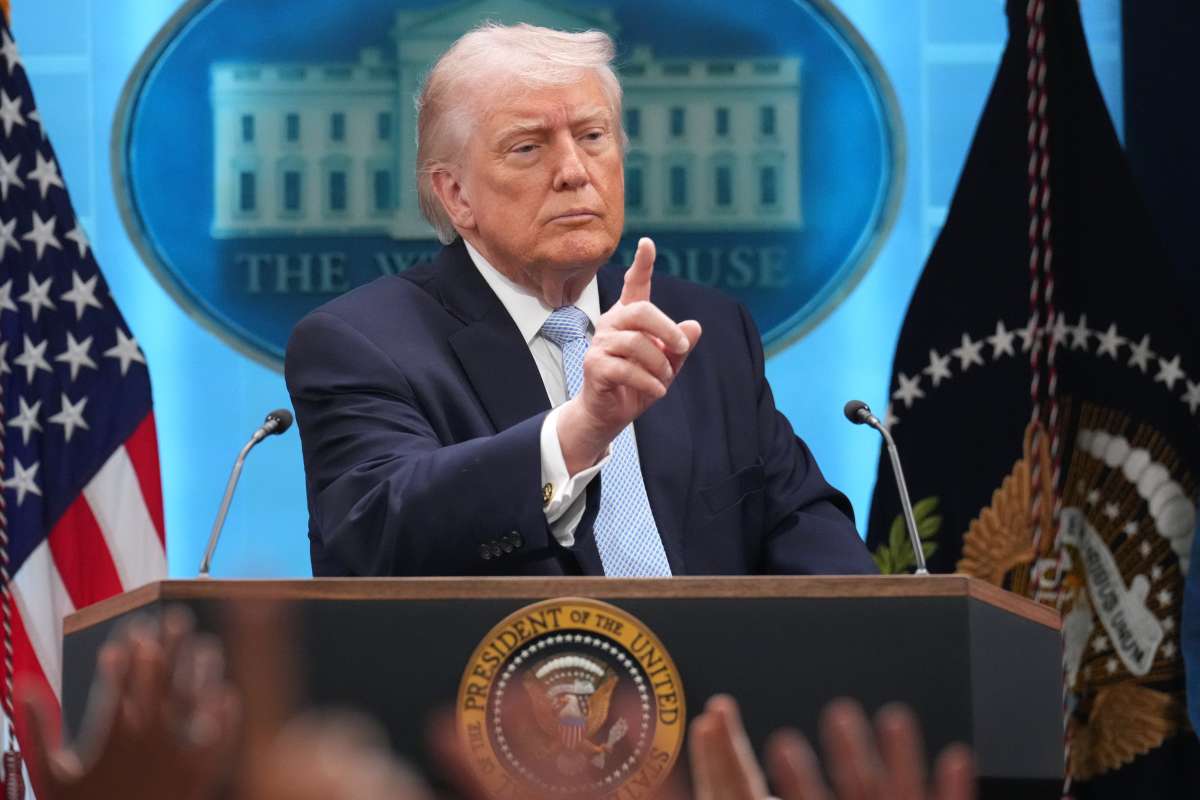
WASHINGTON, DC: With the war dragging on, Donald Trump is running out of time as his Iran safe-passage agreement nears its expiry date of August 17. Amid the desperation, Tehran has made things harder for the president by issuing a series of explosive new demands over the Strait of Hormuz, refusing to reopen the key oil chokepoint until the United States “corrects its behavior”.
The long list of demands, which are largely what Trump had already agreed to do in the memorandum of understanding that was signed on June 17, includes an end to US threats, the withdrawal of American forces from the region and a halt to what Tehran describes as wars involving Iran and its regional allies.
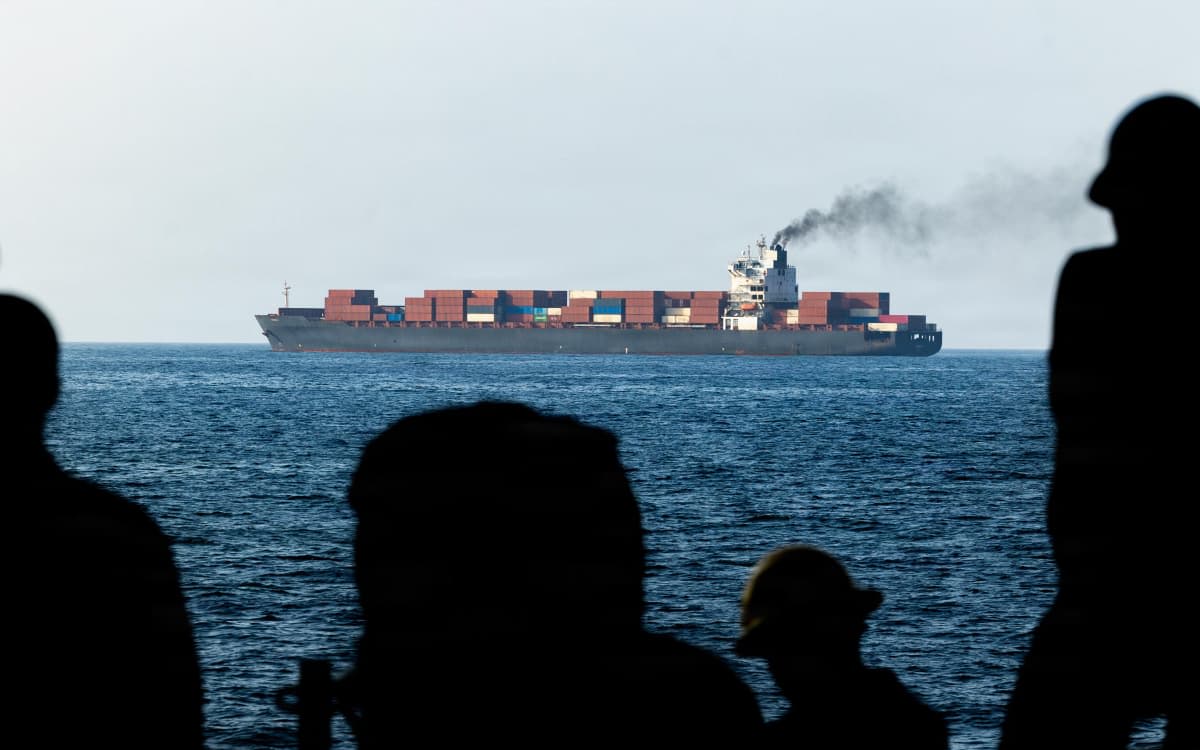
The pressure isn’t only diplomatic, as commercial shipping continues to remain under attack in and around the strait, with the UAE alleging that Iran had targeted a tanker belonging to the state-owned Abu Dhabi National Oil Company (ADNOC) while it was transiting the waterway.
Warning for Trump from Carter’s Iran crisis
As Trump continues to mull over whether to move toward a deal or escalate things with another round of strikes, history has a warning for him.
Nearly five decades ago, Jimmy Carter faced a similar Iran crisis in November 1979 when militants seized the US Embassy in Tehran and held more than 50 Americans hostage.
The then-president tried everything, talking, waiting, freezing Iranian money, but nothing worked. Eventually, Carter decided to use his military power and authorized Operation Eagle Claw, a risky attempt to rescue the hostages.
However, the rescue mission turned out to be another setback for his presidency as it failed in the desert before it even reached Tehran, and resulted in the death of another eight US servicemen.
The hostages remained captive for 444 days, turning the crisis into a major blow for Carter’s presidency. As the standoff dragged on, he faced growing criticism for failing to resolve it, which hurt his chances of winning re-election in 1980.
Lessons for Trump from Reagan's playbook
While Carter’s handling of the Iran crisis offers Trump a lesson in what to avoid, an approach used by another US president provides him with a potential playbook for navigating the crisis unfolding today.
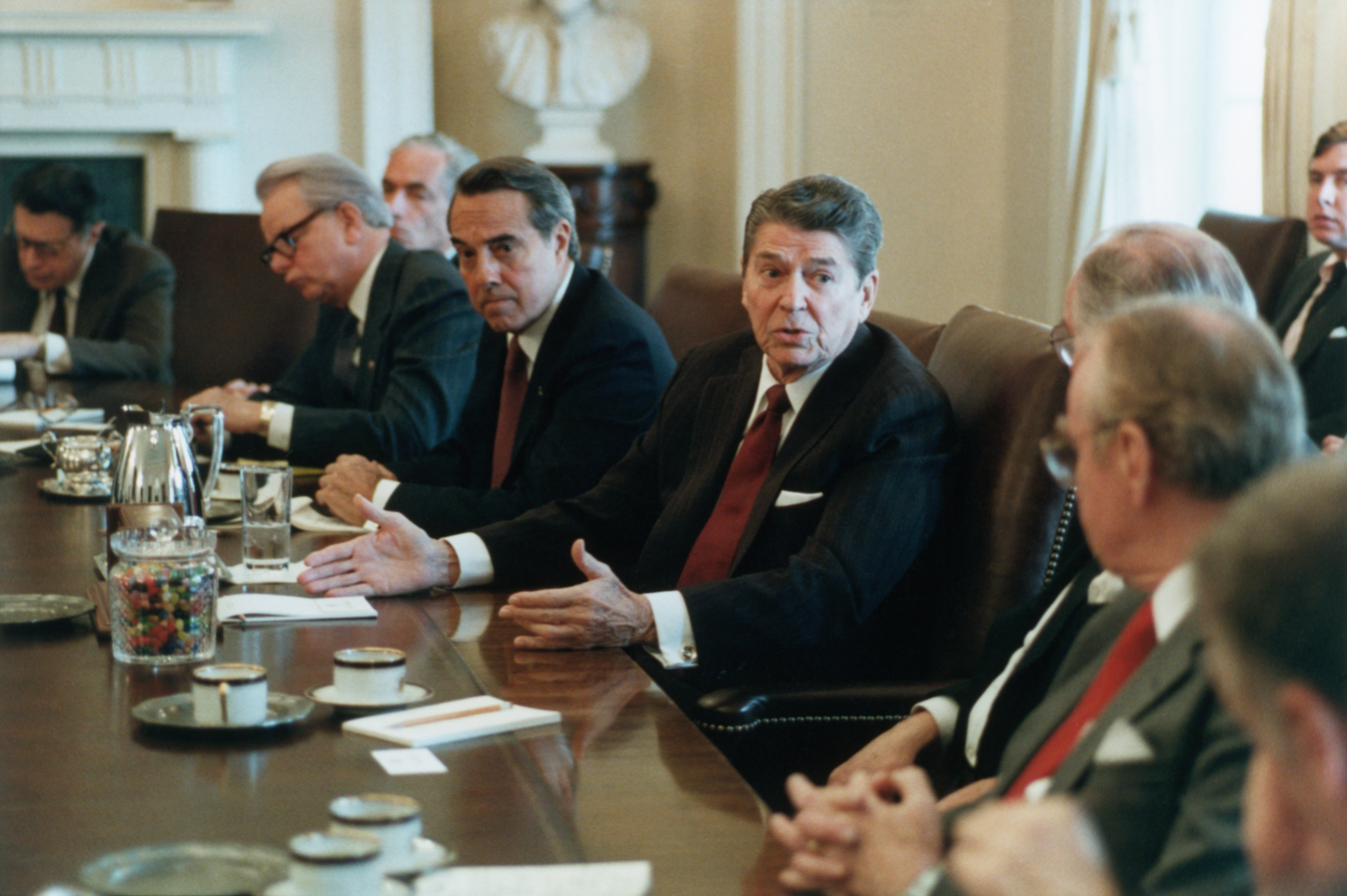
A GOP veteran, Ronald Reagan, faced his own Persian Gulf crisis in the 1980s, when Iran and Iraq engaged in a conflict and started attacking commercial ships and oil tankers.
By 1987, the attacks, a campaign known as the Tanker War, had become severe enough to threaten international shipping. At that time, instead of launching a full-fledged war against Iran, Reagan’s administration built a system around three basic goals: protect shipping, deter further attacks, and keep diplomatic pressure on Tehran.
His administration protected commercial shipping by reflagging Kuwaiti tankers as American vessels and preparing US Navy escorts for them. According to the Reagan Library, the US-led intervention eventually helped contain Iranian attacks on shipping and preserve freedom of movement in the Gulf, a crisis Trump continues to tackle with Tehran choking the Strait of Hormuz.

While the then-administration focused more on protecting shipping, it couldn’t completely avoid using military force. In October 1987, after Iranian attacks on US and other shipping, Reagan ordered forces to strike an Iranian military platform that Washington said had been used to support attacks and mine-laying operations.
The lesson of maintaining balance could be crucial for Trump. He can keep enough military power in the Gulf to deter further attacks without falling into a trap where every move taken by Iran leads up to a bigger response from the US.
As the conflict continued, Reagan opted for a cocktail of military force and diplomacy, where he pushed for a negotiated end to the Iran-Iraq War and backed the implementation of UN Security Council Resolution 598.
In the case of diplomacy, Trump still has leverage despite the MoU falling through, with Iran and Oman continuing to communicate and leaving the door open for negotiations.
Iran and Oman are currently working on a possible arrangement for shipping through Hormuz, while Oman has also served as an intermediary between Tehran and Washington. Direct US-Iran negotiations remain difficult, but the indirect channel gives both sides a way to communicate.
Warning for Trump from Reagan’s playbook
Reagan’s playbook comes with a built-in warning for Trump. The 40th president’s approach remained effective until it was public; it turned into a major disaster the moment it turned secret.
Some of Reagan’s officials secretly sold weapons to Iran and diverted part of the proceeds to support Contra fighters in Nicaragua, a scandal called Iran-Contra that nearly wrecked his presidency.
After the scandal, the Tower Commission was set up to review how the National Security Council had managed sensitive foreign policy, military and intelligence operations.
Reagan later acknowledged the need for changes, bringing in new senior officials and promising to make sure he was fully briefed on such operations.
The entire fiasco gives Trump another lesson from Reagan’s playbook: keep the strategy firmly under control.
With the self-passage deal ending in just one week, Trump has roughly a week to secure a lasting deal, push harder through Oman’s back channel, or risk seeing tanker attacks increase and the Strait of Hormuz shut down again.