Woman hours from execution says she and Lindsay Clancy got into trouble over 'female issues'

NASHVILLE, TENNESSEE: Tennessee is hours away from executing Christa Pike, marking the state’s first execution of a female inmate in more than two centuries.
Pike, 50, faces death by lethal injection on Wednesday, September 30, as state officials process applications for execution witnesses.
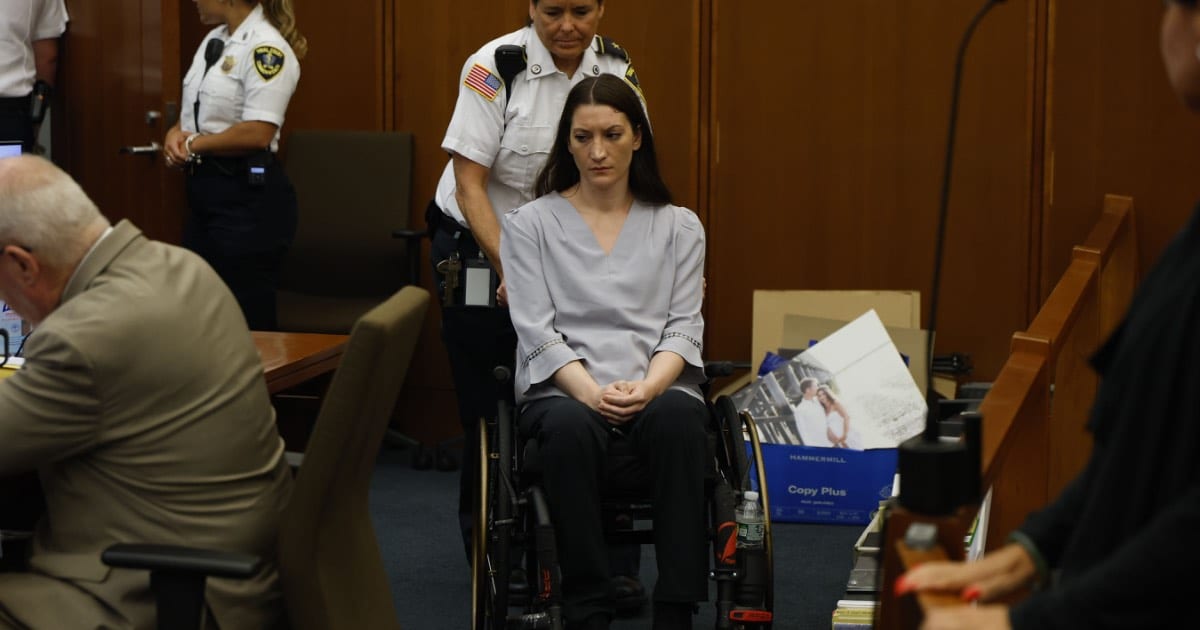
Yet, amid final preparations, Pike’s focus has shifted to the national headlines surrounding Lindsay Clancy, whose Massachusetts trial involving a postpartum psychosis defense recently ended without a verdict.
Communicating through legal counsel, the death-row inmate highlighted parallels between both cases, focusing heavily on how gender-specific mental health struggles impact the justice system.
Christa Pike update-
— Rose (@901Lulu) September 29, 2026
Tennessee Gov. Bill Lee has denied Christa Pike’s request for clemency.
She is scheduled to be executed by lethal injection at 10am CDT on Wednesday, Riverbend Maximum Security Institution in Nashville.
Her attorneys have asked the U.S. Supreme Court to…
Christa Pike 'feels' for Lindsay Clancy
“I feel a kinship with Lindsay,” Christa Pike told The Times of London in an interview published Tuesday, September 29.
The comparison, she said, comes from the circumstances surrounding both cases and the way society has understood women's mental health and trauma.
“We are both females who got into trouble because of uniquely female issues,” Pike stated to The Times.
Pike said she was relieved that Clancy's case did not end with a conviction and believes changing scientific understanding could affect how a similar case is viewed today.
She pointed specifically to research surrounding brain development and the way women’s mental-health struggles are understood.
“One thing is different, however, is that times have changed a lot on awareness of women’s issues since I was put on trial,” Pike added.
“There are so many women who don’t get the help they need: me and others,” she added during the interview.

Pike also suggested that she believes the circumstances surrounding her own case would receive greater consideration if it were being tried today.
Pike has spent more than 30 years on death row.
As the scheduled execution approaches, she has indicated that the prospect of dying itself is not what troubles her most.
Before learning that Governor Lee would not intervene, Pike wrote in a letter shared with NBC News through her spiritual adviser: “I am not afraid to die. I’m only nervous about the process.”
She also wrote: “Whether my clemency is granted or not, I am at peace.”

Christa Pike's horrific crime
At 18 years old, Christa Pike participated in the 1995 killing of 19-year-old Colleen Slemmer in Knoxville.
Prosecutors established that Pike coaxed Slemmer who was also enrolled in their Job Corps training programme to a deserted steam plant located close to the University of Tennessee.
There, Slemmer was assaulted and fatally beaten. The sheer viciousness of the assault quickly came to define the public perception of the entire trial.
Pike has consistently acknowledged her guilt throughout the process.
Instead of proclaiming innocence, her subsequent legal battles have centered almost entirely on the personal history that the jury was never permitted to hear.
Her legal team asserts that profound childhood trauma triggered severe psychological disorders, which were largely ignored or inadequately explained during her initial trial.

Reflecting on her actions, Pike characterized herself as a deeply disturbed adolescent whose personal history was overlooked when she received the death penalty.
In her official petition for clemency, she stated that she was a mentally ill 18-year-old child.
She has also expressed deep remorse for the devastating impact of her actions on Slemmer's family, stating that taking the life of someone's daughter, sister, and friend leaves her sickened by her own past capacity for violence.
Tennessee Governor Bill Lee has officially refused to halt the execution, confirming that his office decided to maintain the death penalty after a comprehensive review of the file.
This gubernatorial denial leaves the United States Supreme Court as Pike's sole remaining option for an emergency intervention, even though a last-minute stay of execution seems to be highly improbable at this late juncture.