Wright expects gas prices to stay high for weeks as energy markets tighten
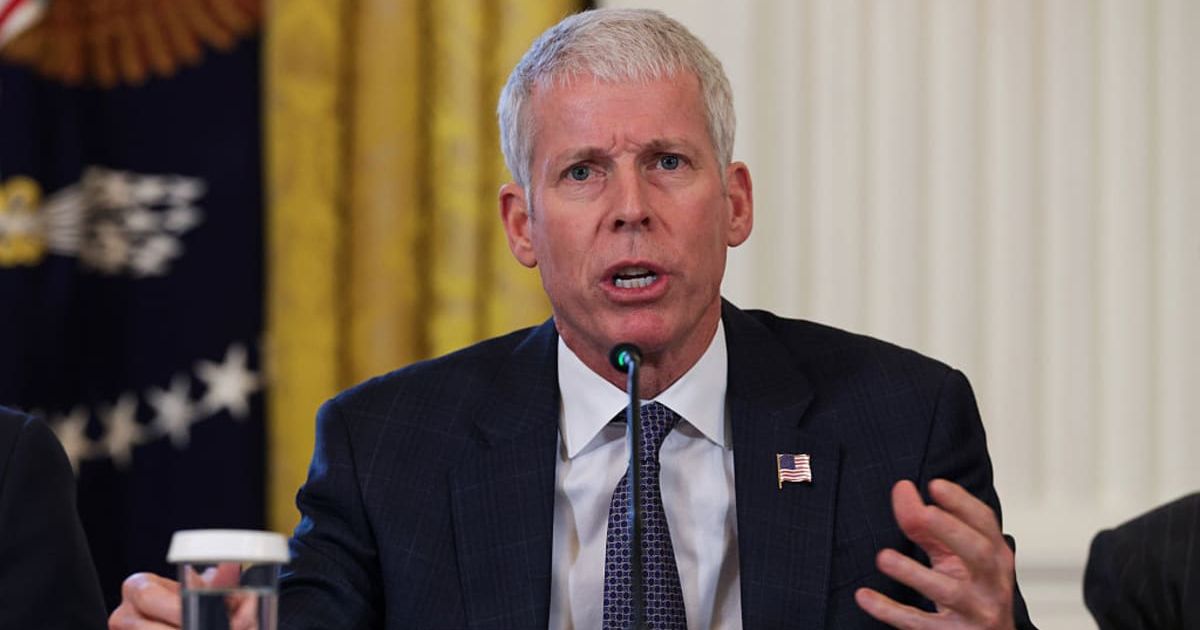
WASHINGTON, DC: Energy Secretary Chris Wright informed the public on Sunday, March 15, that the surge in gas prices sparked by the US conflict in Iran will likely persist "for a few more weeks."
Speaking with Kristen Welker on NBC News’s "Meet the Press," Wright acknowledged the immediate financial pressure on American households but framed the current volatility as a necessary phase in a broader strategic shift.
"Yes, it is a short-term disruption in the flow of energy," Wright stated, noting that while Americans are feeling the impact now, the ultimate goal is to remove the greatest existing risk to the global energy market.
He asserted that the end of the conflict would result in a world with more abundant and affordable energy, while also reducing risks to American troops and commerce in the Middle East.
National average hits $3.70
.@SecretaryWright: "We knew there would be a short-term disruption in energy flows... On the other side, we'll be in a much better place. The greatest driver of terrorism in the world, the greatest threat to global energy supplies, will be defanged." pic.twitter.com/rqfGXrpKeP
— Rapid Response 47 (@RapidResponse47) March 15, 2026
The domestic impact of the Iranian crisis is reflected in the latest data from AAA, which shows the national average for regular gas has climbed to approximately $3.70 per gallon.
This represents a significant spike from just one month ago, when the national average sat at roughly $2.98. The rapid increase follows weeks of heightened tensions and military strikes that have unsettled international oil benchmarks.
To combat these rising costs, the administration is reportedly weighing various domestic interventions. Among the options being considered is the potential loosening of specific shipping rules.
This effort is intended to ease logistical bottlenecks and encourage a decline in oil prices to drop as the US seeks to stabilize the internal market despite the ongoing regional instability.
Khamenei maintains total Strait closure

The supply crunch remains driven by the defiant stance of Iran’s new supreme leader, Mojtaba Khamenei, who reaffirmed on Thursday that the Strait of Hormuz will remain closed.
The waterway is a vital global chokepoint, facilitating the transit of nearly one-fifth of the world’s total oil supply. Its closure has effectively paralyzed a major artery of the international energy trade.
The Islamic Revolutionary Guard Corps (IRGC) has doubled down on this blockade, declaring that it will not allow "even a single liter of oil" to pass through the strait.
The Iranian military command has tied the reopening of the waterway directly to the cessation of military strikes by US and Israeli forces, creating a high-stakes stalemate in the Persian Gulf.
Waltz demands international naval participation
.@USAmbUN: I think @POTUS is calling upon the world, saying that Iran can't hold your economies hostage, & we certainly welcome and encourage their participation to help their own economies. Meanwhile, our military will continue to destroy Iran's forces to keep the straits open. pic.twitter.com/PAPge0akVj
— Rapid Response 47 (@RapidResponse47) March 15, 2026
In tandem with energy policy, the US is intensifying its diplomatic pressure to break the blockade. US Ambassador to the United Nations Mike Waltz told CNN’s "State of the Union" that President Trump is calling for an international coalition to escort commercial ships.
Waltz argued that because the entire world is affected by the closure, other nations must help protect their own economies.
"Iran can’t hold your economies hostage," Waltz stated, adding that the US encourages and even demands the participation of international allies in naval escort missions.
This push to restart the oil trade through the Strait of Hormuz is viewed as a critical component of the administration's plan to restore global energy flows and bring relief to American consumers at the pump.