Artemis II crew struggles to walk as Earth’s gravity hits after historic moon mission

SAN DIEGO, CALIFORNIA: The crew of Artemis II was caught on camera struggling to walk after splashing down from their historic lunar mission.
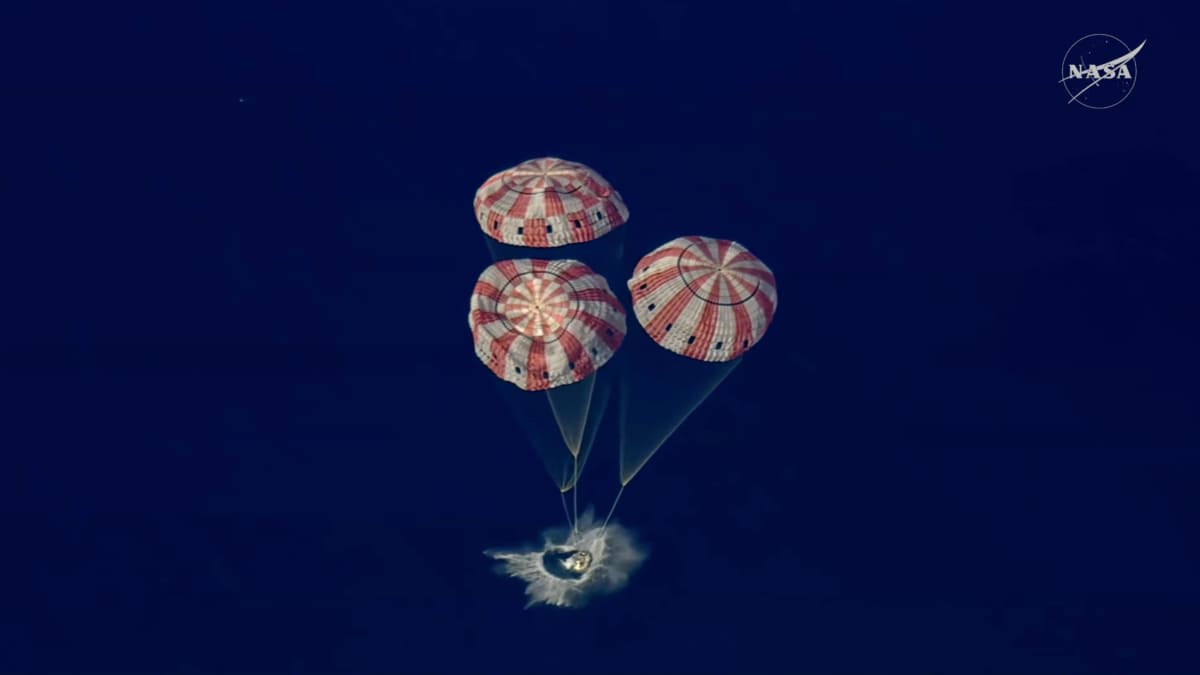
The four-person team — Reid Wiseman, Victor Glover, Christina Koch, and Canadian astronaut Jeremy Hansen — reentered Earth’s atmosphere at a speed of nearly 25,000 miles per hour before their capsule eased into the Pacific Ocean off San Diego at 8:07 p.m. ET, touching down at a comparatively gentle 19 mph.
NASA hailed the mission as a major win, saying the crew had hit a “perfect bullseye” with their landing.
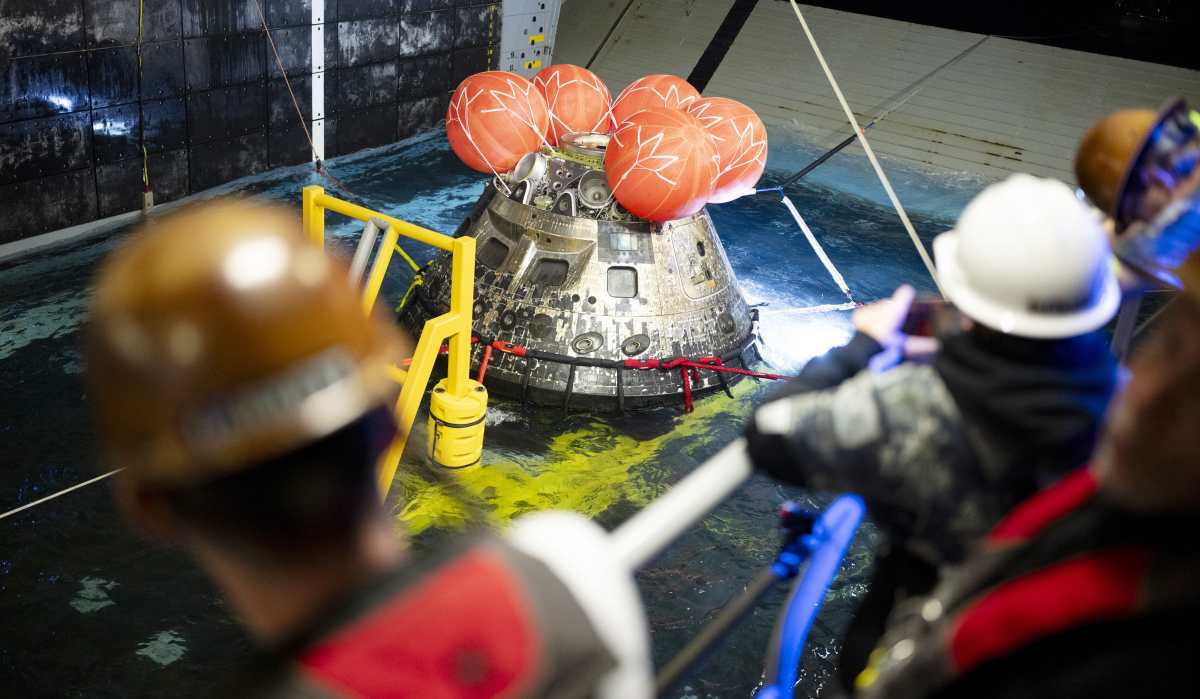
After splashdown, the astronauts were pulled from the Orion crew module and airlifted by helicopter to the USS John P. Murtha, where cheering personnel welcomed them back.
Wobbly legs after weightlessness
As the crew stepped off the helicopter and onto the ship’s deck, their legs told a different story.
All four astronauts appeared unsteady, each supported by aides on both sides. A third assistant followed closely behind with a wheelchair, ready in case anyone’s knees gave out.
The Artemis II astronauts could barely walk after a week in space! pic.twitter.com/MYJqEOLA9X
— Vince Langman (@LangmanVince) April 11, 2026
Despite the shaky start, the crew managed to complete their walk without needing to sit down. One astronaut even managed to walk unaided and wave to the crowd.
NASA later said the astronauts were in “excellent shape,” while Commander Reid Wiseman reported that all four crewmembers were “stable” and “green."
The awkward steps, however, weren’t unexpected. Spending extended time in microgravity can wreak havoc on the human body. Astronauts often return with balance issues tied to the inner ear, along with nausea, disrupted sleep, immune system changes, and even vision problems caused by fluid shifting toward the head and impacting the optic nerve.
There’s also the issue of physical deterioration. In just two weeks, muscle mass can drop by as much as 20%, while bone density declines by up to 2% per month due to the lack of gravitational strain.
Fortunately, the Artemis II crew spent only about ten days in space, meaning they’re less likely to face severe aftereffects.
Still, recovery isn’t optional. The astronauts are expected to undergo an “obstacle course” including climbing ladders and other physical tests to measure how well they readjust to Earth’s gravity and to provide data for future missions.
A record-breaking ride, plans for the future
Artemis II marked the first time humans had seen the moon up close since Apollo 17 in 1972. During the journey, the spacecraft traveled 252,756 miles from Earth, surpassing the 248,655-mile record set by Apollo 13 nearly 56 years ago.

NASA Administrator Jared Isaacman summed up the moment from aboard the Murtha. “I’m still at a loss for words," he admitted. “I mean, you know, like the childhood Jared right now, can’t believe what I just saw."
He added, “I mean, I've been waiting my whole lifetime to see this, and then as NASA administrator, I just couldn’t be more proud of the entire workforce, the years, the effort, the late nights, all that contributed to this incredible moment.”
WATCH: @NASAAdmin Jared Isaacman on Artemis II's return to Earth....
— Curtis Houck (@CurtisHouck) April 11, 2026
"I mean, I'm honestly -- I'm still at a loss for words. I mean, you know, like the childhood Jared right now. Can't believe what I just saw. I mean, almost been waiting my whole lifetime to see to see this. And… pic.twitter.com/bRdXym691h
With Artemis II now in the books, NASA will turn its attention to analyzing mission data before moving ahead with Artemis III, another planned lunar flyby.
A return to the moon’s surface is currently targeted for Artemis IV in 2028. That mission is expected to begin laying the groundwork for a permanent lunar base, which can serve as a stop for even more ambitious ventures, including future missions to Mars.