Beyond Iowa: What hazardous military waste does the US detonate and where are other lead sites?
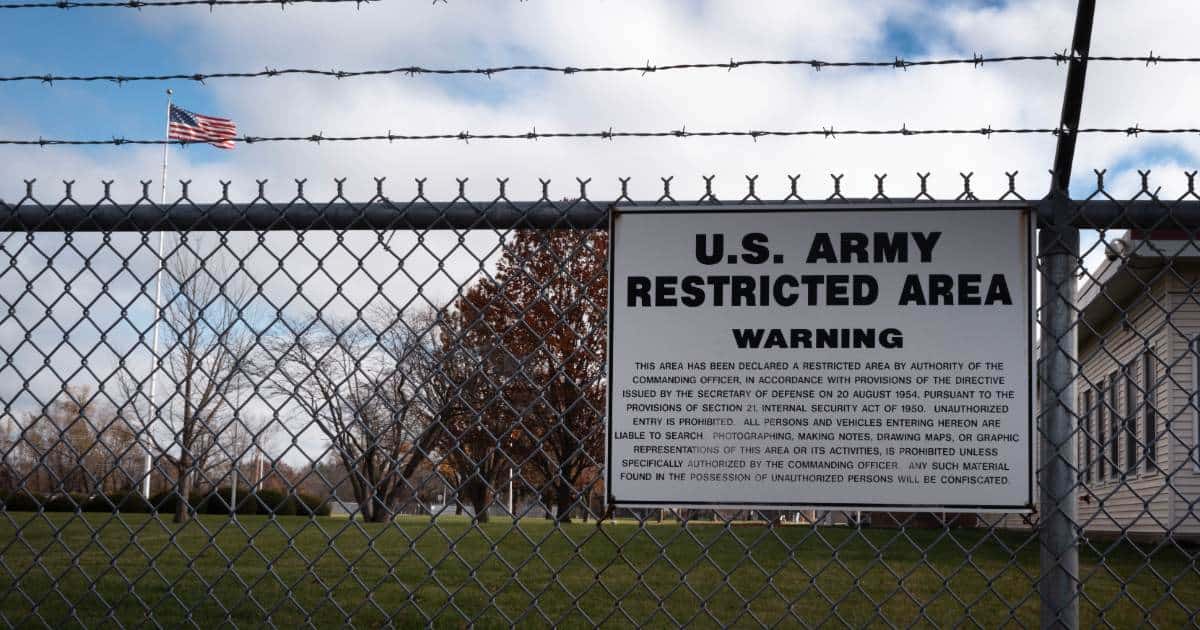
WASHINGTON, DC: The US Army’s planned detonation of nearly five tons of degraded lead azide in Iowa has once again brought the issue of how the US disposes of its aging military explosives into the spotlight.
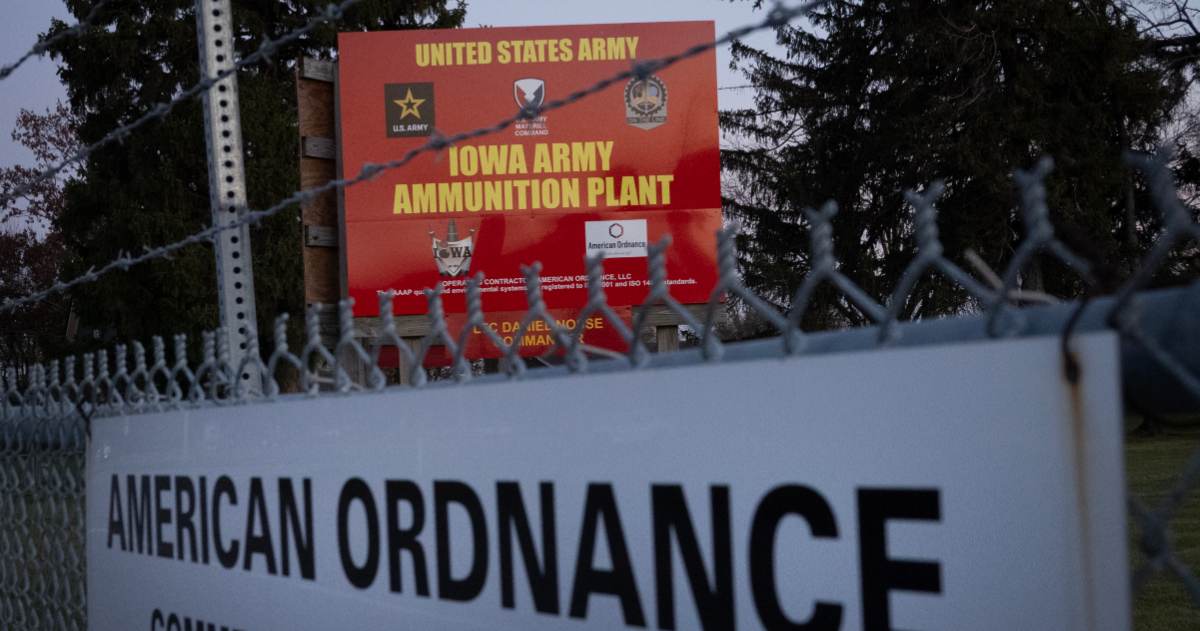
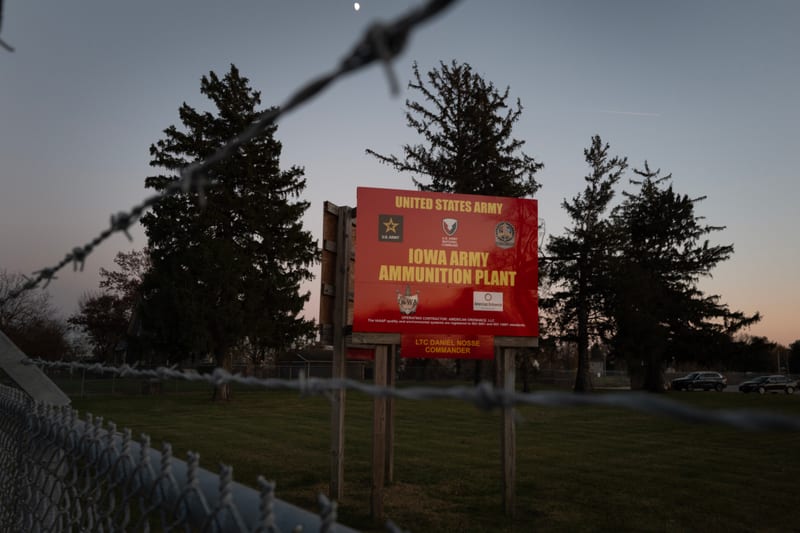
The operation, scheduled to take place on November 25 at the Iowa Army Ammunition Plant, will involve the detonation of 68 drums containing more than 9,700 lbs of the material.
The Army says the stockpile has become so sensitive that it is no longer safe to move or handle, making an explosion at the site the least hazardous option available.
But Iowa isn't the only place where hazardous explosives are being destroyed. The EPA says 65 facilities were operating under a permit or interim status for open burning or open detonation as of September 2024.
There are also facilities in the country that recycle lead from batteries and process lead-bearing materials. Those sites can be environmentally problematic, but not all of them are involved in the destruction of explosives.
UPDATE: Our EPA team has now been scaled up to 209 personnel on the ground in Middletown, Iowa, and we will be over 300 by tomorrow. We have now collected 1,216 samples ahead of tomorrow’s controlled lead azide detonation at the Iowa Army Ammunitions Plant: 650 soil samples 297 dust samples 210 water samples 59 air samples Before, during, and after detonation, EPA is fully tackling our sampling and monitoring mission on behalf of all local families and communities. To whatever extent necessary, we are just as prepared to jump on any environmental remediation work as well.
— Lee Zeldin (@epaleezeldin) November 25, 2026
Iowa Army lead azide blast raises disposal concerns
During a routine inspection in Middletown, Iowa, on March 11, 2026, the Army found that decades-old lead azide at the site had partially crystallized.
The deterioration meant the explosive was becoming increasingly sensitive to friction, shock and cold. Officials were concerned that even the slightest movement could result in an uncontrolled detonation.
The Army considered chemical neutralization, thermal treatment, relocation and continued storage before deciding on an in-place controlled detonation.
Chemical treatment would have required workers to open the drums and mix the material. Moving it or exposing it to heat could have triggered an accidental blast.
Continued storage was also considered increasingly hazardous as temperatures dropped.
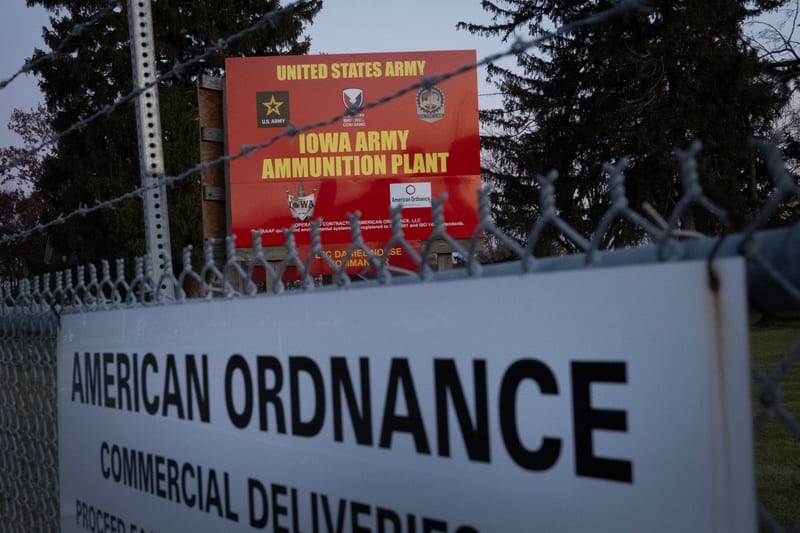
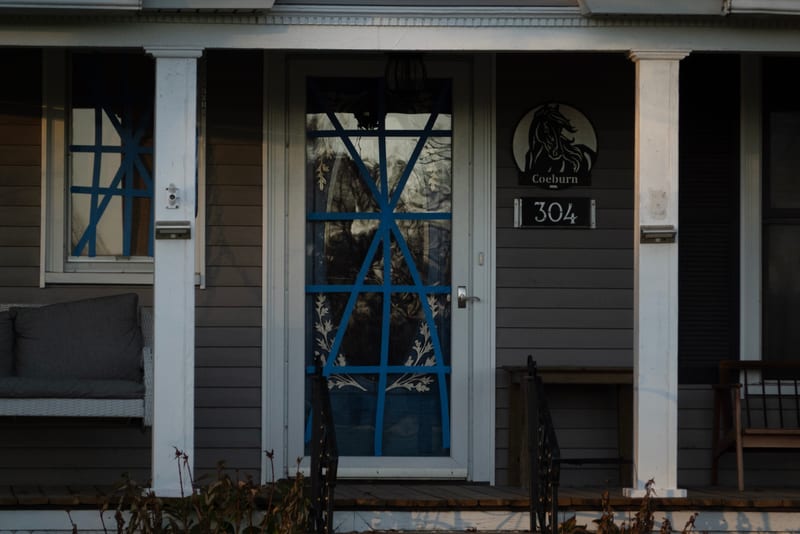
The operation is scheduled for November 25, with federal officials recommending evacuation within a five-mile radius southwest of the plant.
The Army's mitigation plan includes earth-covered magazines, sand-filled barriers, a water wall, gel blocks and foam to contain lead particles.
Soil, air and water will be sampled before and after the operation. The EPA's November 13 emergency permit also requires sampling, public notification, cleanup and reporting.
Lead azide detonation risks toxic environmental contamination
Military explosives comprise a range of chemical compounds that vary in sensitivity, use and potential environmental effects.
Lead azide is a primary explosive (ie, it is used to set off other explosives in detonators and ammunition). It is an explosive in its own right and is therefore used in small initiating devices.
The problem is that it contains lead, creating an additional environmental concern. Detonation will break down the compound, but it will not destroy the lead. Lead-containing dust can end up in soil, water and on surfaces.
TNT (trinitrotoluene) is used in military shells, bombs and grenades. The Agency for Toxic Substances and Disease Registry (ATSDR) states that it can enter the environment through manufacturing waste, the processing and destruction of munitions, and explosive recycling.
It can migrate through soil into groundwater and break down into other compounds. Exposure has been linked to blood and liver effects, while prolonged skin contact can cause irritation.
RDX and HMX are powerful secondary explosives used in military munitions. EPA research has identified RDX as a contaminant at both active and former military installations.
It can migrate through soil into groundwater, and exposure can affect the nervous system. HMX can be released as dust or ash during waste treatment and can also migrate from soil into groundwater.
Dinitrotoluene (DNT) is used in the manufacture of explosives and some military propellants. The ATSDR has reported that it is found in soil, surface water and groundwater, particularly around manufacturing and waste sites.
Animal studies have demonstrated effects on the lungs, blood, liver and nervous system.
Nitroglycerin is another high-energy compound used in military propellants and dynamite. Residues can be left near a firing position if the propellant does not burn completely.
Research has shown that nitroglycerin and similar compounds can migrate through soil following rainfall or snowmelt.
EPA lists 65 open detonation facilities nationwide
The EPA's inventory for September 2024 lists 65 facilities with open burning or open detonation permits, or with interim status. Military bases, research sites and private explosives companies are among the facilities listed.
These include Alabama's Redstone Arsenal and Anniston Army Depot; South Carolina's Joint Base Charleston; Fort Carson in Colorado; the Dahlgren Navy facility and Radford Army Ammunition Plant in Virginia; China Lake Naval Air Weapons Station in California; and Dugway Proving Ground in Utah.
The EPA's facility table has not been updated since March 11, 2025. Some permit dates are listed as expired.
However, if an operator has applied for renewal on time, an expired permit may still have conditions, the agency says. Therefore, the list does not confirm that all sites are conducting detonations today.
The most recent publicly available figure—65—is from September 2024, not a verified total of operations in 2026.
US lead smelters recycle hazardous battery waste
A review by the US EPA in September 2025 identified 11 secondary lead smelters in the United States. These operations recycle lead reclaimed from scrap, primarily used lead-acid batteries, into lead metal or alloys.
Examples include Gopher Resource in Eagan, Minnesota, and Tampa, Florida; Quemetco in City of Industry, California, and Indianapolis, Indiana; Revere Smelting and Refining in Middletown, New York; and Sanders Lead in Troy, Alabama.
These examples are based on older EPA technical records. The agency's latest public summary repeats the overall figures but does not provide an updated, complete list of sites.
Federal workers collect soil samples from residential yards in Augusta south of the Iowa Army Ammunition Plant where the U.S. Army announced it would conduct a detonation Wednesday of 68 drums containing 9,500 pounds of lead azider Tuesday in Augusta, Iowa. https://t.co/iU1bZfkYAO
— armando l sanchez (@mandophotos) November 24, 2026
EPA outlines alternatives to open explosive detonation
Enclosed furnaces, stationary and rotary kilns, and chemical treatments are all alternative disposal methods. Various pollution-control devices, such as scrubbers and high-efficiency filters, can also be added.
While there is no 'one size fits all’ approach to disposing of explosives, the EPA states that it is necessary to consider which technique is most appropriate for the type, condition and volume of waste, as well as to evaluate the disposal process in terms of health and safety.
Usually, the EPA does not allow hazardous waste to be disposed of through open burning or detonation.
However, an exemption may be granted for explosives that cannot be safely disposed of using any other method. Businesses must regularly demonstrate that they continue to qualify for this exemption.
The Army decided that there was an unacceptable risk of an inadvertent explosion if the deteriorated lead azide was disturbed. Although the EPA’s special permit stipulates monitoring and decontamination requirements, the ultimate environmental impact will depend on post-operation test results.
🚨 BREAKING: FEMA and the U.S. Army are urging everyone within 5 miles southwest of the Iowa Army Ammunition Plant to EVACUATE ahead of tomorrow morning’s controlled detonation of nearly 10,000 POUNDS of unstable explosives! Stay safe, Iowa—heed the warnings and get out of the blast zone! 🇺🇸⚠️🔥
— Ryan Fournier (@RyanAFournier) November 25, 2026
The Iowa plant is owned by the Army and operated by American Ordnance. In December 2024, the EPA stated that the Army and the company would be collectively fined $39,311 to address alleged violations of hazardous waste authorizations at the site.
The Defense Department also provides funding for the remediation of current and former military sites, including environmental issues and leftover munitions.