Canadian wildfire smoke chokes New York City as officials warn of worsening air quality
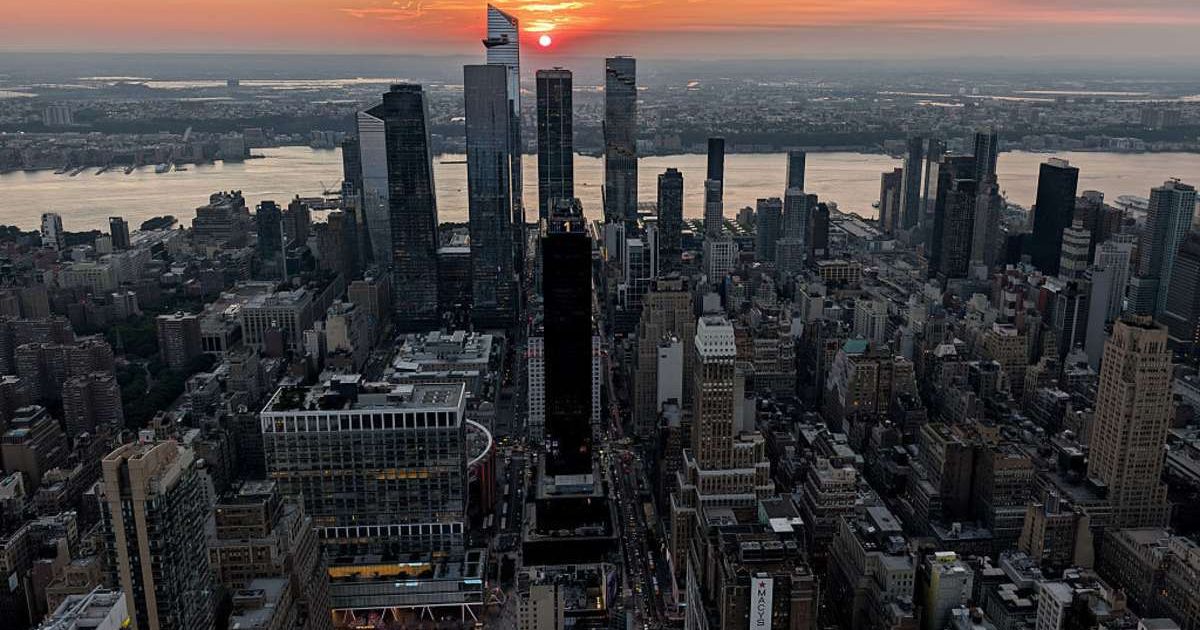
NEW YORK CITY, NEW YORK: Smoke from Canadian wildfires continued to drift across the Northeast on Wednesday, July 15, pushing air quality levels into the unhealthy range across New York City and surrounding areas.
The worsening conditions come as the region also deals with high temperatures and lingering humidity, prompting city officials to expand emergency measures and urge residents to stay indoors whenever possible.
Air quality readings climbed throughout the day, with smoke visibly hanging over parts of the city and many residents reporting irritation in their eyes and the smell of smoke in the air.
Officials have warned that conditions are expected to persist through at least Friday, with the smoke forecast to become even more concentrated on Thursday.
Wildfire smoke from Canada has returned, blanketing New York in a thick haze.
— Spectrum News 1 ROC (@SPECNews1ROC) July 15, 2026
The smoke, combined with already high temperatures in the state this week, is creating unhealthy air quality conditions.
The smoke is expected to stick around through Thursday. pic.twitter.com/S5ZIowd2oA
New York City schools and services adjust as smoke and heat impact daily life
As air quality concerns grow, city agencies have begun taking steps to reduce exposure, particularly for vulnerable groups.
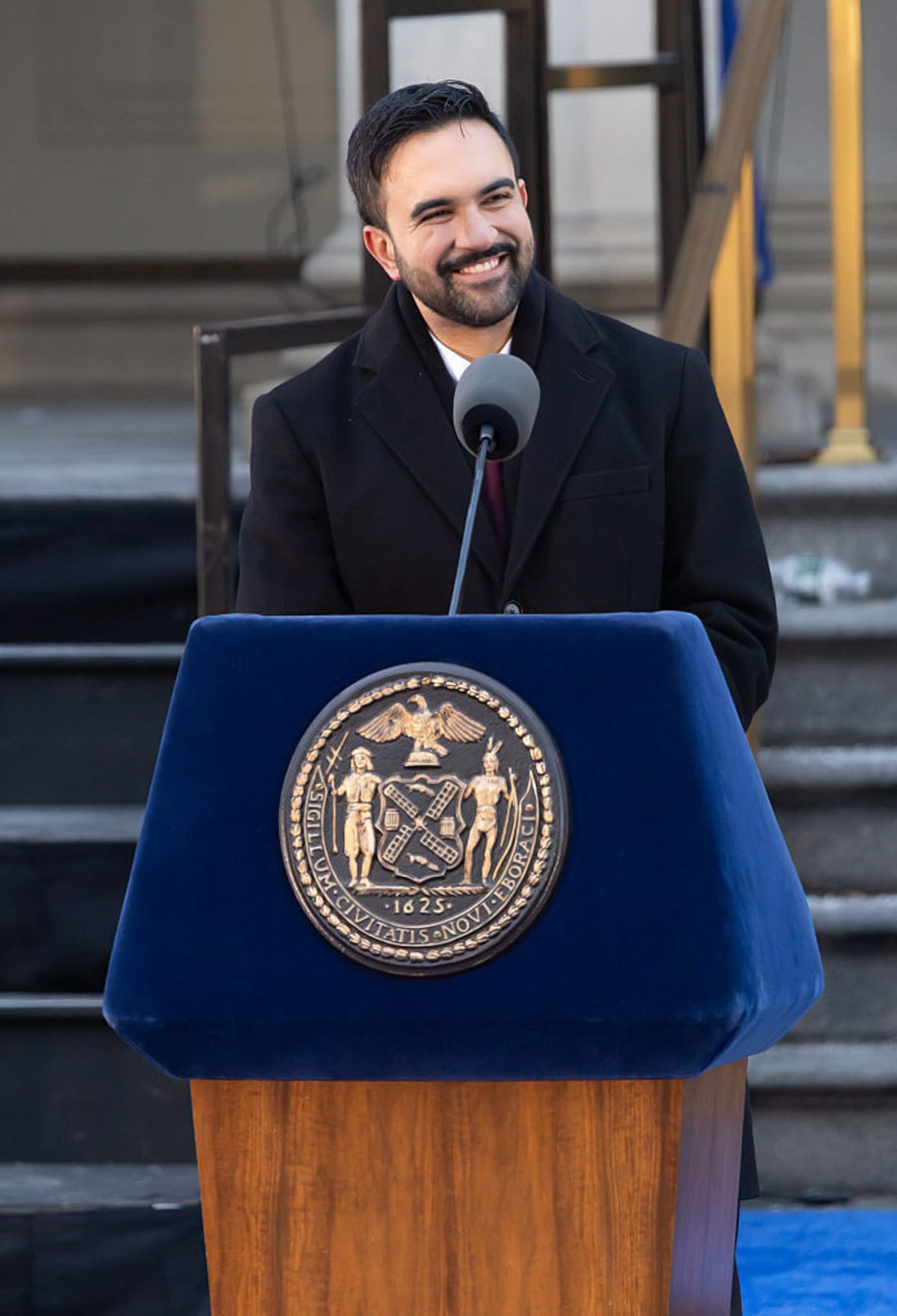
Mayor Zohran Mamdani announced an expanded city response, calling the combination of extreme heat and unhealthy air a serious public health concern.
“The combination of dangerous heat and unhealthy air is a serious threat to New Yorkers’ health,” Mamdani said.
Tomorrow's combination of dangerous heat and unhealthy air is a serious threat to New Yorkers’ health.
— Mayor Zohran Kwame Mamdani (@NYCMayor) July 16, 2026
If you can, stay somewhere cool with air conditioning, limit your time outdoors, drink plenty of water, and check on your neighbors — especially older New Yorkers and anyone… pic.twitter.com/1PDWXRmWLn
New York City Public Schools has directed principals to significantly limit outdoor activities. Schools are rescheduling outdoor field trips where possible and ensuring that ventilation and air-conditioning systems are operating effectively.
City agencies are also making adjustments. NYC Parks is canceling several outdoor programs, including some swimming activities for children and infants, while moving camp operations indoors whenever possible.
Officials said they will continue monitoring conditions and make further changes if necessary.
Canadian wildfire smoke expected to worsen through Thursday
Forecasters say smoke levels increased noticeably on Wednesday compared to earlier in the week.
By early afternoon, the Air Quality Index in Midtown Manhattan had surpassed 150, placing it in the “unhealthy” category.
The smoke is expected to become more concentrated through Thursday morning before remaining relatively steady into Friday.
Canadian Wildfire Smoke) covers the Times Square in Manhattan today (July 15, 2026).
— Yasser alkhader (@AlkhaderYasser) July 15, 2026
The sky in New York is cloudy and full of thick smog due to forest fires in Canada. Air quality has reached an unhealthy level, especially for sensitive groups.
Giant screens and neon lights look… pic.twitter.com/ILYjogNm0U
Officials are warning residents that unhealthy air conditions may persist throughout the region for at least the next several days.
At the same time, temperatures have climbed above 90 degrees in parts of the city, with humidity making it feel closer to 100 degrees.
Although a National Weather Service heat advisory expired Wednesday evening, New York City extended its heat emergency through Thursday.
“New Yorkers are urged to stay in air-conditioned spaces whenever possible, limit time outdoors, stay hydrated and check on neighbors,” city officials said.
Officials share advice as free KN95 masks become available citywide
Health experts warn that fine particulate matter from wildfire smoke can be especially dangerous for children, older adults and people with heart or lung conditions.
Exposure may lead to coughing, shortness of breath, dizziness, fatigue and worsening symptoms for those with existing medical conditions.
To help residents protect themselves, the city has made free KN95 masks available at more than 200 library locations across New York City, as well as all NYPD precincts, several FDNY firehouses and major transit hubs.
Air quality has reached unhealthy levels in parts of NYC due to smoke from Canadian wildfires moving through the city.
— Mayor Zohran Kwame Mamdani (@NYCMayor) July 15, 2026
Poor air quality affects everyone, but some people are more sensitive to it than others, including people with heart or lung conditions, older adults, pregnant…
Officials also recommend keeping windows closed, using air conditioners or air purifiers when available and limiting outdoor activity as much as possible until conditions improve.
“If you are feeling any effects from this, I would advise you to stay indoors. And again, the best way to handle the heat, is to do the same,” Mamdani said.
Smoke traced to Canadian wildfires burning in Ontario
The smoke affecting New York City is primarily coming from wildfires burning in Ontario.
Weather patterns are helping carry the smoke across the Great Lakes and into the Northeast.
Wildfire smoke from northern Canada and high temperatures are expected to create unhealthy air conditions. Smoke will be visible and is set to first cross into western areas early this morning before disbursing across the state. pic.twitter.com/xCmC3LfWc8
— New York State Dept. of Environmental Conservation (@NYSDEC) July 15, 2026
Officials said a combination of high pressure over the central United States and low pressure over eastern Canada is funneling smoke directly toward major population centers, including New York City.
The situation has brought back memories of July 2023, when wildfire smoke turned skies across the Northeast a dramatic orange color and pushed air quality to hazardous levels.
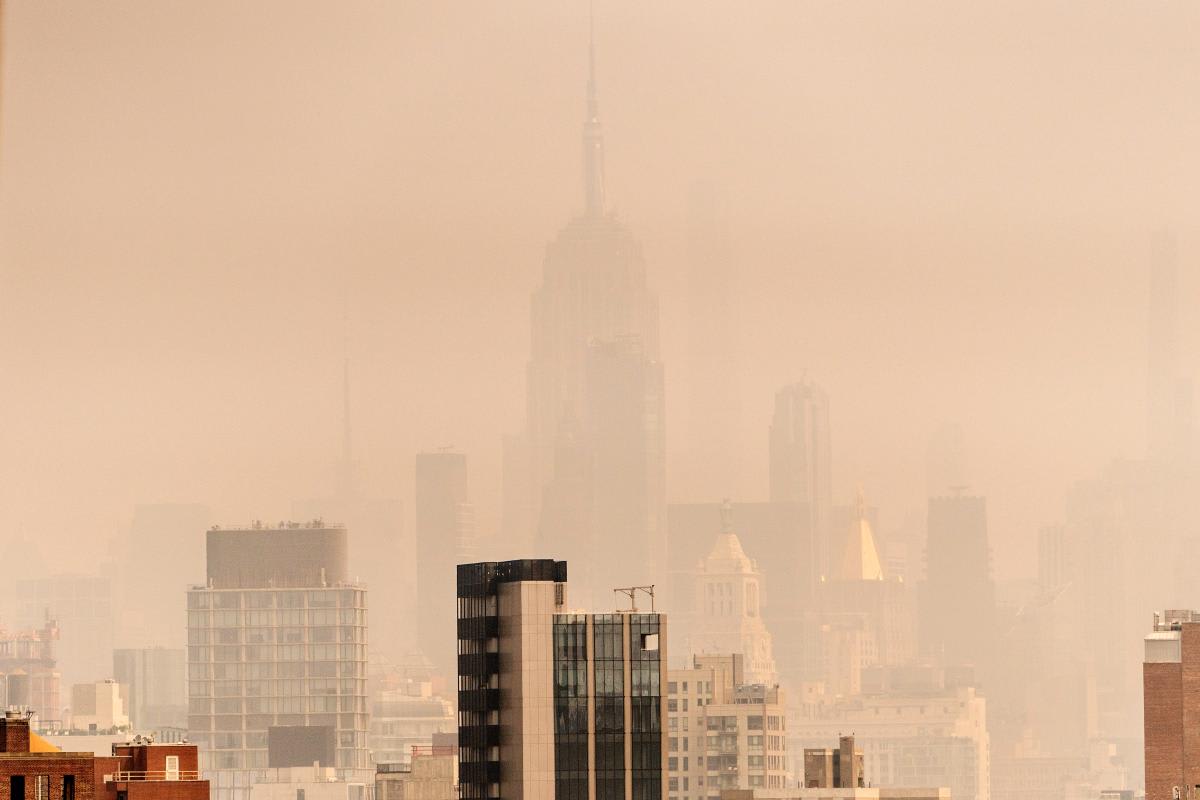
On that day, New York City's AQI reached 416.
Current forecasts do not suggest conditions will reach those historic levels, but officials caution that wildfire smoke patterns can change quickly.