Fact Check: Does opening text message announcing Trump's arrest attack bank account?
WASHINGTON, DC: In mid-January, a rumor circulated online claiming that opening a text message about the supposed 'arrest' of President Donald Trump would attack users' bank accounts.
The rumor was shared by several social media users across various platforms, including X, Facebook, Instagram, and Threads. But is there any truth to this? Let us find out below.
Claim: Opening text message about Trump's arrest would attack users' bank accounts
An X user took to the social media platform and wrote, "I just got this... FYI... Just sharing, if you get a text that trump was arrested don't open it because it will attack your bank account. Tell all your friends. Too much going on! Please forward to family and friends! Really sickening."
I just got this...
— American No Deep State Arrest Islandman (@N76247476Man) January 8, 2026
FYI... Just sharing, if you get a text that trump was arrested don't open it because it will attack your bank account. Tell all your friends. Too much going on! Please forward to family and friends!
Really sickening.👀
The same message was shared across Facebook, Threads, and Instagram between January 9 and 11, 2026.
A Facebook user wrote, "FYI... Just sharing, if you get a text that trump was arrested don't open it because it will attack your bank account. Tell all your friends. Too much going on! Please forward to family and friends! Really sickening."
False: No credible evidence to back the claim
The claims made online are false, as the warning was a hoax that carried misinformation. The rumor circulated soon after Donald Trump was indicted on charges related to election interference in the 2020 presidential election and around the time voters elected him to a second term.
In 2016, Snopes reported on another hoax that falsely claimed a virus would infect people's devices when they click on a photo supposedly showing Trump's 'arrest'.
However, people can't get scammed simply by opening and reading a text message. For a scam to occur, scammers typically need the recipients to respond to a message or click on a link.
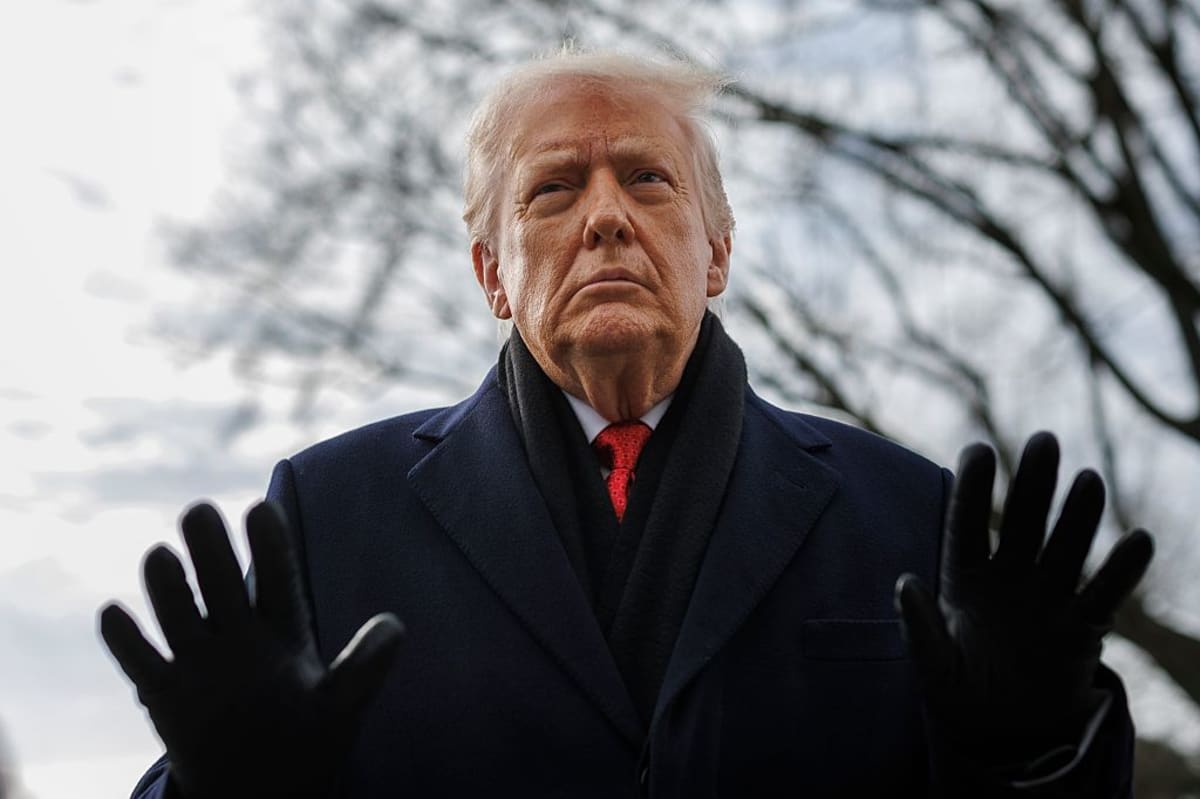 President Donald Trump speaks to reporters on the South Lawn before boarding Marine One at the White House on January 16, 2026, in Washington, DC (Tom Brenner/Getty Images)
The Federal Trade Commission (FTC) published a full guide on text message scams, which scammers attempt to steal consumers' personal and financial information.
If any personal or financial details are provided to scammers, it is recommended to report the text messages to the FTC using the instructions at the bottom of their guide.
Moreover, it is advised to contact the associated bank or credit card company — either by visiting a branch or calling an official number to address the issue.