Iran war is draining a key US military drone fleet, report reveals
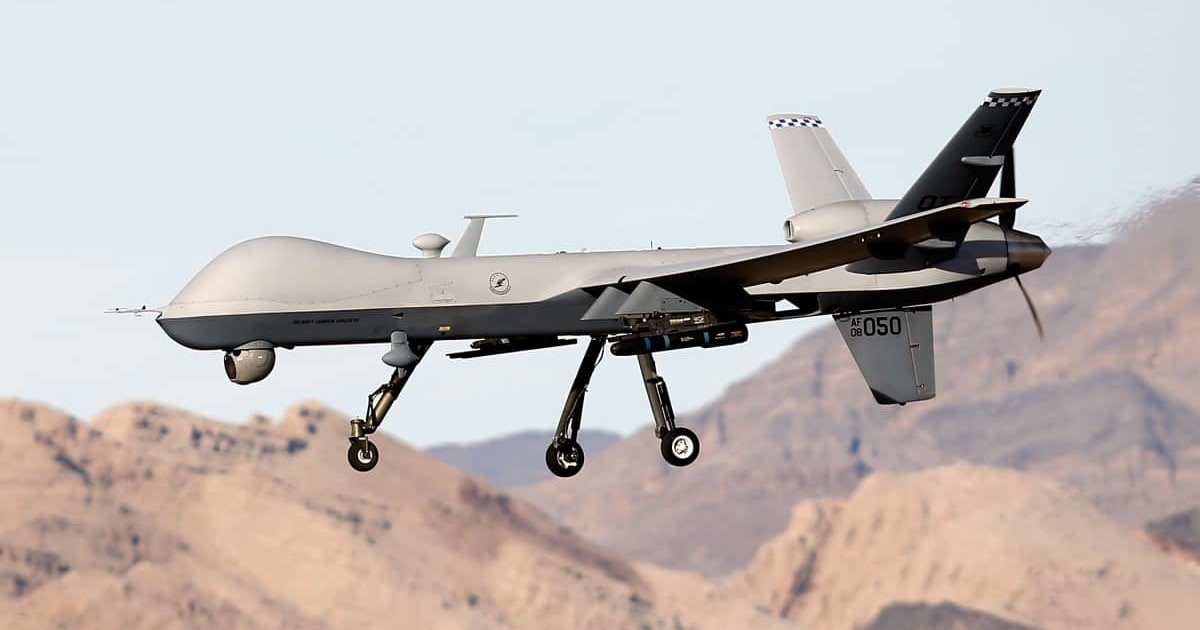
WASHINGTON, DC: The Iran war has drained a major US surveillance and strike capability, with at least 45 Reaper drones lost during the conflict, officials told the Washington Post.
The losses amount to roughly one-quarter of the military’s Reaper fleet, exposing the scale of equipment being consumed as the conflict continues.
The drones have been used heavily around the Strait of Hormuz, where their slow speed and low-altitude flights can leave them vulnerable.
Reaper losses expose the strain
The MQ-9 Reaper conducts surveillance and targeted strikes, and each aircraft can cost $30 million to $50 million depending on its sensors and weapons.
The WaPo report published on Thursday, August 13, said that three US officials familiar with the matter told the newspaper that at least 45 Reapers have been lost since the war began.
A fourth official said not all were shot down.
An unspecified number crashed after operators lost communications links with the aircraft, the official said.
The Marines have not lost any Reapers, according to Lt Col Joshua Benson, because those aircraft operate primarily in the Asia-Pacific.
In May, Lt Gen David Tabor told the Senate that the number of remaining drones had fallen to about 135.
He said he was “concerned” about the losses and that the Air Force was exploring ways to replenish the fleet quickly.
The potential taxpayer cost of the recent Reaper losses alone is more than $1.3 billion, according to the report.
Pentagon seeks money to rebuild
The Reaper losses are part of a wider depletion of US weapons and munitions during the Iran war and years of military support for Ukraine, according to the report.
The Pentagon has consistently denied reports that its stockpiles are running low, while the Trump administration has sought tens of billions of dollars to cover war costs and replenish supplies.
The administration is seeking support for a $67 billion Iran war supplemental budget, which it says is needed to restock the Pentagon’s arsenal.
Even if Congress approves it, rebuilding supplies depleted by the conflict and weapons sent to Ukraine could take years, according to the report.
President Donald Trump also confronted Defense Secretary Pete Hegseth about the condition of the US stockpile during a July 31 Cabinet meeting at Camp David, according to the Post.
Hegseth told the Senate in July that the Pentagon would have to curtail military training without a quick infusion of additional funding as the war strains the defense budget.
Pentagon plans replacement fleet
The Pentagon is already phasing out the General Atomics-produced Reaper and plans to replace it with less expensive armed surveillance drones capable of swarming targets, the newspaper stated in its report.
A separate American Enterprise Institute report this week found that some Pentagon production plans have “key dependencies,” including a major expansion of defense-industry factory output.
The report cited THAAD interceptors as one example: the Missile Defense Agency can produce 96 a year, while the Pentagon seeks 857 next year and nearly 2,600 over five years.
At current production rates, fulfilling that request would take “approximately 27 years,” the report found.

AEI senior fellow Todd Harrison said a single interceptor takes almost three years to manufacture.
“Even if you ordered them today, delivery wouldn’t be until President Trump leaves office,” Harrison said.
Although Hegseth has met with companies that build key munitions and secured framework agreements to increase production, the WaPo report said there are not yet contracts or funding for those firms to move forward.