Kalshi wants Americans to trust its election markets after a ‘95%’ call collapsed
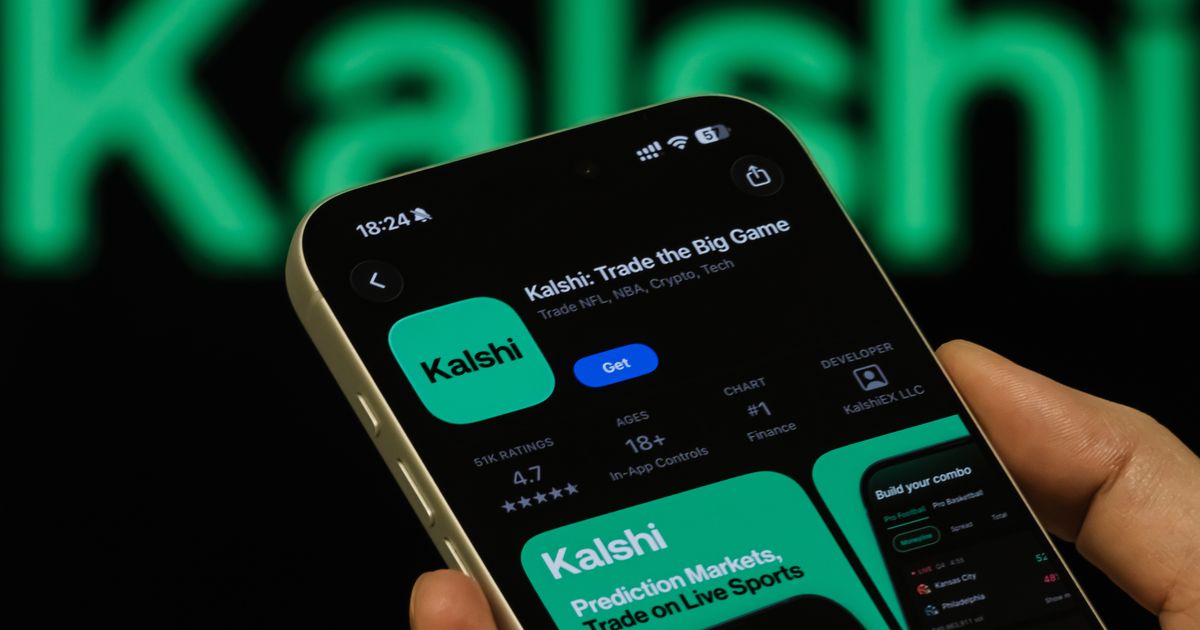
NEW YORK CITY, NEW YORK: Kalshi is trying to make its election odds easier to judge just weeks after one of its most visible political-market misses exposed the danger of treating a probability as near-certainty.
The prediction-market company announced new transparency measures Tuesday, October 6, for every US midterm election market, adding forecast-accuracy information, warnings for markets with relatively few traders and real-time displays of individual trades.
The changes arrive as prediction markets enter their first US midterm cycle after becoming a mainstream part of election coverage.
The timing is notable.
TODAY: WISCONSIN DEMOCRATIC GOVERNOR NOMINEE ODDS: 🟦 Francesca Hong: 95% 🟦 David Crowley: 5% https://t.co/Qv547Ox4dn
— Kalshi Politics (@KalshiPolitics) August 11, 2026
In Wisconsin’s Democratic gubernatorial primary in August, Kalshi’s market put Francesca Hong at about a 95% chance of winning shortly before voting.
David Crowley won the nomination by a razor-thin margin.
Kalshi’s own market showed Hong at 95.9% and Crowley at 4.2% before the vote.
Wisconsin miss puts odds under scrutiny
Kalshi says every US midterm election market will carry three new transparency features.
One will measure forecast accuracy against historical outcomes, showing how closely market probabilities have tracked results.
Another will flag markets with relatively few traders, where thinner participation can make prices less informative.
The third will display trades in real time.
The Wisconsin result did not mean a 95% market price represented a guarantee.
Kalshi co-founder Luana Lopes Lara pointed out afterward that “5% is not 0%,” emphasizing that an outcome assigned a low probability can still happen.
But the episode highlights the communication problem facing a platform whose numbers are increasingly consumed outside the trading screen.
A 95% figure can look definitive to a casual reader even though it represents a probability, not a promise.
Kalshi says its new accuracy measure will provide historical context for how its forecasts have performed.
The company has separately published research arguing that forecasting improves with time, market depth and participation.
Midterms turn market prices political
Kalshi’s election business has grown rapidly enough that its numbers are now being watched as political signals.
Its Midterms Hub showed more than $800 million in trading volume this week, including contracts on control of the House and Senate.

The timing matters because prediction markets are entering their first US midterm cycle after becoming a larger part of political coverage.
The platform's political markets are also being used as live indicators of congressional and statewide races.
That makes candidate probabilities increasingly visible to voters, campaigns and journalists, even though they reflect traders' positions rather than a poll of the electorate itself.
That scale gives the platform greater visibility, but it also raises the stakes when thinly traded or fast-moving markets are interpreted as authoritative forecasts.
Kalshi’s new low-participation warning is designed to give users another signal as to how much weight to place on a displayed price.
CEO Tarek Mansour called 2026 “the first election after prediction markets have gone mainstream” and said the company wants to put its markets “in context.”
Kalshi expands beyond election markets
The company is simultaneously moving deeper into financial products.
Tuesday’s launch of perpetual futures tied to a market-cap-weighted index tracking 500 large US companies allows traders to take leveraged long or short positions without an expiration date.

That expansion comes alongside a regulatory fight.
On Sept. 25, the Sixth Circuit ruled Ohio and Tennessee could enforce gambling laws against Kalshi’s sports-event contracts, rejecting its argument that federal commodities law preempted state regulation.
The ruling added to a growing split among federal courts over how prediction markets should be regulated.