Khanna names redacted Epstein associates on House floor, accuses FBI of Trump-era cover-up
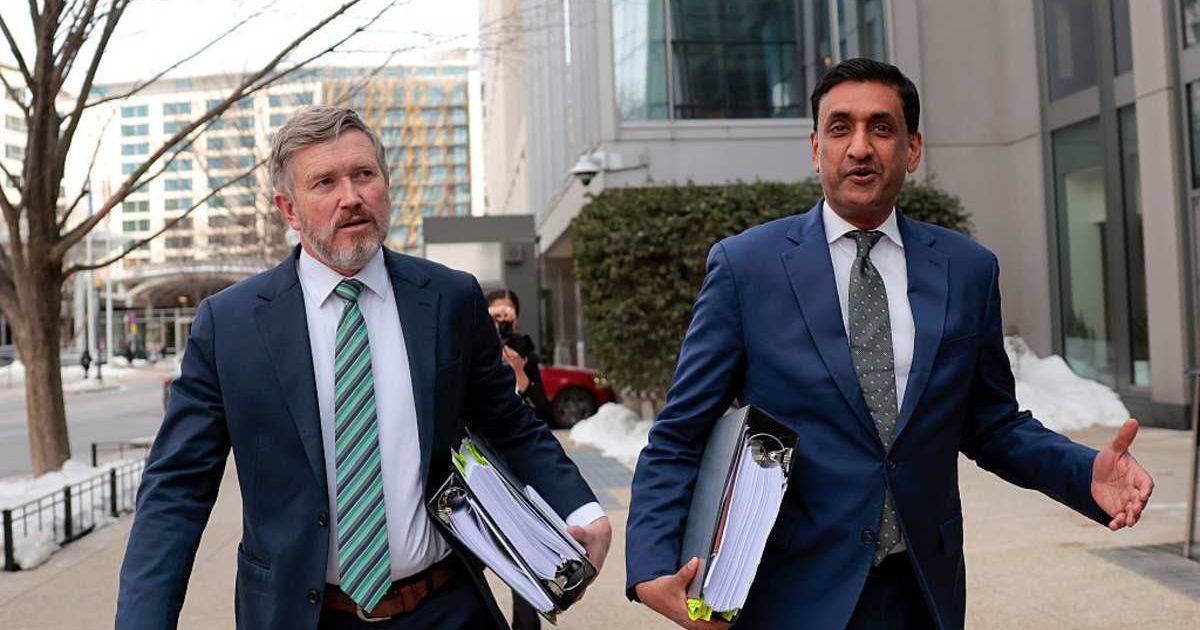
WASHINGTON, DC: Rep Ro Khanna (D-Calif) on Tuesday, February 10 publicly named six men he said were improperly redacted from federal files related to the late disgraced financier Jeffrey Epstein, accusing the Trump administration’s FBI of deliberately concealing the identities of wealthy and powerful individuals.
Speaking on the House floor, Khanna said he and Rep Thomas Massie (R-Ky) recently reviewed what the Department of Justice described as “unredacted” Epstein materials, only to find that the vast majority of records remained obscured.
“Yesterday, Congressman Massie and I went to the Department of Justice to read the unredacted Epstein files,” Khanna said. “We spent about two hours there, and we learned that 70 to 80 percent of the files are still redacted.”
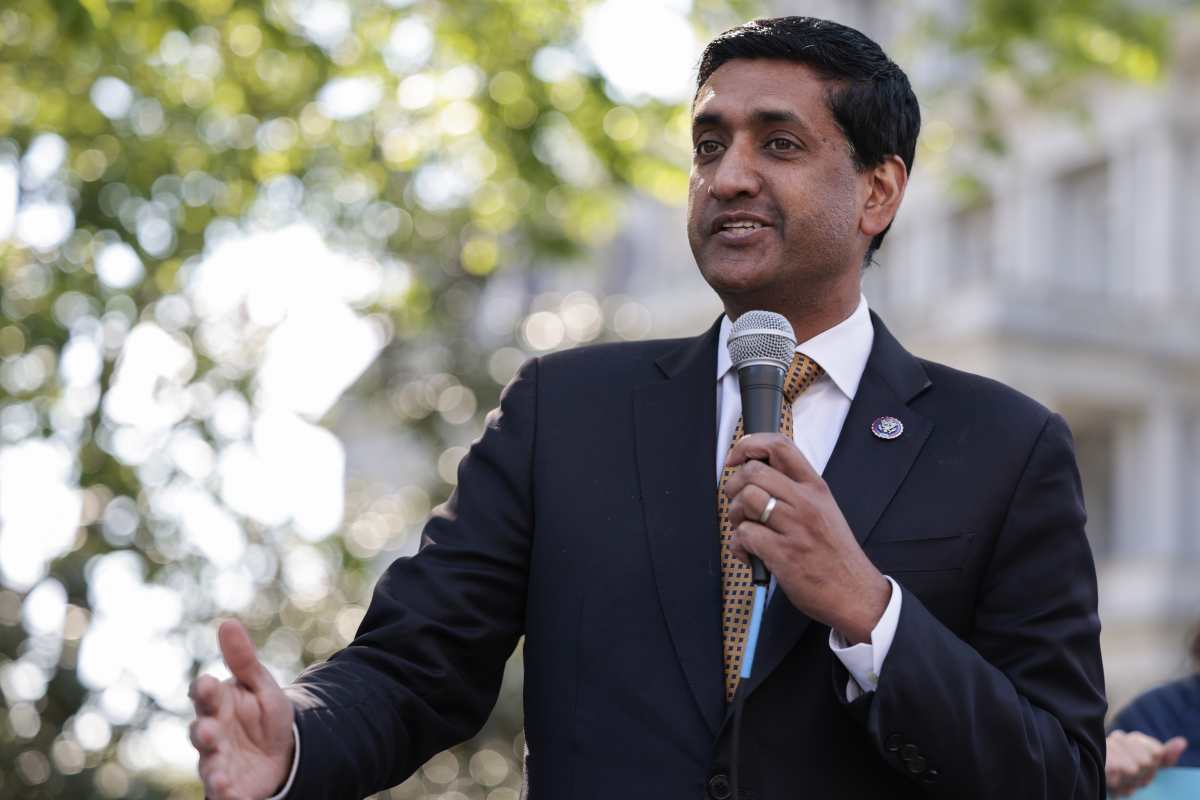
Khanna asks how many others are hidden in three million files
Khanna said the lawmakers identified six individuals whose names had been withheld without explanation. After raising the issue with DOJ officials, he said the department acknowledged an error and disclosed the names.
.@RepThomasMassie and I forced last night the DOJ to disclose the identities of 6 men:
— Rep. Ro Khanna (@RepRoKhanna) February 10, 2026
Salvatore Nuara, Zurab Mikeladze, Leonic Leonov, Nicola Caputo, Sultan Ahmed Bin Sulayem, and billionaire businessman Leslie Wexner.
I share details of what more we learned to hold the… pic.twitter.com/5JwKwRUNIF
According to Khanna, the individuals are Salvatore Nuara, Zurab Mikeladze, Leonic Leonov, Nicola Caputo, Sultan Ahmed bin Sulayem, the CEO of Dubai Ports World, and billionaire retail executive Leslie Wexner, whom Khanna said was labeled a co-conspirator by the FBI in Epstein-related materials.
“My question is, why did it take Thomas Massie and me going to the Justice Department for these six men’s identities to become public?” Khanna asked. “And if we found six men they were hiding in two hours, imagine how many more they are covering up for in those three million files.”
Khanna stressed that listing names doesn't imply guilt, but the public has a right to know who appears in government records tied to Epstein's crimes.

Khanna and Massie makes FBI interference allegation
Khanna alleged that the redactions originated not with DOJ lawyers but with the FBI, which he said scrubbed the files months earlier before Congress passed the Epstein Transparency Act, legislation intended to force the release of unredacted records.
“The reality is that Donald Trump’s FBI scrubbed these files in March,” Khanna said. “Now, my bill is clear. The Epstein Transparency Act requires them to unredact those FBI files. And yet the Justice Department told us, ‘We just uploaded whatever the FBI sent us.’” “And guess what?” he added. “The FBI sent scrubbed files.”
Khanna claimed that survivor statements naming wealthy and powerful men who allegedly traveled to Epstein’s properties, including his private island, ranch and residences, remain hidden from public view.
“Those statements are all redacted,” he said. “It’s a little bit of a farce. Members of Congress are being invited to view supposedly unredacted files, but they are redacted at the source.”
Khanna says DOJ is shielding ‘Epstein class’
Khanna framed the issue as part of a broader pattern of elite impunity, accusing federal authorities of shielding what he called the “Epstein class.”
“It’s a blatant violation of the Epstein Transparency Act,” he said. “But it also asks a fundamental question: Who are they protecting? Why are they protecting these rich and powerful men?”
He contrasted the US response to scandals involving elites with actions taken abroad, citing cases in Europe where royalty and political figures have faced investigations or public consequences.
“In the United States of America,” Khanna said, “we still have powerful people connected to these files holding positions of influence, without accountability.”
Khanna calls for accountability
Khanna closed his remarks with a sweeping call for investigations and prosecutions, arguing the Epstein case exposes a deeper divide in the justice system. “This isn’t just about the 1,200 survivors,” he said. “It’s about two tiers of justice in America.”
He linked the controversy to broader economic inequality, saying the country increasingly works for the wealthy while leaving ordinary Americans behind.
“I say enough,” Khanna declared. “It’s time to begin accountability for the Epstein class. Investigate them. Prosecute them where the evidence leads. And let’s return to one system of justice in the United States of America.”
Neither the FBI nor the Department of Justice immediately responded to Khanna’s accusations.