'Quiet death': Hegseth touts 'sheer destruction' of Iranian Navy as US torpedoes enemy warship
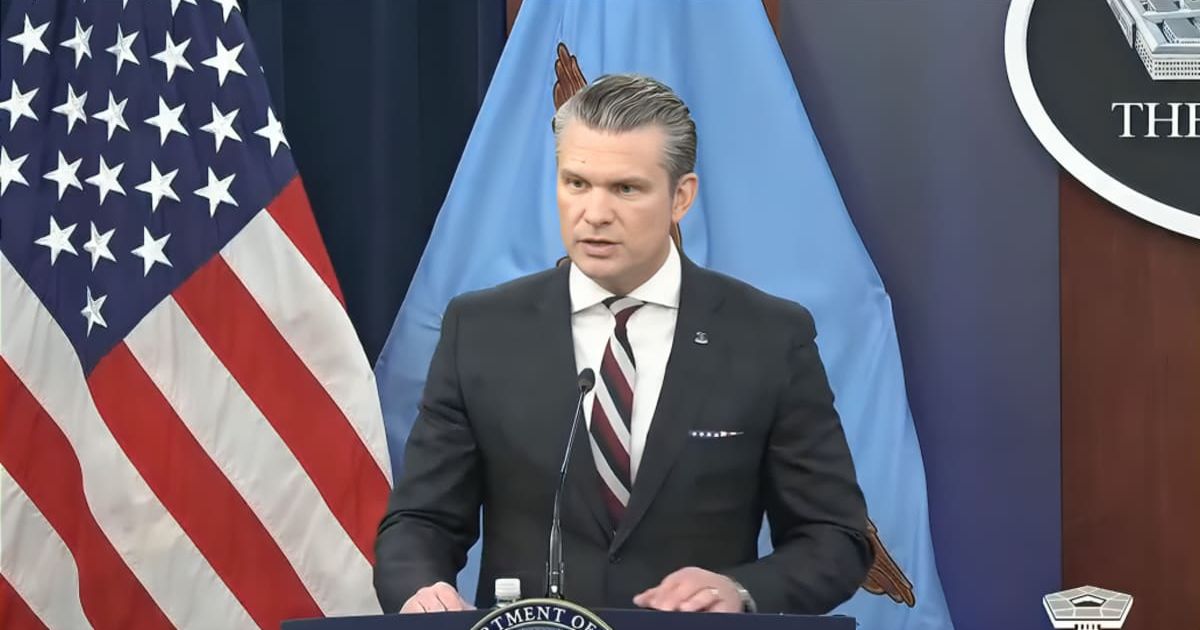
WASHINGTON, DC: Defense Secretary Pete Hegseth announced on Wednesday, March 4, that an American submarine sank an Iranian warship in the Indian Ocean, marking the first time a US torpedo sank an enemy vessel since World War II.
Speaking from the Pentagon as the campaign against Iran entered its fifth day, Hegseth described the strike as a "quiet death" for a vessel that incorrectly believed it was safe in international waters.
Chairman of the Joint Chiefs of Staff Gen Dan Caine reported "steady progress" in the operation and confirmed that more than 2,000 targets had been hit.
These strikes successfully neutralized Iran's major naval presence, destroying over 20 naval vessels and one submarine.
.@SECWAR “In the Indian Ocean—an American submarine sunk an Iranian warship, that thought it was safe in international waters.
— DOW Rapid Response (@DOWResponse) March 4, 2026
Instead, it was sunk by a torpedo—Quiet Death.
The first sinking of an enemy ship by a torpedo since World War 2. Like in that war—back when we were… pic.twitter.com/Y97YQBxQza
'Historic' results in early combat phase
Secretary Hegseth touted "incredible" and "historic" results so far, emphasizing that the US could sustain this fight for as long as necessary.
He noted that while the operation was still in its early days, the combination of the US military and the "devastatingly capable" Israeli Defense Forces has resulted in "sheer destruction" for the Iranian regime.
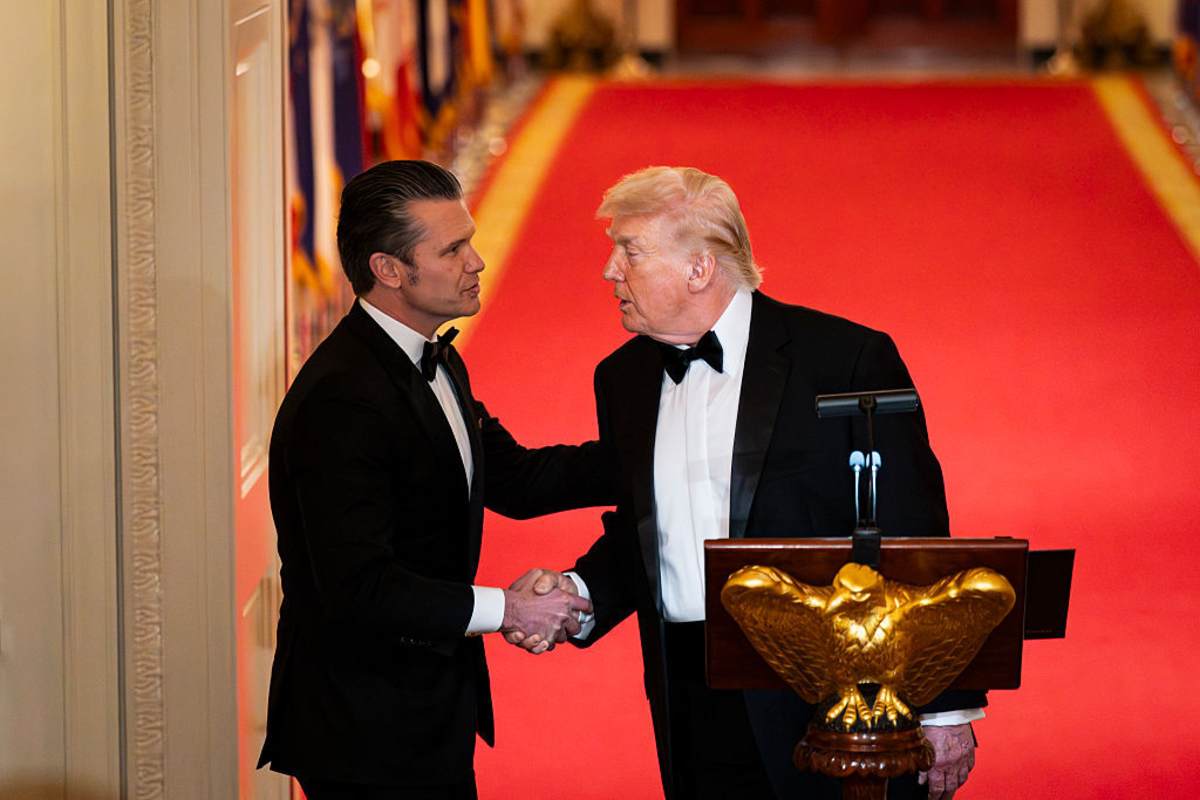
The Defense Secretary maintained that the US and President Trump were setting the pace and tempo of the operation, keeping the enemy off balance.
He asserted that the gap between Iran's ability to shoot and the US's ability to defend was getting "wider and wider every day."
Pentagon outlines core military objectives
General Dan Caine, Chairman of the Joint Chiefs of Staff:
— Clash Report (@clashreport) March 4, 2026
We will now begin to expand inland, striking progressively deeper into Iranian territory. pic.twitter.com/GHadsXmZbr
General Caine reconfirmed the three primary objectives of the campaign: eliminating Iran's ballistic missile systems, destroying the Iranian Navy, and preventing the regime from rapidly rebuilding its combat power.
The 2,000 targets hit to date included command and control centers, ballistic missile sites, and IRGC headquarters.
Under Secretary of Defense for Policy Elbridge Colby informed the Senate Armed Services Committee that the operation was prompted by the "rapid buildup" of Iran's missile and one-way attack drone capabilities.
Officials maintained that Iran had negotiated in bad faith while preparing to strike, necessitating defensive US action.
Honoring fallen US service members
Gen. Dan Caine shares the names of four of the six fallen heroes, all from the 103rd Sustainment Command, U.S. Army Reserve, based in Des Moines, Iowa:
— The White House (@WhiteHouse) March 4, 2026
Capt. Cody Khork
Sgt. 1st Class Noah Tietjens
Sgt. 1st Class Nicole Amor
Sgt. Declan Coady
To the families of our fallen, we… pic.twitter.com/Vqn4OCldQK
The military success came at a cost, with six US service members killed and 10 seriously wounded since the conflict began.
General Caine formally announced the names of four of the fallen on Wednesday, expressing the military's grief alongside their families.
The Pentagon had previously warned that "additional losses" were expected as the operation continued.
Hegseth reiterated that there were no fixed time limits on the campaign, stating it could last anywhere from three to eight weeks, depending on President Trump's desire to achieve specific effects.