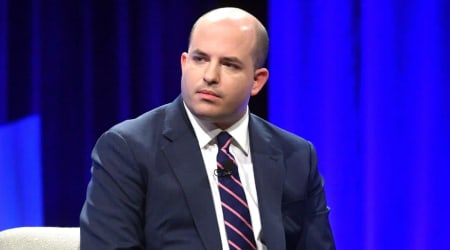
NASA chief says US could build Moon base 'within 5 years' in interview

WASHINGTON, DC: The United States could establish a sustained presence on the Moon within the next five years, according to NASA chief Jared Isaacman, who laid out an ambitious roadmap during an appearance on 'The Benny Show' hosted by Benny Johnson.
Speaking in an interview that premiered April 1, Jared said missions will ramp up rapidly starting in 2027, ultimately leading to what he described as a long-term 'enduring presence' on the lunar surface.
NASA Administrator: 'The U.S. WILL have a Moon Base in the NEXT 5 years.'
— Benny Johnson (@bennyjohnson) April 1, 2026
Here's how were going to do it...
"We’re going to start launching in early 2027. We are going to literally start putting landers— these are uncrewed robotic landers and rovers— on the surface of the moon… pic.twitter.com/NF7hEYHHJP
Jared Isaacman details 'moon base for US'
Detailing the timeline, Jared made it clear that NASA’s approach will be incremental but relentless.
“We’re going to start launching in early 2027; we are going to literally start putting landers and rovers on the surface of the moon on a near monthly cadence starting in 2027,” he said, emphasizing the frequency and scale of upcoming missions.
Rather than a futuristic sci-fi outpost, he pushed back on popular imagination about what a Moon base would actually look like.
“When you think of moon base, you think of this beautiful glass dome,” he said, before adding, “think of it closer to a junkyard.”
Explaining further, he said the cluttered setup would be intentional: “We are going to have so many broken down rovers and landers everywhere, but that’s actually how you do it.”
The idea, he noted, is to build gradually through experimentation rather than jumping straight to a finished structure.
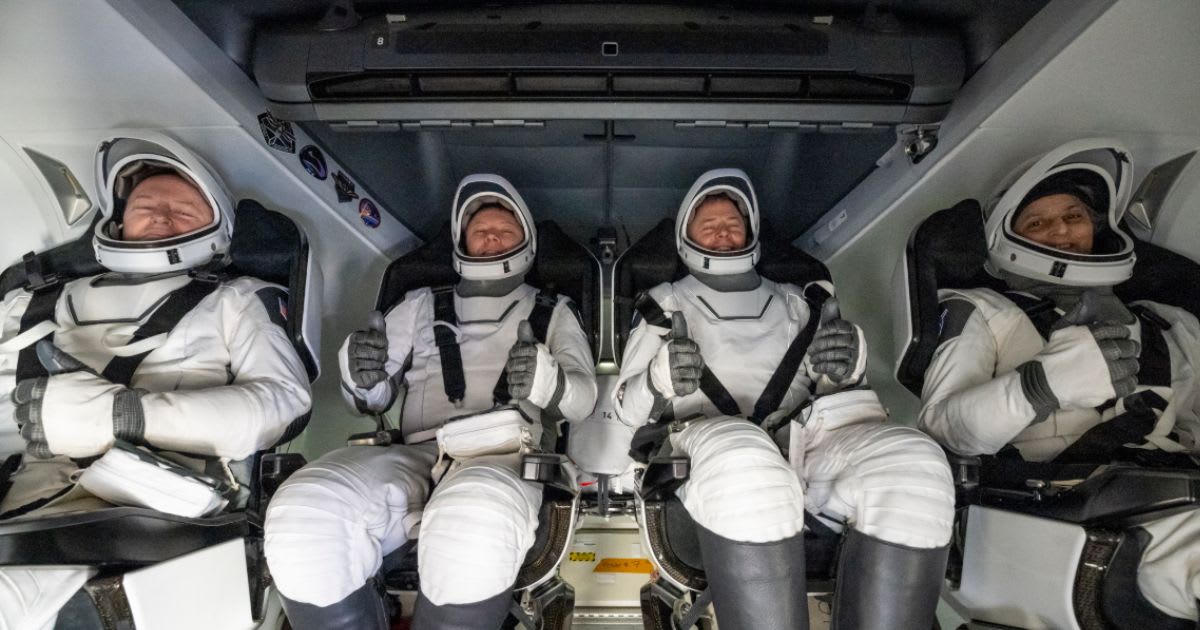
The early phase will focus heavily on testing systems. “Phase one is all about lots of landers, lots of rovers, packed with science instruments, we are going to figure out what should the surface comms be like, what is the best power source,” he said.
That includes a mix of technologies: “We’re going to have solar power nuclear powered RTGs and we’re eventually going to have a nuclear power plant on the moon.”
All of it feeds into a long-term vision. “We are going to learn , that’ll inform phase two till we get to phase three we’re going to have that real enduring presence on the moon,” Jared said.
🚨 NASA declares alien life likely exists, with Administrator Jared Isaacman pointing to overwhelming odds across the universe.
— Brandon Straka #WalkAway (@BrandonStraka) April 1, 2026
“I’d put it at a better 90% chance… we could prove microbial life on Mars.”pic.twitter.com/puRSqxijJ4
Jared Isaacman opens up on life beyond earth
The Moon mission, however, is just one step in a much bigger cosmic puzzle. When asked about the possibility of life beyond Earth, Jared suggested the implications could be enormous.
“I would say there is a chance there could be life out there everywhere,” he said, adding that upcoming missions could provide answers closer to home.
“If we can get to Mars and we can bring samples back, I’d put it at a better 90 percent chance that we could prove there was some microbial life on Mars,” he said.
He also pointed to other missions, including one targeting Europa and another headed to Saturn’s moon Titan.
Describing the Titan mission, he said, “We are launching a nuclear powered octocopter in 2028 and it is going to fly around and search for signs of life.”
Discovering biosignatures, he added, would change everything: “It would be the most consequential discovery in human history and what if in our own solar system it could be everywhere?”