Kevin McCarthy thinks he knows why lawmakers are leaving Congress: ‘Nothing is happening’
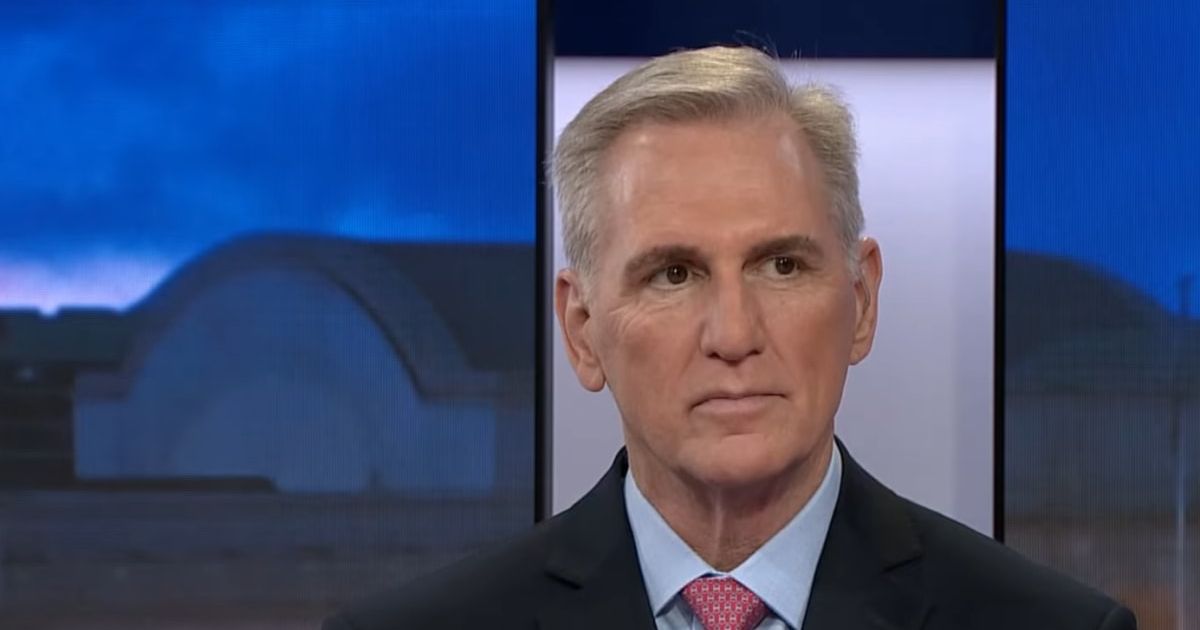
WASHINGTON, DC: A growing number of lawmakers are preparing to leave Capitol Hill ahead of the 2026 midterm elections, a trend former House Speaker Kevin McCarthy says reflects deep dysfunction and paralysis in Congress.
Republicans and Democrats alike are heading for the exits, underscoring mounting frustration with legislative gridlock, political polarization, and the personal toll of serving in Washington. The departures could have major implications for the balance of power in the House and the future of Congress’s legislative agenda.
Kevin McCarthy (R-Calif.) said on Friday that many lawmakers are choosing to retire or seek other paths because, in his words, “nothing is happening” on Capitol Hill.
Kevin McCarthy says nothing is being accomplished in Congress
Appearing on C-SPAN’s Ceasefire with Dasha Burns alongside former Senator Joe Manchin (D-W.Va.), McCarthy described the sacrifices lawmakers make and why those sacrifices feel less worthwhile amid persistent stalemate.
“If nothing’s being accomplished, because they are making a sacrifice, they’re being away from their family, sometimes it’s a long travel, you get harassed, you get death threats, all the different things,” McCarthy said. “But you’re willing to make that sacrifice if you can accomplish something.”
A report cited by The Hill noted that more than 50 lawmakers from both parties have announced they will not seek reelection or have indicated plans to leave Congress.
“When nothing is happening, when it’s just pure fighting, people say, ‘I could go spend my time doing something else,’” McCarthy added. “And it’s not good when you see the number of people retiring, but the quality of people.”
He went on to argue that increased partisan sorting has weakened Congress’s ability to function as intended.
“Well, now we’re trying to make whole states decide whether they’re red or blue, and that’s bad for the country,” McCarthy said.
Reflecting on the structure of the legislature, he pointed to the founders’ original vision. “The founders designed it where the House you can flip every two years. It’s supposed to be a microcosm of society, closest there,” he said.
“The Senate, every six years, so it’s more grandfatherly, calm it down,” McCarthy continued. “Predetermining who’s elected — that’s not good. You’re taking away the power of the idea.”
More than 50 lawmakers from both parties plan to leave
The reported wave of departures includes a mix of high-profile conservatives, moderates, and longtime progressives who have publicly expressed frustration with the pace and tone of congressional work.
On the Republican side, figures such as Chip Roy, Michael McCaul, and Don Bacon have announced plans not to seek reelection, despite having survived competitive races in recent cycles.
BREAKING: Texas Republican Rep. Michael McCaul announced on @ThisWeekABC that he will not seek reelection in 2026.
— This Week (@ThisWeekABC) September 14, 2025
“It's been an honor to serve for over two decades in the Congress. I’m looking now for a new challenge.”
Read more: https://t.co/4zQmchkZaj pic.twitter.com/DJYCDJurjf
Several Democrats have also signaled plans to step aside after long careers in Washington, including senior members who have cited age, changing priorities, or dissatisfaction with the current political climate.
Some lawmakers are leaving Congress to pursue other offices. Republicans Nancy Mace, David Schweikert, and Andy Biggs have indicated interest in running for governor in their respective states, while others, including Representatives Seth Moulton and Jasmine Crockett, have said they plan to seek Senate seats.
As she prepares to retire from Congress after nearly four-decades in Washington, Speaker Emerita Nancy Pelosi sits down with @jonkarl to reflect on her groundbreaking career. pic.twitter.com/izDdRwPwJH
— This Week (@ThisWeekABC) December 28, 2025
One of the most closely watched exits has been Representative Marjorie Taylor Greene, a high-profile Republican and former ally of President Donald Trump, whose departure has drawn significant attention across the political spectrum.

Together, the exits highlight a broader sense of burnout and disillusionment in Congress, raising questions about institutional stability, representation, and whether lawmakers believe meaningful change remains possible from within the chamber.