NTSB releases chilling audio from final 3 minutes of Air Canada jet before LaGuardia airport crash
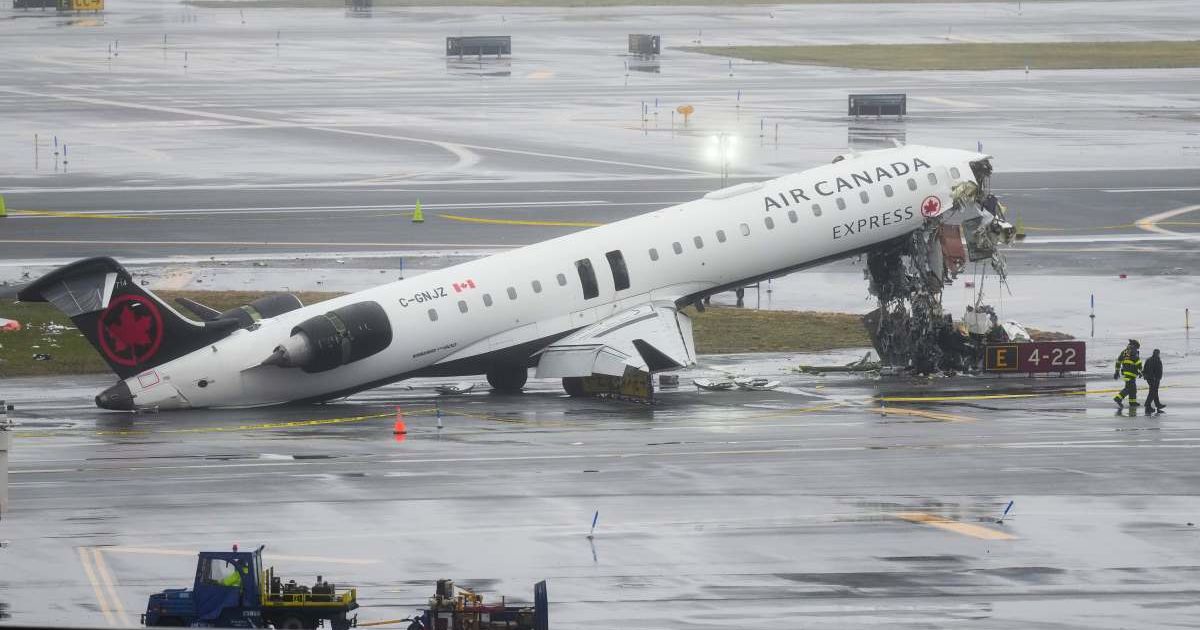
NEW YORK CITY, NEW YORK: What started as a routine descent into New York spiraled into catastrophe in just three minutes. Now, investigators are laying out second by second how Air Canada Flight 8646 met its fate.
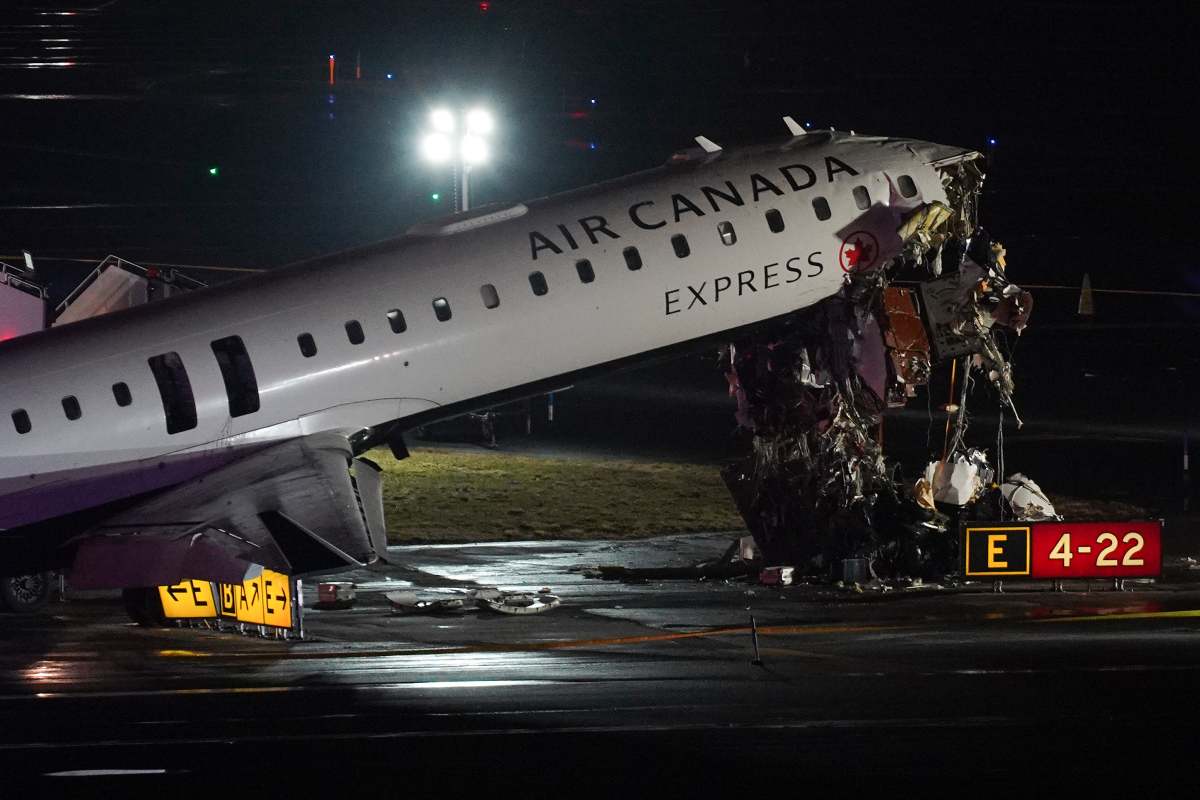
The doomed jet’s cockpit voice recorder captured a methodical countdown to disaster Sunday night, when the aircraft slammed into a fire truck at LaGuardia Airport, killing both pilots and injuring more than 40 others.
A routine approach turns into a race against time
According to National Transportation Safety Board senior aviation investigator Doug Brazy, the flight from Montreal was following a standard landing sequence until it wasn’t.
WATCH: Officials detail final 3 minutes from cockpit recording before Air Canada jet collided with fire truck at LaGuardia, killing 2 pilots pic.twitter.com/XkWW7sfHVP
— BensonNewsHub (@BensonNewsHub) March 24, 2026
Three minutes and seven seconds before touchdown, the crew was instructed to switch over to LaGuardia’s tower. From there, everything unfolded with clockwork precision.
At 2 minutes and 45 seconds, the landing gear came down. Roughly 20 seconds later, the crew checked in with the tower. By the 2-minute, 27-second mark, they were cleared to land on Runway 4, second in line.
The descent continued smoothly on paper. Flaps were adjusted to 30 degrees at 1 minute, 52 seconds, then to 45 degrees at 1 minute, 33 seconds. Automated callouts ticked off altitude markers, notably “1,000” feet at 1 minute, 26 seconds, followed by confirmation that the landing checklist was complete at 1 minute, 12 seconds.
At 54 seconds, the crew confirmed they were 500 feet above ground and on a stable approach. That kind of routine check that usually signals everything is under control.
But in hindsight, it was the calm before the storm.
Missed signals and mounting confusion
At 1 minute, 3 seconds, an airport vehicle attempted to radio the tower, but the transmission was blocked by another, unidentified source. It’s a small detail, but one investigators are now zeroing in on.
By 40 seconds, the tower was asking which vehicle needed to cross a runway. Then came a flurry of radio exchanges involving “Truck 1.”
At 25 seconds, the truck requested clearance to cross Runway 4. Five seconds later, the tower gave the green light.
Meanwhile, the aircraft was descending rapidly. Automated warnings marked its altitude. “100” feet at 19 seconds, then “50,” “30,” “20,” and “10” in quick succession.
At 9 seconds, the tower suddenly instructed Truck 1 to stop.
At 8 seconds, the sound of the plane’s landing gear hitting the runway was heard.
Six seconds before the end, control of the aircraft was transferred between pilots.
At 4 seconds, the tower again ordered Truck 1 to stop.
Then, silence. The recording ends at zero.
Troubling gaps raise new questions
The aftermath is raising as many questions as answers.
A FlightRadar24 representative told the New York Post that the aircraft was traveling as fast as 105 mph when it struck the fire truck.
New footage captures the horrifying moment an Air Canada Express plane (Flight AC8646) slammed into a Port Authority fire truck on the runway at LaGuardia Airport in New York City, killing both pilots and injuring dozens of passengers, crew, and firefighters in the crash. https://t.co/a7F4i02k2i pic.twitter.com/0msbqHFb4O
— GeoTechWar (@geotechwar) March 23, 2026
Investigators have since revealed a series of troubling oversights.
The fire truck involved was not equipped with a transponder, a critical device that would have allowed controllers to track its exact position on the runway. It’s also unclear whether the driver even heard the tower’s urgent commands to stop.
NTSB Chairwoman Jennifer Homendy acknowledged confusion inside the control tower itself.
“It is not clear who was conducting the duties of the ground controller,” she said. “We have conflicting information. We have some information, it was the controller-in-charge. We have some information, it was the local controller.”
🚨🇺🇸NTSB Chair Jennifer Homendy admitted something pretty worrying about the LaGuardia crash.
— Mario Nawfal (@MarioNawfal) March 25, 2026
She said it’s still not clear who was actually sitting in the ground controller’s seat that day, and her team is getting conflicting information on it.pic.twitter.com/DokhkY0DTS https://t.co/yec8RKV5kR
Homendy noted the lack of a transponder on the fire truck further complicated the situation, depriving air-traffic controllers of a clear picture of ground activity.
“Should they have transponders? Yeah, they should,’’ she said.