Pentagon's new Iran war accounting begins on the same day Trump's war clock reset
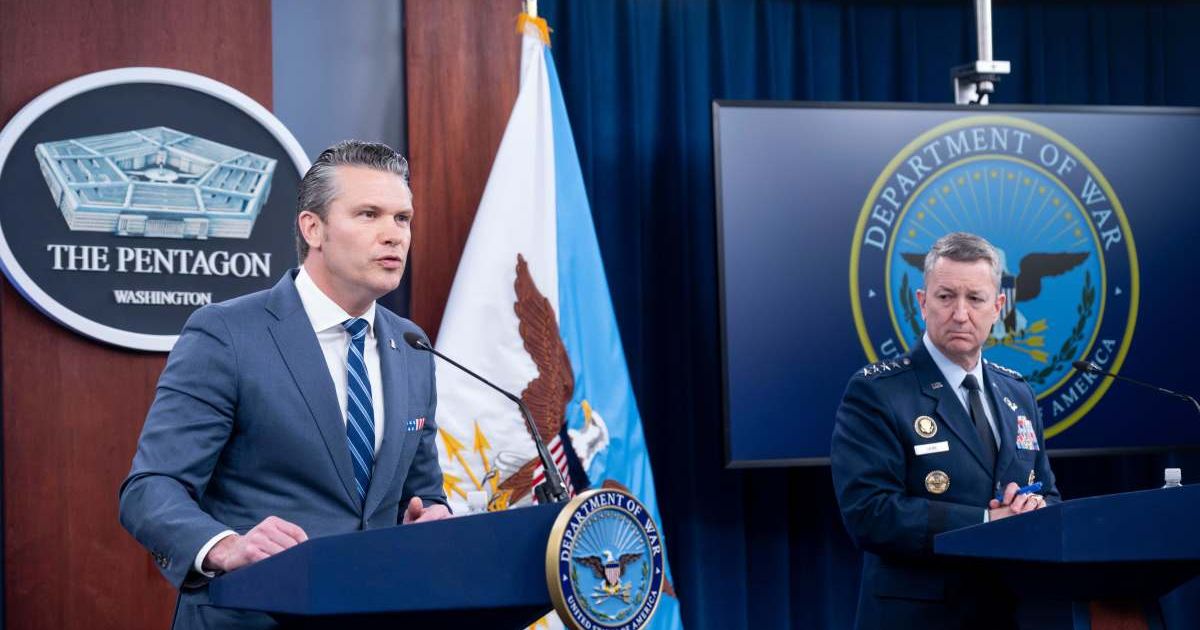
WASHINGTON, DC: The Pentagon has quietly overhauled how it records casualties from the Iran conflict, making sweeping changes that coincide with the same day the Trump administration says a new phase of the war began under the War Powers Act.
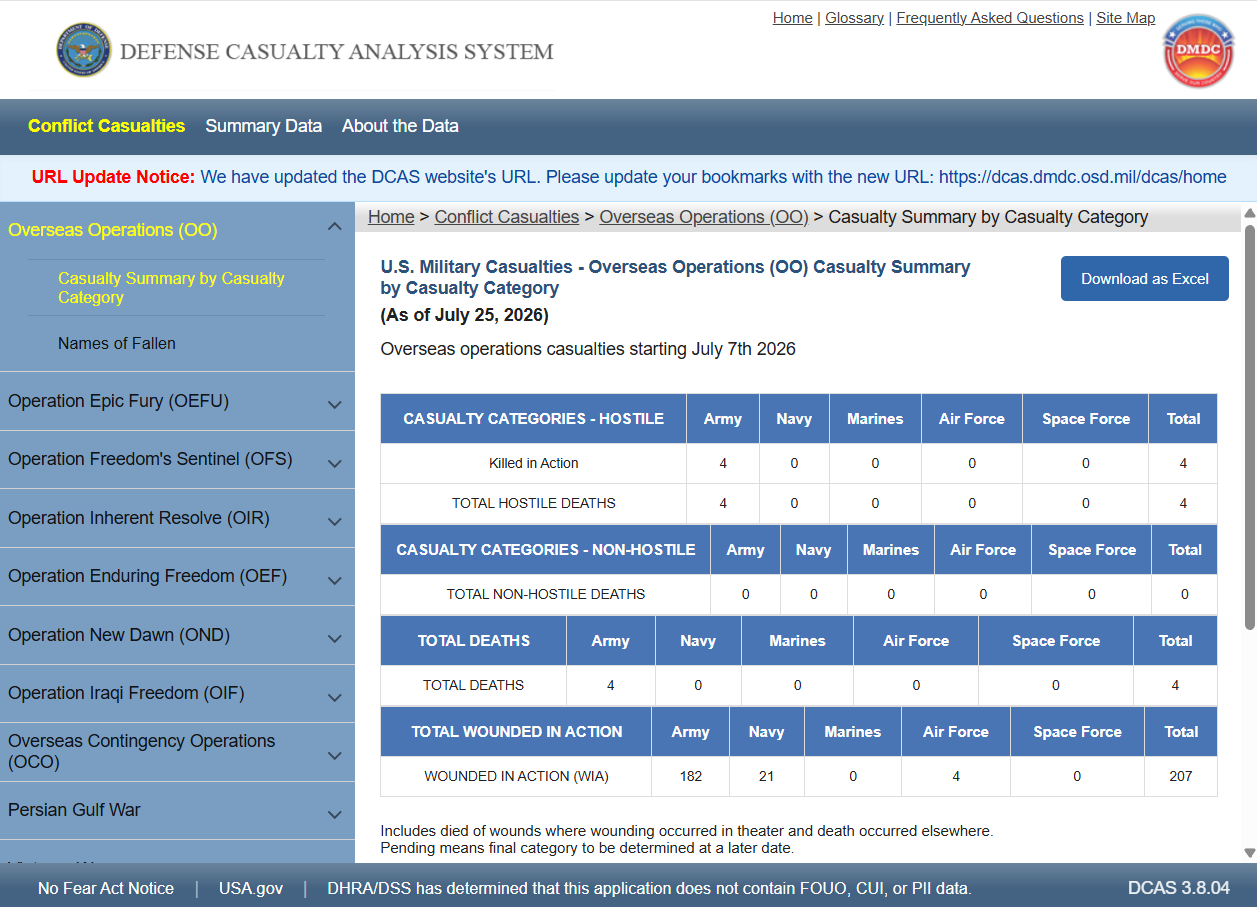
Updated figures published in the Defense Casualty Analysis System (DCAS) restored previously missing fatalities, added more than 140 wounded troops and introduced a brand-new "Overseas Operations" category beginning July 7, the exact date President Donald Trump's administration told Congress a restarted conflict with Iran had begun for War Powers purposes.
While the Defense Department has not publicly linked the database changes to the administration's legal position, the overlap comes as lawmakers from both parties question whether the White House has effectively reset the constitutional clock governing military action without fresh congressional approval.
Pentagon quietly rewrites war records
The revised DCAS database now lists 18 US service members killed and 624 wounded since military operations against Iran began, a sharp increase from the previously reported total of 482 wounded.

The update also restored four deaths that had temporarily disappeared from the database after Iranian attacks, following days of confusion over fluctuating casualty figures.
Perhaps more significant than the numbers themselves is the introduction of an entirely new casualty category labeled "Overseas Operations," which begins on July 7. The Pentagon has not publicly explained why the category was created, why that date was chosen or which conflicts it officially covers.
The department previously attributed disappearing casualty figures to temporary technical disruptions but has yet to provide a detailed explanation for the broader restructuring.
July 7 carries legal significance
The starting date immediately caught attention because it matches the date the Trump administration identified in its War Powers notification to Congress as the beginning of a renewed phase of hostilities with Iran.
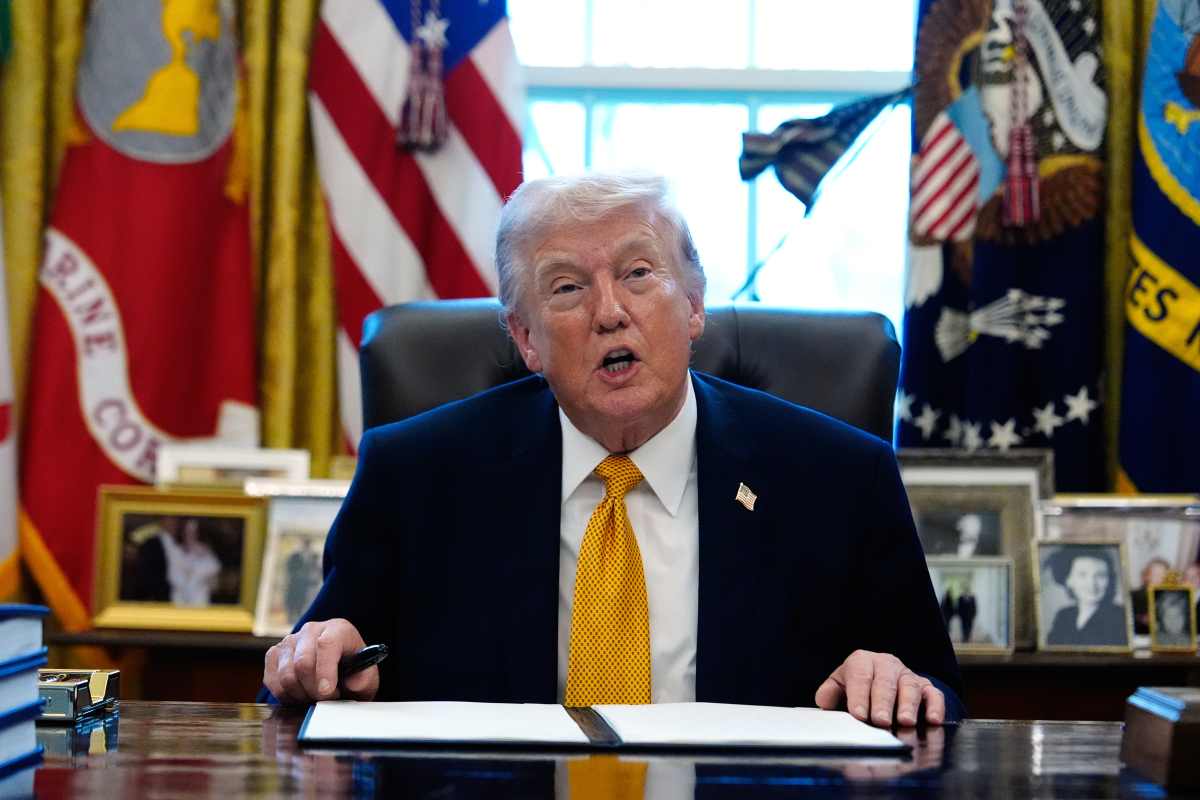
Earlier this month, the White House argued that a ceasefire had effectively stopped the original War Powers clock before fighting resumed, creating what it considers a legally distinct conflict.
Under the War Powers Resolution of 1973, presidents generally must obtain congressional authorization if military operations continue beyond 60 days.
By aligning the Pentagon's newest casualty category with the same date cited in the administration's legal notification, the accounting change introduces a new dimension to the debate over how the conflict itself is being defined.
Lawmakers demand greater clarity
The changes arrived after lawmakers openly questioned inconsistencies in Pentagon casualty reporting.

Twelve Democratic members of the Senate Armed Services Committee wrote to Defense Secretary Pete Hegseth seeking answers after casualty totals unexpectedly declined while military operations were continuing.
CNN also reported observing casualty figures fluctuate repeatedly while monitoring the DCAS database in real time.
Although Pentagon officials acknowledged temporary website disruptions, they have not fully explained why fatalities disappeared before later being restored or why the database now categorizes casualties differently.
War Powers debate intensifies again
The accounting revisions are likely to fuel an already contentious constitutional debate over presidential war powers.
Several lawmakers, including Republican Sen. Lisa Murkowski, have argued that resetting the War Powers timeline could allow the administration to continue military operations without obtaining new congressional authorization.
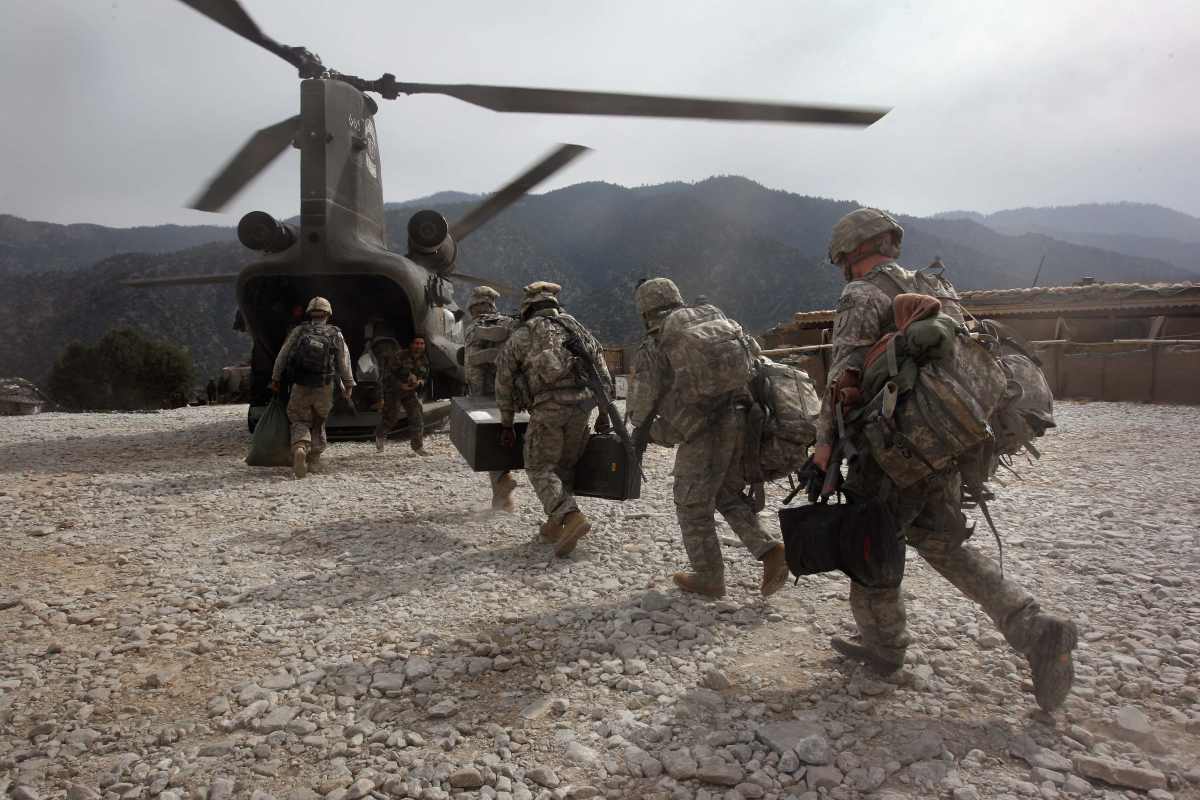
Meanwhile, some administration officials and legal scholars maintain that portions of the War Powers Resolution unconstitutionally restrict the president's authority as commander in chief.
Whether the Pentagon's revised casualty accounting ultimately reflects a technical update or a broader administrative shift, the timing has ensured that questions extend far beyond troop numbers.
The focus is now on how the government is officially defining the Iran conflict itself, and what that definition could mean for congressional oversight of America's expanding military campaign.