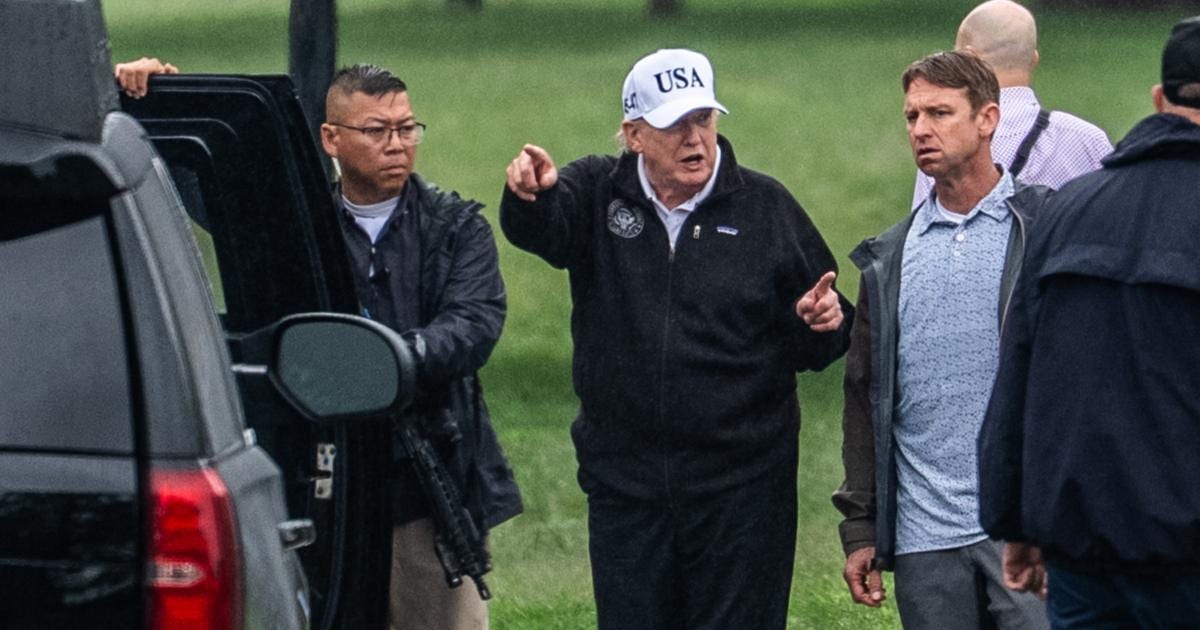
War Powers victory: Senate kills 'fourth' Iran revolt as Trump retains strike authority
Fourth attempt to curb Trump's war powers failed in the Senate as the measure fell short amid a party-line split over executive military authority
UPDATED 1 HOUR AGO
Lawmakers voted against advancing a resolution that sought to restrict presidential military powers, allowing current operations to continue without immediate congressional limits (Getty Images)

WASHINGTON, DC: The Senate on Wednesday, April 15, rejected a fourth attempt to limit President Donald J Trump's authority to conduct military operations related to Iran, voting 47-52 against a motion to advance a War Powers Resolution.

The outcome allows the administration to continue its current course without immediate congressional restriction, as the conflict approaches its seventh week.

The resolution, introduced by Senator Tammy Duckworth (D-Ill), aimed to require the removal of US forces from hostilities unless Congress formally authorized military action.

WASHINGTON, DC - NOVEMBER 17: Sen. Tammy Duckworth (D-IL) talks to reporters during a news conferenc
Sen Tammy Duckworth (D-IL) talks to reporters during a news conference at the US Capitol on November 17, 2020, in Washington, DC (Chip Somodevilla/Getty Images)

Duckworth argued that the operation required legislative approval, while Republican leadership maintained that the president retains authority under existing frameworks.

The vote underscores continued divisions in Congress over the scope of executive war powers, particularly as the April 21 ceasefire deadline approaches and negotiations remain ongoing.

Democrats vow weekly votes after Senate rejects resolution

Following the vote, Senate Minority Leader Chuck Schumer said Democrats would continue to bring the resolution forward, signaling plans for repeated floor action.

He stated that lawmakers should continue debating the issue, given the duration of the conflict and the absence of a formal authorization.
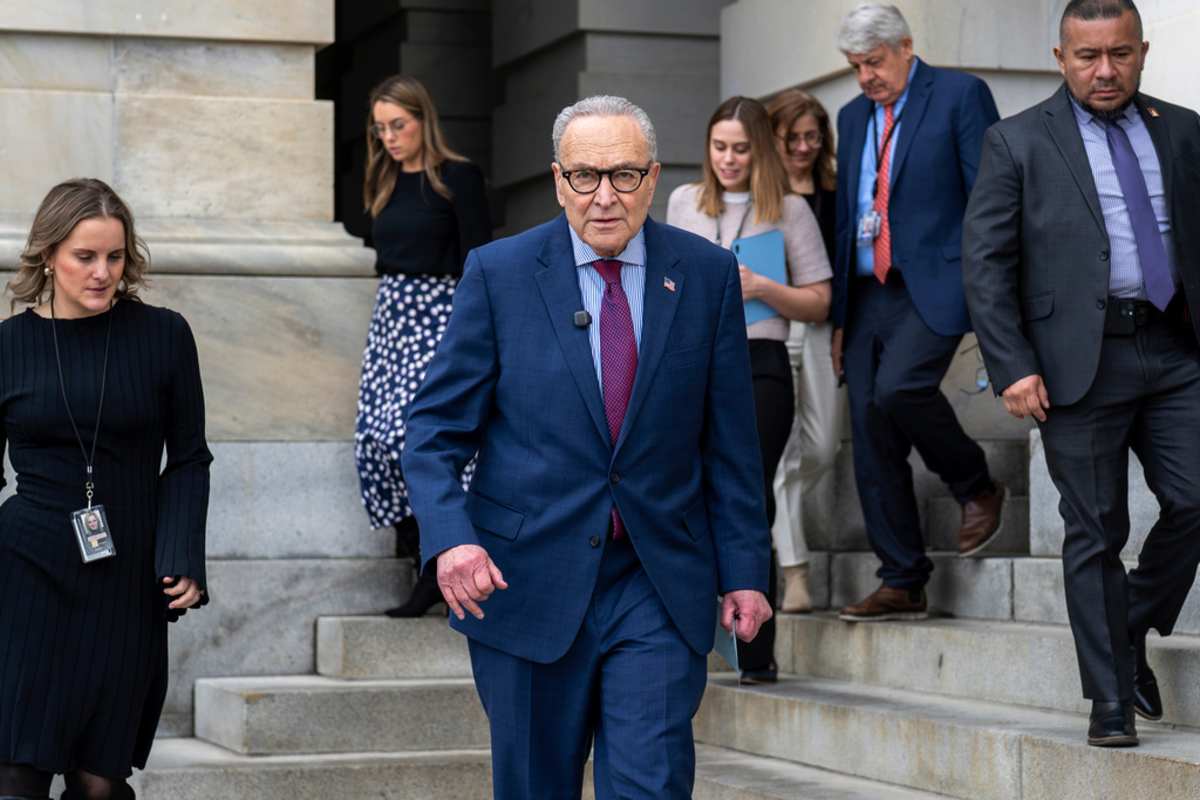
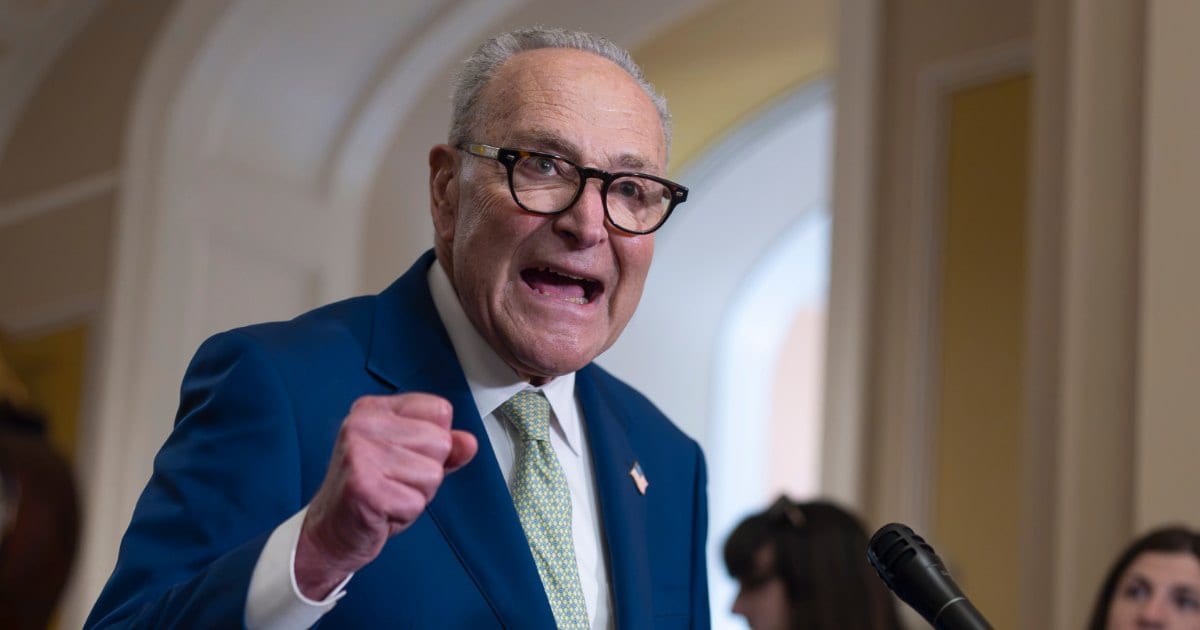
Senate Minority Leader Chuck Schumer, D-N.Y., walks to speak with reporters about Homeland Security Secretary Kristi Noem, outside the Capitol in Washington, Thursday, March 5, 2026. (AP Photo/J. Scott Applewhite)
Minority Leader Chuck Schumer has vowed to force a war powers vote every week until the conflict ends or the GOP breaks ranks (AP Photo/J Scott Applewhite)

Support for the measure remained limited across party lines. Senator Rand Paul (R-Ky) joined Democrats in backing the resolution, while Senator John Fetterman (D-Pa) voted with Republicans against it.

The vote highlighted a narrow but consistent alignment within the Senate that has so far prevented the measure from advancing.

Democratic lawmakers have argued that Congress must reassert its constitutional role in authorizing military force.

U.S. Sen. John Fetterman (D-PA) speaks to reporters in the Senate Subway during a series of confirmation votes for U.S. President Donald Trump's cabinet nominees at the U.S. Capitol Building on February 12, 2025 in Washington, DC. The Senate voted to confirm Tulsi Gabbard as Director of National Intelligence and completed a procedural vote for the confirmation of Robert F. Kennedy Jr. as Secretary of Health and Human Services. (Photo by Anna Moneymaker/Getty Images)
Sen John Fetterman (D-PA) speaks to reporters in the Senate Subway on February 12, 2025, in Washington, DC (Anna Moneymaker/Getty Images)

Republican leaders, however, have pointed to national security considerations and the need for operational flexibility during ongoing negotiations and enforcement measures.

Republicans eye sixty-day 'lethal' deadline

Despite the vote, some Republican senators have raised questions about the timeline under the 1973 War Powers Resolution, which limits unauthorized military engagement to 60 days unless Congress provides approval.

That threshold is approaching, placing additional focus on the administration’s next steps.

Senators, including John Curtis (R-Utah) and Mike Rounds (R-SD), have indicated that continued military involvement beyond that period may require further congressional review.

CHARLOTTE, NORTH CAROLINA - AUGUST 24:  U.S. President Donald Trump speaks on the first day of the R
With the 60-day legal limit less than two weeks away, Republicans are demanding the administration present a post-war plan (Getty Images)

Under the law, the president may extend the window to 90 days by certifying that additional time is required due to military necessity.

The approaching deadline has introduced a new layer of urgency, as lawmakers assess whether current operations will conclude within the statutory timeframe or require additional authorization.

John Thune backs administration strategy, cites progress on Iran talks

Senate Majority Leader John Thune said Republicans remain supportive of the administration’s current approach, citing what he described as progress toward defined objectives.

He indicated that leadership believes the strategy, combining diplomatic efforts with economic and military pressure, could produce results before further congressional action is required.
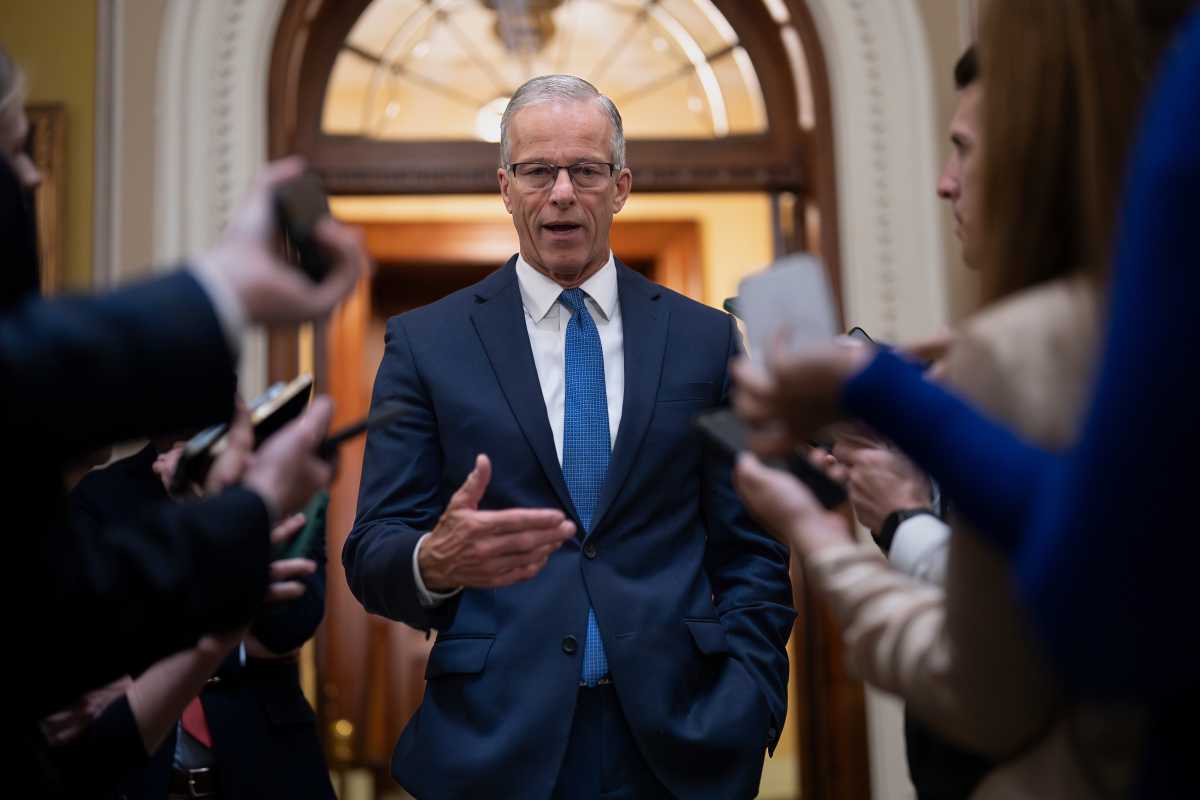
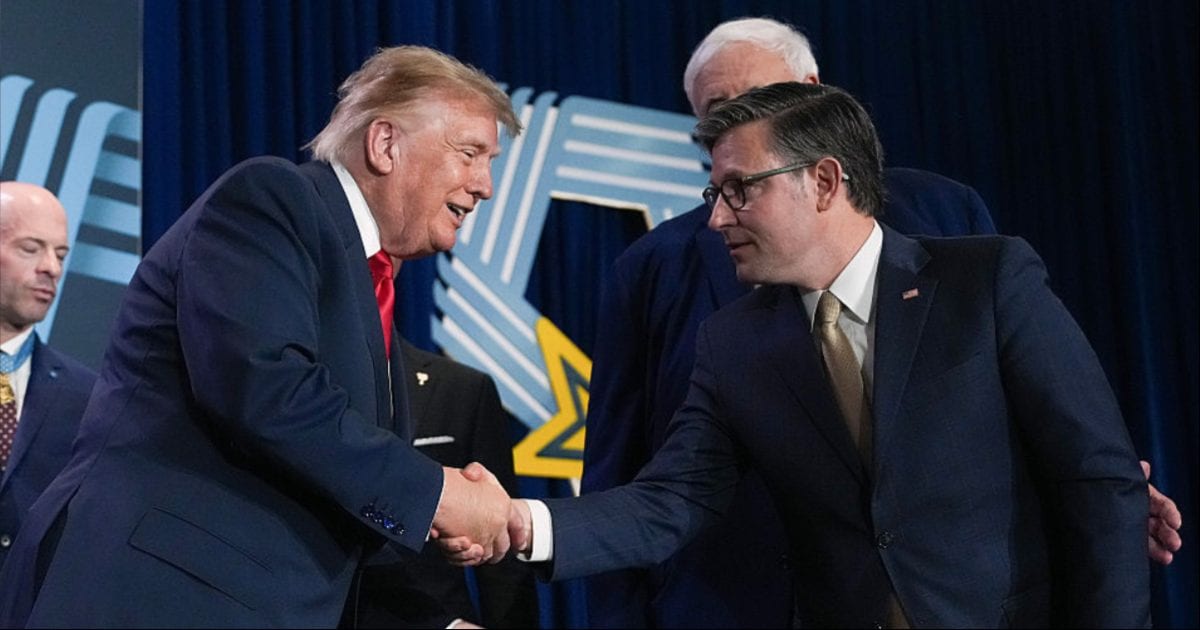
Senate Majority Leader John Thune, R-S.D., speaks to reporters outside the chamber after passing a measure by unanimous consent that would fund most of the Department of Homeland Security, if the House agrees, at the Capitol in Washington, Thursday, April 2, 2026. (AP Photo/J. Scott Applewhite)
Leader Thune maintained that the GOP conference felt 'pretty good' about current military achievements, backing Trump's 'max pressure' strategy (AP Photo/J Scott Applewhite)

The administration has focused on securing a long-term agreement addressing Iran’s nuclear program, with negotiations continuing through multiple channels.

Officials have suggested that existing measures, including maritime enforcement, are intended to strengthen the US position in those talks.

As the Senate prepares for potential additional votes, the balance between executive authority and congressional oversight remains a central issue.

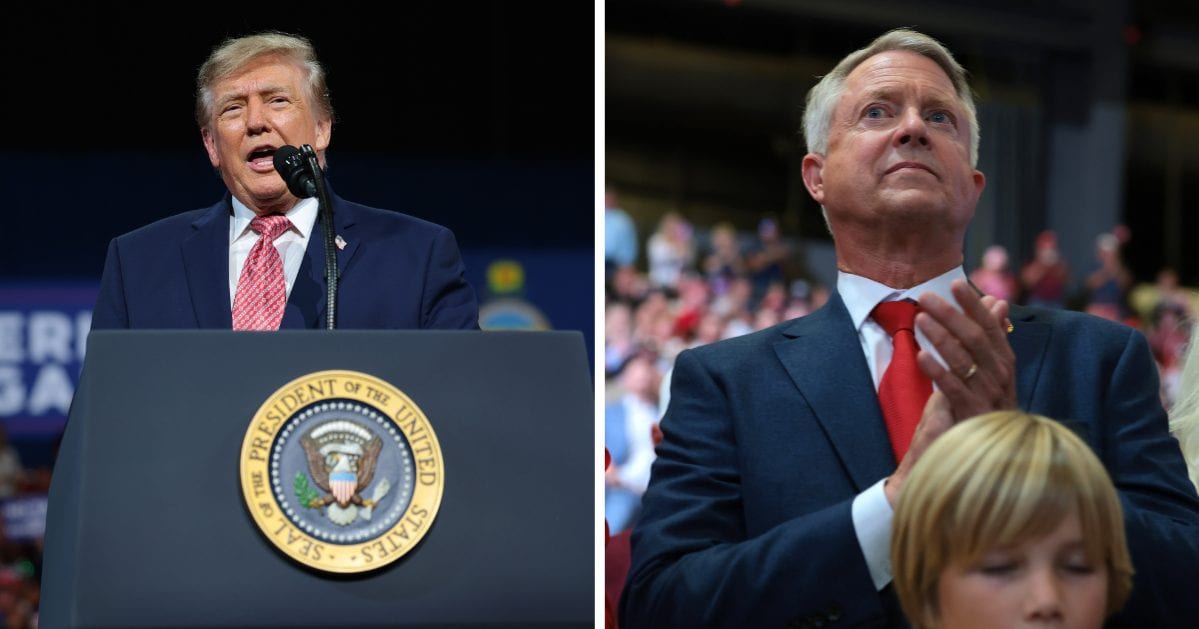
President Donald Trump speaks outside the Oval Office of the White House, Monday, April 13, 2026, in Washington. (AP Photo/Alex Brandon)
President Donald Trump speaks outside the Oval Office of the White House, Monday, April 13, 2026, in Washington (AP Photo/Alex Brandon)

With the War Powers timeline advancing and diplomatic efforts ongoing, the coming days are expected to be critical in determining whether legislative intervention gains traction or the current strategy continues without interruption.
RELATED TOPICS US STRIKES IRAN

GET BREAKING U.S. NEWS & POLITICAL UPDATES
STRAIGHT TO YOUR INBOX.

MORE STORIES

Hilton targets Steyer’s immigration policies during campaign segment as rivalry sharpens
1 hour ago
Sanders says, 'the American people have had enough,' ahead of the Israel arms vote
2 hours ago
Treasury Secretary Bessent projected $3 gas, linking potential price drops to progress in diplomacy and improved global shipping conditions.
3 hours ago
House Speaker defends Trump as clash with Pope Leo escalates over Iran war and moral authority
3 hours ago
'More than 53 million filers claimed at least one of President Trump's signature new tax cuts', Press Secretary Karoline Leavitt said
3 hours ago
Resolution claims Hegseth misused authority, hurt military credibility and NATO ties
4 hours ago
'We’re still negotiating,' GOP leaders say as Trump urges Reps to 'UNIFY' behind clean extension
4 hours ago
JD Vance expressed optimism on Iran talks as discussions continued through intermediaries rather than direct leadership contact
5 hours ago
Trump posts new image days after critics labeled earlier post 'blasphemy' backlash
5 hours ago
Democrats proposed a bill to bar presidents, vice presidents, and their families from receiving federal settlement payouts in most legal disputes
5 hours ago