Rubio says US Iran operation expected to end in 'weeks'
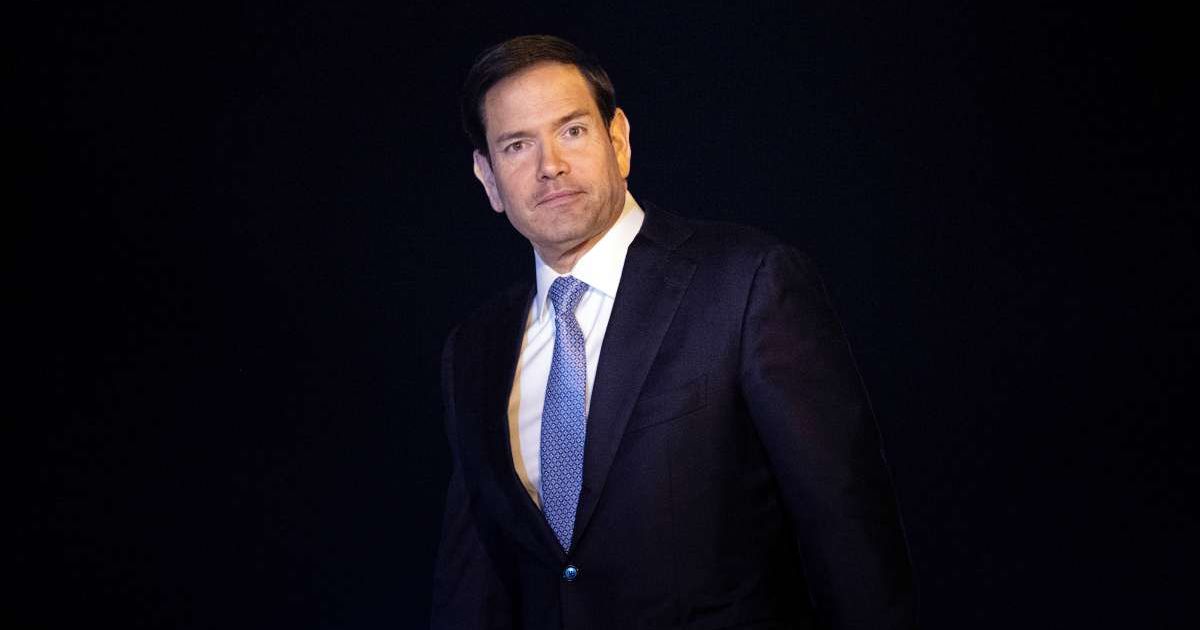
WASHINGTON, DC: Secretary of State Marco Rubio said on Friday, March 27, that the United States expects its ongoing military campaign against Iran to conclude in “weeks, not months,” even as fighting continues to intensify across multiple fronts.
Speaking after a Group of Seven (G7) foreign ministers meeting in France, Rubio said the objective remains to weaken Iran’s military capabilities while creating conditions for a potential diplomatic resolution.
His remarks come as Israeli forces expanded their air operations, targeting key nuclear-linked facilities inside Iran.
According to regional reports, strikes were carried out on the Shahid Khondab heavy-water plant in Arak and a uranium-processing facility in Yazd. Israeli officials have indicated that operations will continue as long as military objectives remain unmet.
Secretary of State Marco Rubio suggested Friday that the war in Iran could end "in a matter of weeks, not months," regardless of whether the United States sends ground troops.
— CBS News (@CBSNews) March 27, 2026
Rubio was attending the G7 Foreign Ministers' meeting in France, where he told U.S. allies "that… pic.twitter.com/axAOm37gao
The conflict, which escalated after a February 28 strike that killed Iran’s Supreme Leader Ali Khamenei, has entered a critical phase marked by continued airstrikes, maritime disruptions, and competing diplomatic signals.
Chokehold on the Strait of Hormuz
Tensions remain high in the Strait of Hormuz, where Iranian forces have continued to restrict maritime traffic.
On Friday, multiple commercial vessels were reportedly turned away by the Islamic Revolutionary Guard Corps (IRGC) Navy, with restrictions targeting ships linked to countries supporting US and Israeli operations.
Alongside military bases, those financial entities that finance the US military budget are legitimate targets. US treasury bonds are soaked in Iranians' blood. Purchase them, and you purchase a strike on your HQ and assets.
— محمدباقر قالیباف | MB Ghalibaf (@mb_ghalibaf) March 22, 2026
We monitor your portfolios. This is your final notice.
The waterway, which carries a significant share of global oil shipments, remains partially disrupted. Rubio described the situation as a major concern for global trade and energy stability, stating that efforts are underway to ensure freedom of navigation.
In response, the United States has increased its military presence in the region, including deployments of Marines and airborne units.
Defense officials have not confirmed specific operational plans but have emphasized readiness to secure key maritime routes if required.
🚨🇮🇷 Iran's Parliament Speaker is warning the world about the economic fallout from this war.
— Mario Nawfal (@MarioNawfal) March 9, 2026
Mohammad Bagher Ghalibaf says oil prices could stay in triple digits for an extended period and paralyzing global economies is the "likely outcome."
His shot at the U.S.: "The Israel… https://t.co/QCUQA2xqir pic.twitter.com/w0iXlbVNrr
Iranian officials have warned of economic consequences if foreign forces expand their footprint, including potential impacts on global oil prices.
Nuclear facilities and missile sites hit
Israeli airstrikes continued across multiple locations on Friday, including targets linked to missile production and launch infrastructure.
Defense officials in Israel said operations are focused on limiting Iran’s ability to deploy long-range weapons.
US intelligence assessments have indicated that a portion of Iran’s missile and drone capabilities has been degraded, though a significant number of systems remain operational. Israeli leadership has signaled that further strikes are likely as part of ongoing operations.
Crush their missiles and drone stockpiles. Destroy their defense industrial base. Wipe out Iran's military capabilities.
— The White House (@WhiteHouse) March 26, 2026
"It's a display of force and precision and skill like nothing the world has really witnessed." - President Donald J. Trump 🇺🇸 pic.twitter.com/qMVDoopt69
The conflict has also had humanitarian consequences. International organizations, including the Red Cross, have reported rising casualty figures in Iran.
In Lebanon, ongoing military activity has displaced large numbers of civilians in southern regions.
The White House has previously stated that ensuring maritime access and addressing security concerns tied to Iran’s capabilities remain central to US objectives.
Diplomacy stalled amid conflicting reports
Diplomatic efforts continue alongside military operations, though progress remains unclear. President Donald Trump has said that discussions are ongoing, while Iranian officials have denied that formal negotiations are taking place.
A senior Iranian Foreign Ministry official: “There are no negotiations underway with the United States.”
— Cryptopolitan (@CPOfficialtx) March 23, 2026
“We reject Trump’s claim about ongoing talks, and the Islamic Republic of Iran will not accept any negotiations until its objectives in the war are achieved. Trump’s… https://t.co/NnmI4yoc51
Rubio confirmed that indirect communication has occurred through mediators, including representatives from Pakistan and Turkey.
However, he noted that Iran has not formally responded to proposals put forward by the United States.
The G7 foreign ministers issued a joint statement calling for the restoration of safe and open navigation in the Strait of Hormuz and urging a reduction in hostilities.
Despite these calls, military activity continues across the region.