SCOTUS overturns Colorado’s ban on conversion therapy
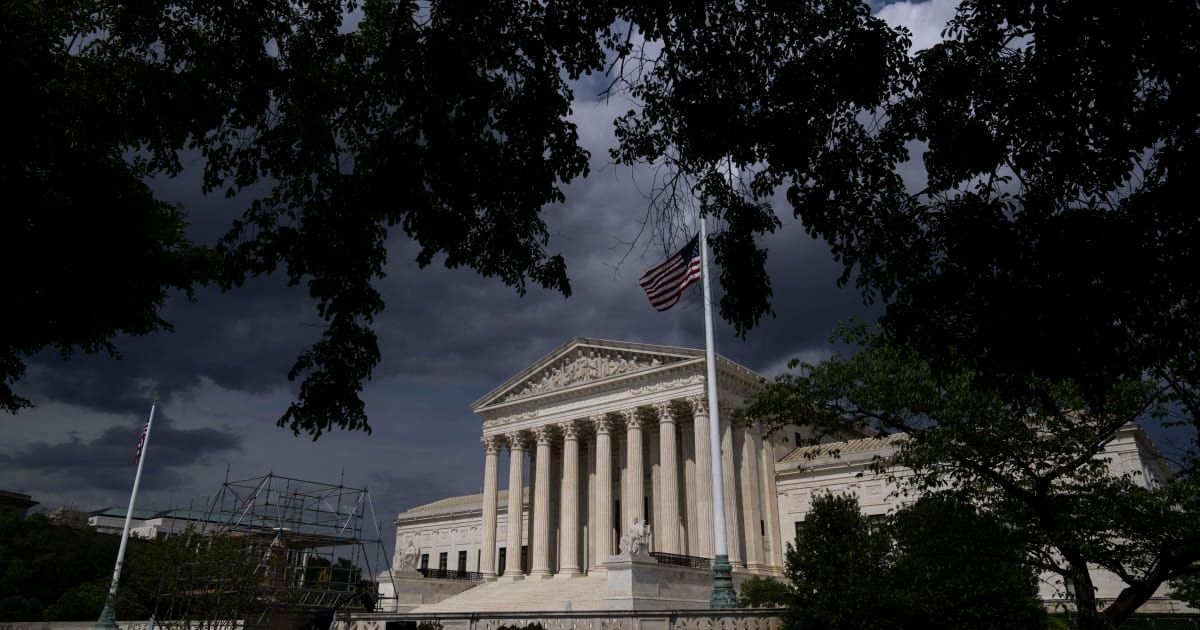
WASHINGTON, DC: The Supreme Court of the United States delivered a seismic shift to the legal landscape of healthcare and civil rights today, ruling 8–1 to strike down Colorado’s 2019 ban on conversion therapy for minors.
In the case of Chiles v Salazar, the Court sided with Kaley Chiles, a Christian talk therapist who argued that the state’s prohibition on efforts to change a minor's sexual orientation or gender identity constituted a viewpoint-based ‘gag order’ on her First Amendment rights.
The ruling effectively upends the legislative efforts of more than 20 states that had previously enacted similar bans to protect LGBTQ+ youth from a practice widely discredited by major medical associations.
🚨 In an 8-1 vote, the Supreme Court holds that Colorado’s ban on “conversion therapy,” as applied to petitioner's talk therapy, violates the First Amendment because it constitutes viewpoint discrimination pic.twitter.com/NkDo4Djsb6
— SCOTUS Wire (@scotus_wire) March 31, 2026
While the Denver-based 10th US Circuit Court of Appeals had originally upheld the law as a valid regulation of professional conduct, the high court’s conservative majority determined that the government cannot "prescribe an orthodoxy of views" within the private confines of a counseling room.
Free speech as a medical bulwark
Writing for the majority, the Court rejected the notion that 'professional speech' exists as a separate, lesser-protected category of expression.
The opinion emphasized that the Constitution protects the right of all citizens to voice dissenting and even unpopular views, stating that state-imposed orthodoxies are fundamentally incompatible with the First Amendment.

"The Constitution does not protect the right of some to speak freely; it protects the right of all," the Court noted, stressing that therapists' conversations are a form of constitutionally protected speech.
Therapist Kaley Chiles, represented by the Alliance Defending Freedom, contended that her practice utilized only talk therapy with voluntary clients who set their own objectives.
Her legal team argued that the state was effectively putting itself into the counseling room to censor shared values between a therapist and her patients.
By siding with Chiles, the Court has set a precedent that professional standards of care cannot override the individual right to expressive conduct.
Jackson warns of medical system ‘unraveling’
Justice Ketanji Brown Jackson stood as the lone dissenter, issuing a blistering warning that the decision could lead to a "precipitous drop" in the quality of American healthcare.
Jackson argued that medical speech is fundamentally different from generic free speech, as it relies on industry-aligned, evidence-based advice to ensure patient safety.
She cautioned that by granting licensed professionals a newfound right to provide "substandard medical care," the Court is inviting the unraveling of the entire regulatory framework governing psychiatrists, therapists, and doctors.
🚨 WOW. Liberal Justice Ketanji Brown Jackson just advocated for ACCPEPTING young children changing their gender, which can involve irreversible s*x surgeries
— Eric Daugherty (@EricLDaugh) March 31, 2026
Of course, this was an 8-1 opinion, she is the ONLY ONE on our court espousing this lunacy in the opinion on Colorado… pic.twitter.com/Gt7hc30brO
"It is baffling that we could now be standing on the edge of a precipitous drop in the quality of healthcare services in America," Jackson wrote.
Her dissent reverberated the concerns of eight healthcare scholars and the Human Rights Campaign, who filed briefs stating that the decision could jeopardize numerous state laws regulating psychotherapy well beyond the specific context of conversion therapy.
Implications for LGBTQ+ youth safety
The decision has immediate and potentially devastating implications for LGBTQ+ youth across the country.
Advocates point to data from The Trevor Project showing that young people who undergo conversion therapy are more than twice as likely to attempt s*****e compared to their peers.

Shannon Minter, legal director of the National Center for LGBTQ Rights, stated that losing these protections would cause "incalculable harm" to a vulnerable population already facing significant psychological stress.
As the practice has been widely rejected by leading mental health associations for contributing to long-term psychological harm, the ruling creates a legal gray area where professional standards and constitutional rights collide.
For now, therapists in Colorado and potentially dozens of other states are free to engage in conversion practices under the shield of the First Amendment, marking a major victory for conservative legal groups and a profound setback for LGBTQ+ advocacy organizations.