'Stick to your knitting': Powell resists Iran war pressure on rates as oil prices surge
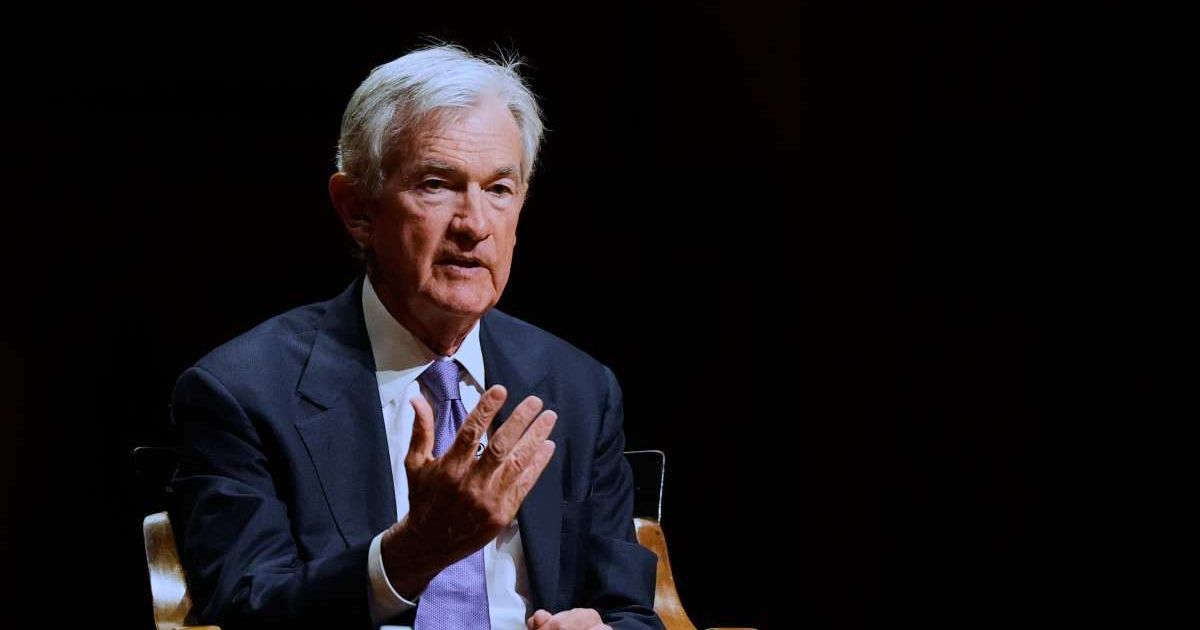
CAMBRIDGE, MA: Federal Reserve Chair Jerome Powell said on Monday, March 30, that the central bank is closely monitoring the economic impact of the ongoing conflict in Iran, as rising energy prices add pressure to global markets.
Speaking to introductory economics students at Harvard University, Powell indicated that policymakers are not yet at a point where immediate action is required, describing current monetary policy as “well positioned” to assess developments.
The remarks come as oil market disruptions linked to the conflict have pushed energy prices higher, raising concerns about inflation and broader economic stability.
Powell said the full scope of the impact remains uncertain, signaling that the Federal Reserve is continuing a data-driven approach before making any policy adjustments.
Inflation expectations remain 'well-anchored' globally
Powell noted that inflation has remained near the Federal Reserve’s 2% target in recent months, though it has not consistently held at that level.
He said longer-term inflation expectations among consumers and markets remain “well-anchored,” a factor that allows the Fed to avoid immediate intervention despite volatility in energy markets.
POWELL JUST LAID OUT THE CURRENT STATE OF THE U.S ECONOMY.
— Bull Theory (@BullTheoryio) March 30, 2026
Prices can still go higher, as tariffs may add up to 1% more inflation.
At the same time, finding a job is getting harder, especially for new workers.
AI is helping companies become more efficient, but it is also… pic.twitter.com/Bw9ynfbgZv
He emphasized that policymakers are assessing whether current price pressures will prove temporary or more persistent. The recent surge in oil prices, tied to supply disruptions in the Middle East, has introduced new uncertainty into the outlook.
Powell also maintained a conversational tone with students, briefly referencing the role of supply shocks in economic modeling while underscoring the importance of patience in policy decisions.
Advice for successor Kevin Warsh
During the session, Powell addressed questions about leadership at the Federal Reserve, including the role of his potential successor, Kevin Warsh, whose nomination is pending in the Senate.
Powell declined to offer specific policy advice but stressed the importance of institutional independence.
"Never volunteer advice," says Jerome Powell on his advice for the next Fed chair. "Only give advice when asked..."
— Yahoo Finance (@YahooFinance) March 30, 2026
Later adding: "It is very, very important to stick to your knitting, and to stick to the things that were actually assigned." pic.twitter.com/okt5mrpUhd
“It’s very, very important to stick to your knitting and stick to the things that were actually assigned,” Powell said, referring to the Fed’s dual mandate of price stability and maximum employment.
He reiterated that monetary policy decisions should remain focused on economic data and statutory responsibilities, regardless of external political pressures.
Underrated skill in building consensus
Powell also spoke about leadership within the Federal Reserve, highlighting consensus-building as a key part of decision-making.
He described listening as an “underrated” skill, noting that effective policymaking often depends on understanding a range of perspectives within the Federal Open Market Committee.
He added that fostering agreement across differing viewpoints is essential for maintaining credibility and stability in financial markets.