Trump could demolish Statue of Liberty if he wants to, DOJ attorney argues in court
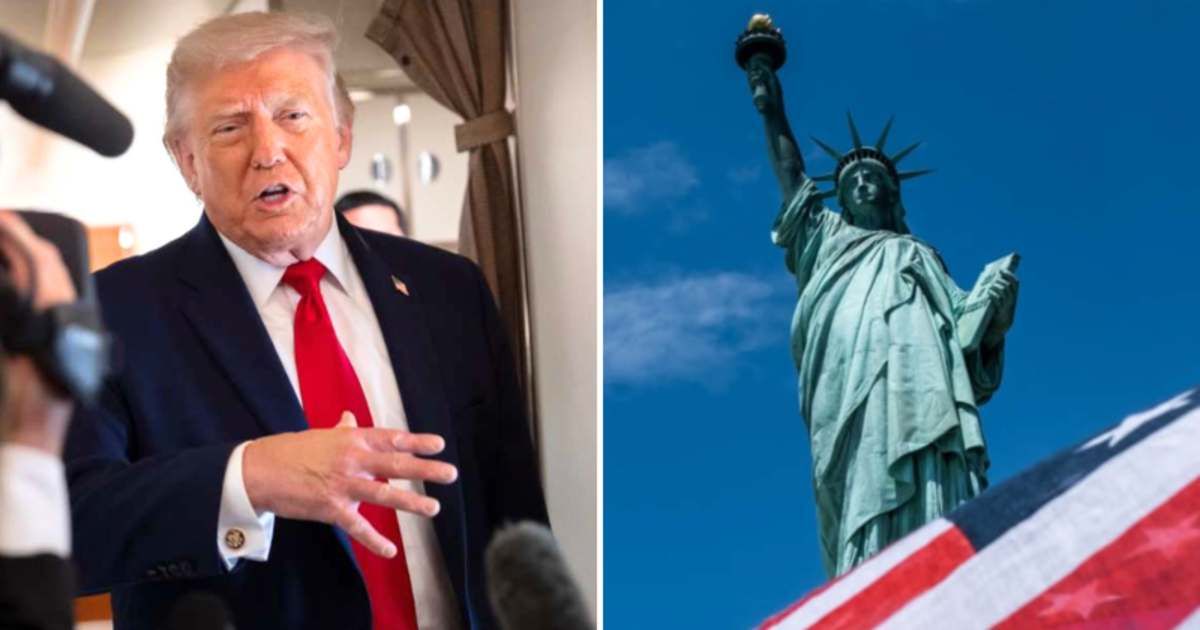
WASHINGTON, DC: A DOJ lawyer raised eyebrows as he made a case for President Trump’s White House makeover spree, suggesting in court that the government has the authority to bulldoze the Statue of Liberty.
President Donald Trump’s sweeping changes to the White House and surrounding landmarks have already stirred backlash from critics, but Friday’s courtroom exchange pushed the debate to another level.
Court clash over 'fait accompli' White House makeover
DOJ attorneys were before a three-judge panel on the US Court of Appeals for the District of Columbia Circuit, namely Judge Patricia Millett, an Obama appointee; Judge Bradley Garcia, a Biden appointee; and Judge Neomi Rao, a Trump appointee. The lawyers defended the administration against a lawsuit aimed at stopping Trump’s ballroom project.
Legal reporters Kyle Cheney and Josh Gerstein of Politico described how judges Millett and Garcia “expressed skepticism Friday about the Trump administration’s view that courts are powerless to stop the construction of the White House ballroom now that the East Wing had been demolished.”
“When did it become a fait accompli?” Millett asked. “If this were complete lawlessness by the government … it couldn’t be stopped?”
DOJ attorney Yaakov Roth didn’t exactly calm things down.
“On these theories, I think that’s right,” he replied.
A DOJ lawyer told a federal appeals court panel that the Trump administration believes the White House ballroom project cannot be stopped by judges, and that even if the president wanted to "bulldoze" the Statue of Liberty, no one could sue to stop him. https://t.co/b5mv4yFcBq pic.twitter.com/eVRBdB3OOh
— ABC News Live (@ABCNewsLive) June 5, 2026
“If the government decides, very quickly, to bulldoze the Statue of Liberty — the people whose ancestors were the first thing they saw coming to this country, but the government moved too fast — nothing can be done?” Millett pressed.
“I think that’s right, yes,” Roth responded.
Trump’s ballroom plans and demolition fallout
At the center of the dispute is Trump’s long-promised White House ballroom, which he has called “absolutely magnificent construction” and “one of the best anywhere in the world.” But critics say the reality didn’t match the rhetoric.
Trump had assured that construction “won’t interfere with the current building” and would be “near [the East Wing] but not touching it.” However, the façade was torn down soon after, followed by another major section. Eventually, the East Wing itself was demolished.
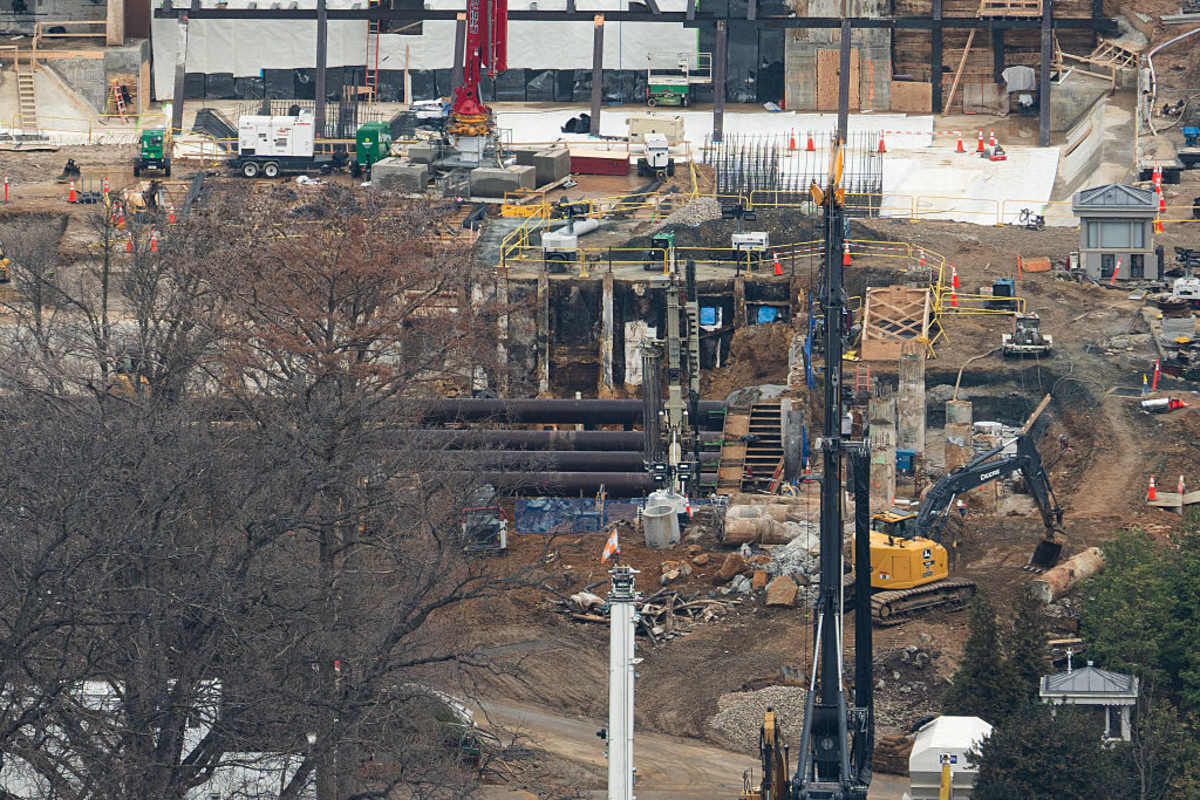
The project was initially pitched as privately funded, though details remained murky and sparked ethical concerns over possible conflicts of interest.
After the attempted shooting at the White House Correspondents’ Dinner, Trump and Republicans also pushed for taxpayer funding for the ballroom.
Trump has faced pushback for adding extensive gold accents to the Oval Office, installing new marble and gold fixtures in the Lincoln Bathroom, paving over the Rose Garden, and repainting the Reflecting Pool. He’s also floated building an Arc de Triomphe-style arch and even had his name installed at the Kennedy Center, though a judge later ruled it had to be removed.
Still, it was the Statue of Liberty hypothetical that stole the spotlight.

The monument is a 151-foot copper neoclassical sculpture inspired by the Roman goddess of Liberty. A gift from France, it was designed by sculptor Frédéric Auguste Bartholdi, with internal ironwork by Gustave Eiffel, who later built the Eiffel Tower.
It was assembled in France, shipped in pieces to the US, and installed on Liberty Island overlooking New York Harbor. After the pedestal was completed in April 1886, construction of the statue began, and it was dedicated on October 28, 1886. Its official name is “Liberty Enlightening the World,” or “La Liberté éclairant le monde.”