Trump, prices, immigration: what's really driving 2026 midterm fight
WASHINGTON, DC: With the November 3 midterms approaching, the economy and cost of living remain among the top concerns in national polling, while immigration has declined in importance.
Trump remains a distinct factor in congressional voting.
Healthcare, abortion and the Iran war have generated substantial campaign activity despite ranking lower in some voter-priority surveys.
The polling measures different things: what voters want candidates to discuss, which issues they consider most important, presidential approval and congressional vote preference.
Those figures are therefore kept separate.
A review of Pew Research Center, Marquette Law School, Economist/YouGov and Harvard CAPS/Harris polling, alongside campaign advertising data, shows where those two conversations overlap, and where they do not.
What issues are voters prioritizing
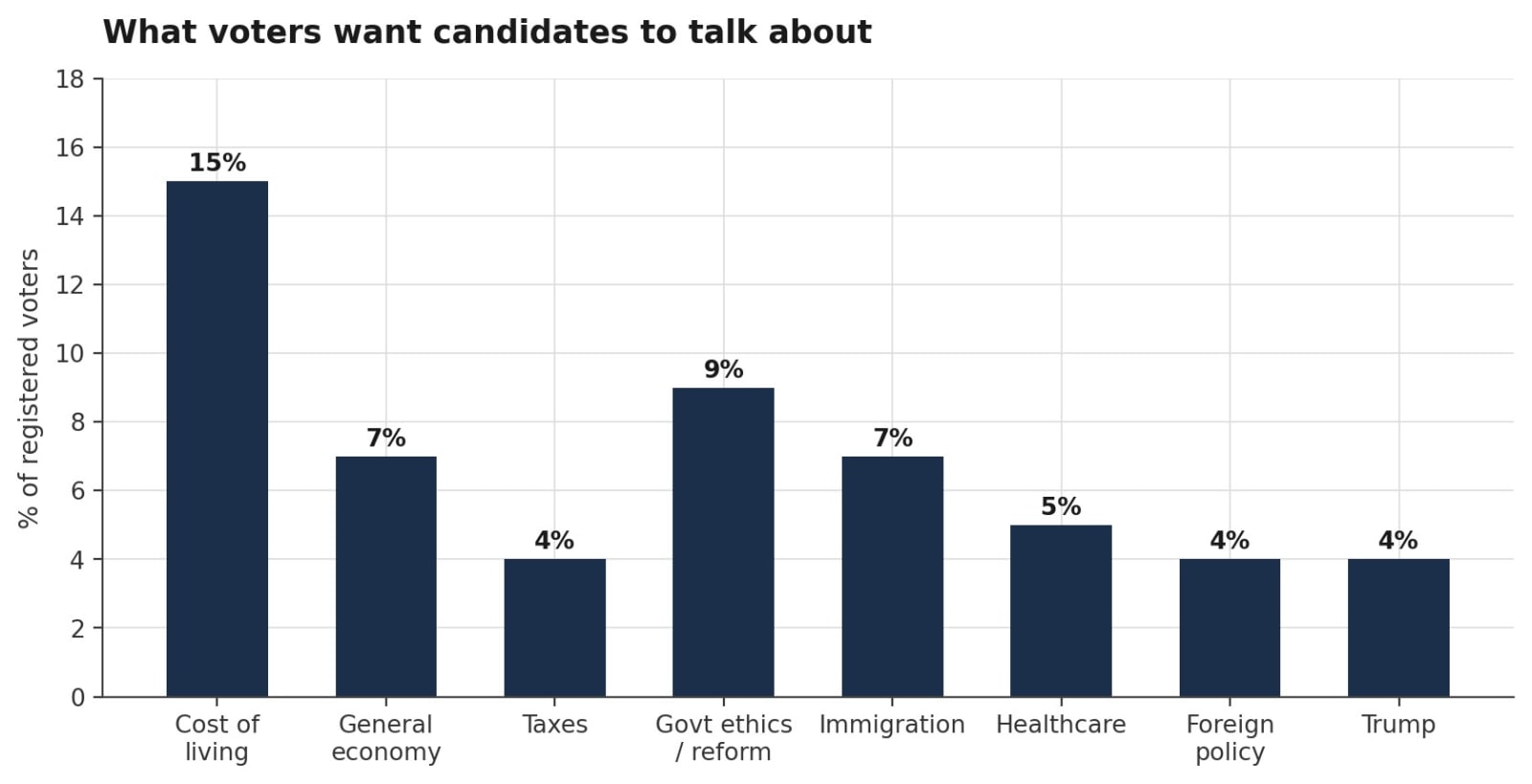
A July 6–12 Pew Research Center survey found 29% of registered voters named an economic concern as the issue they most wanted congressional candidates to discuss.
That included 15% who cited the cost of living and affordability, 7% who cited the general economy and 4% who cited taxes.
Government ethics and reform followed at 9%, while immigration was cited by 7%, healthcare by 5%, foreign policy by 4%, and Trump by 4%.
A September Bowling Green State University/YouGov poll, using a multiple-response question, found the economy at 38%, inflation at 31%, government corruption at 30%, immigration at 25%, threats to democracy at 24% and healthcare at 22%.
The issue has also shaped Senate campaigns.
In Ohio, Republican Jon Husted and Democrat Sherrod Brown have both centered their campaigns on affordability, although their records and explanations for high costs differ.
Is the economy still driving the election
Yes. The Economist/YouGov tracker recorded inflation and prices rising from 26% in early February to a record 34% in early April before remaining in the low 30s through early summer.
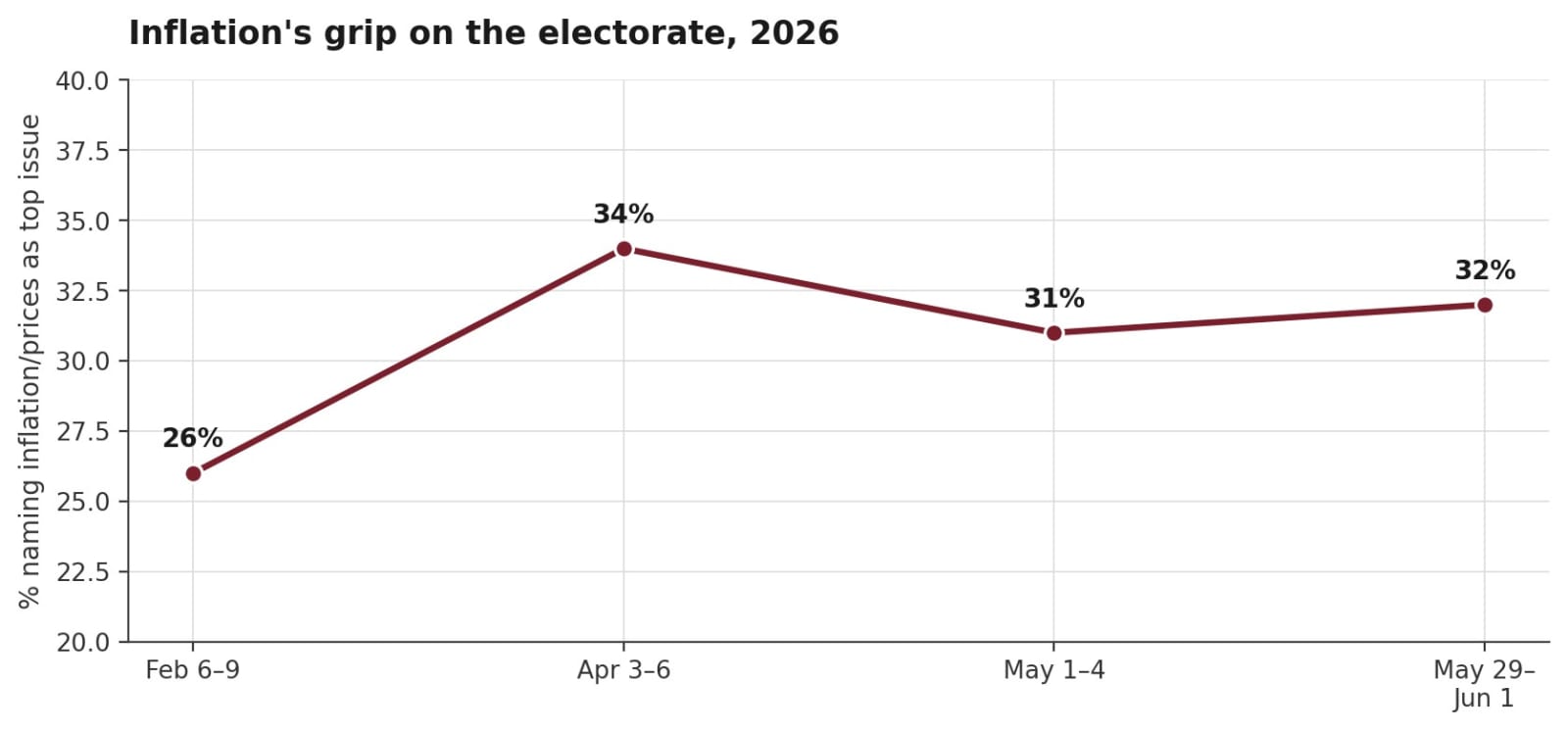
(Economist/YouGov weekly tracker, 2026)
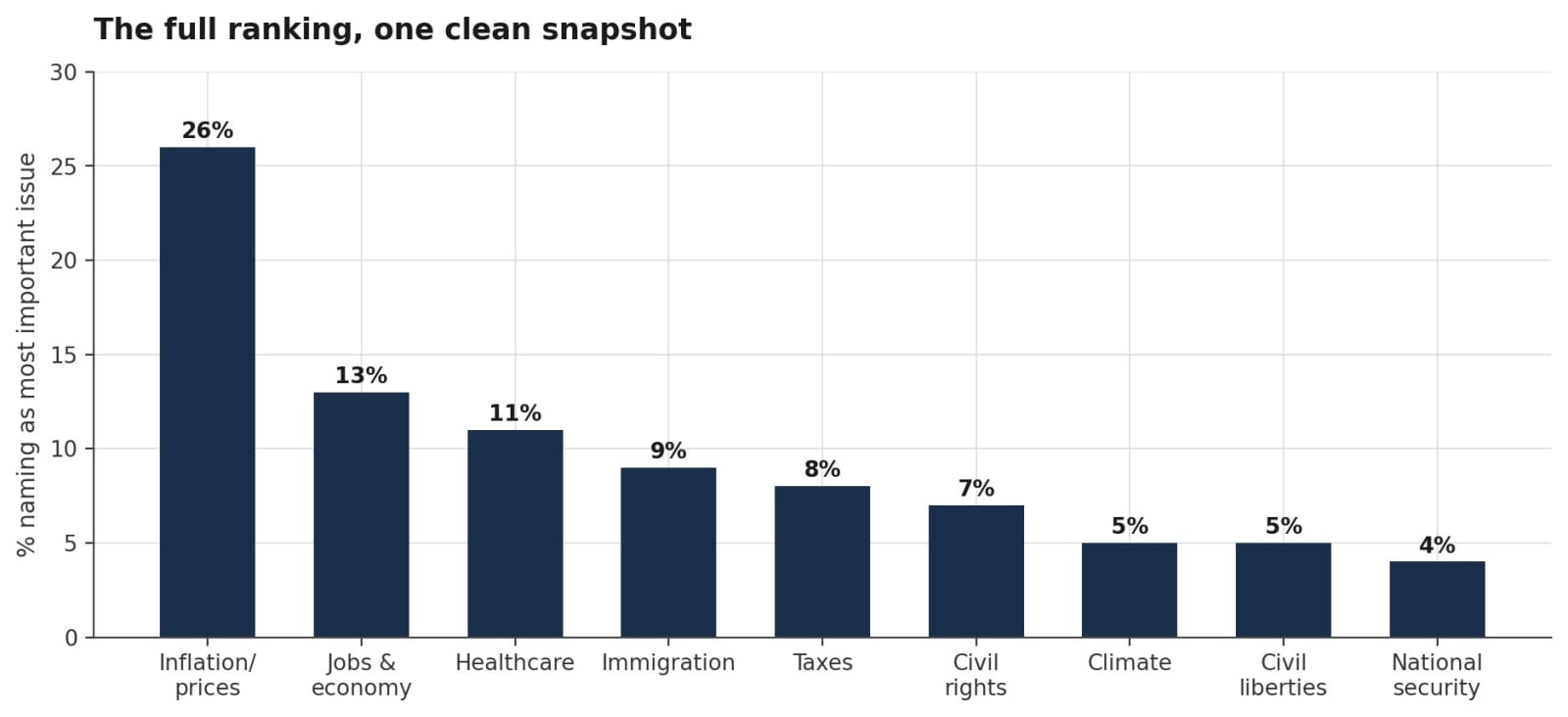
A February 6–9 Economist/YouGov poll placed inflation first at 26%, followed by jobs and the economy at 13%, healthcare at 11%, immigration at 9%, taxes at 8% and civil rights at 7%.
Approval is different from priority.
Approval of Trump’s inflation handling fell to a net -35 in April; by late May, 29% approved and 64% disapproved.
Marquette’s July poll put approval of his handling of inflation, the economy, the Iran war and gas prices at 30% or below.
The economic fight is particularly visible in Ohio.
Husted, appointed to the Senate after JD Vance became vice president, has promoted tax cuts, housing affordability and legislation aimed at making large electricity users such as data centers pay for additional grid costs.
Brown, who served three Senate terms before losing in 2024, has focused on workers, manufacturing, healthcare and household costs while attacking Husted’s record on data centers and electricity prices.
Where do immigration and border policies stand
Immigration has declined sharply in several measures of voter priority.
Marquette’s tracker fell from 14% in January to 5% in July, while YouGov’s closed-list measure fell from 16% in March 2024 to 8% in early June 2026.
Gallup’s open-ended measure was higher at 19–20% in January and February, illustrating the importance of question wording.
Republicans nevertheless retained a 5-point advantage over Democrats on immigration policy in Pew’s July survey, down from 9 points the previous September.
While the Department of Homeland Security does not confirm law enforcement operations, I can report that Secretary Noem has informed me that ICE has ended its enhanced activities in the State of Maine.
— Sen. Susan Collins (@SenatorCollins) January 29, 2026
There are currently no ongoing or planned large-scale ICE operations here. I… https://t.co/kwWVYl7baV
Wesleyan found immigration and policing among the leading issues in Senate advertising from both parties.
The issue remains prominent in campaign messaging even as fewer voters name it first.
Two months ago today, Johan Sebastián Guerrero was murdered by ICE in Biddeford.
— Troy Jackson (@TroyJackson207) September 13, 2026
Susan Collins voted to give ICE $70 billion a month before his killing.
ICE needs to be abolished, full stop. pic.twitter.com/LQr2TLBH2o
In Maine, Republican Sen Susan Collins and Democratic challenger Troy Jackson have sharply different positions on ICE and immigration.
Collins has defended federal enforcement, while Jackson has called for abolishing ICE.
Collins has served in the Senate since 1997 while Jackson served in the Maine Legislature, including as Senate president.
Is Trump himself an election issue
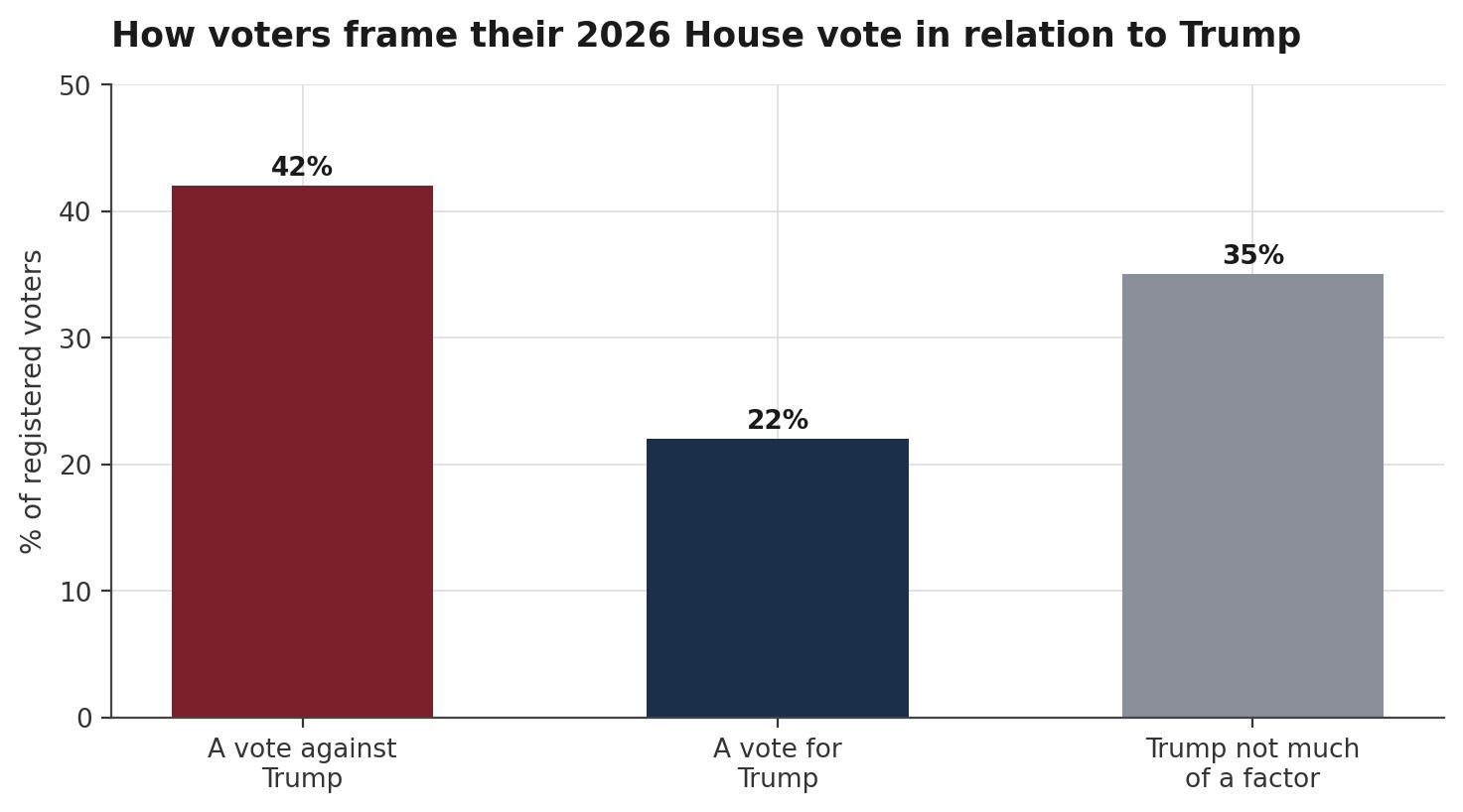
Pew found 42% of registered voters describing their congressional vote as a vote against Trump, 22% as a vote for him and 35% saying he was not much of a factor.
Among Democratic and Democratic-leaning voters, 81% called it a vote against Trump, while half of Republicans said he was not much of a factor.
Trump’s July approval was 34% in Pew, compared with 36% in Gallup’s January reading.
Wesleyan found Trump mentioned in 55% of broadcast ad airings in House and Senate races since January 2025, including more than 70% of Republican candidate-sponsored airings.
Husted has continued campaigning alongside Trump and backing parts of the administration’s economic agenda, while Republican candidates elsewhere have sometimes separated themselves from the administration on specific issues, including the Iran war.
Could Iran break into the midterm debate
Iran has produced less consistent polling.
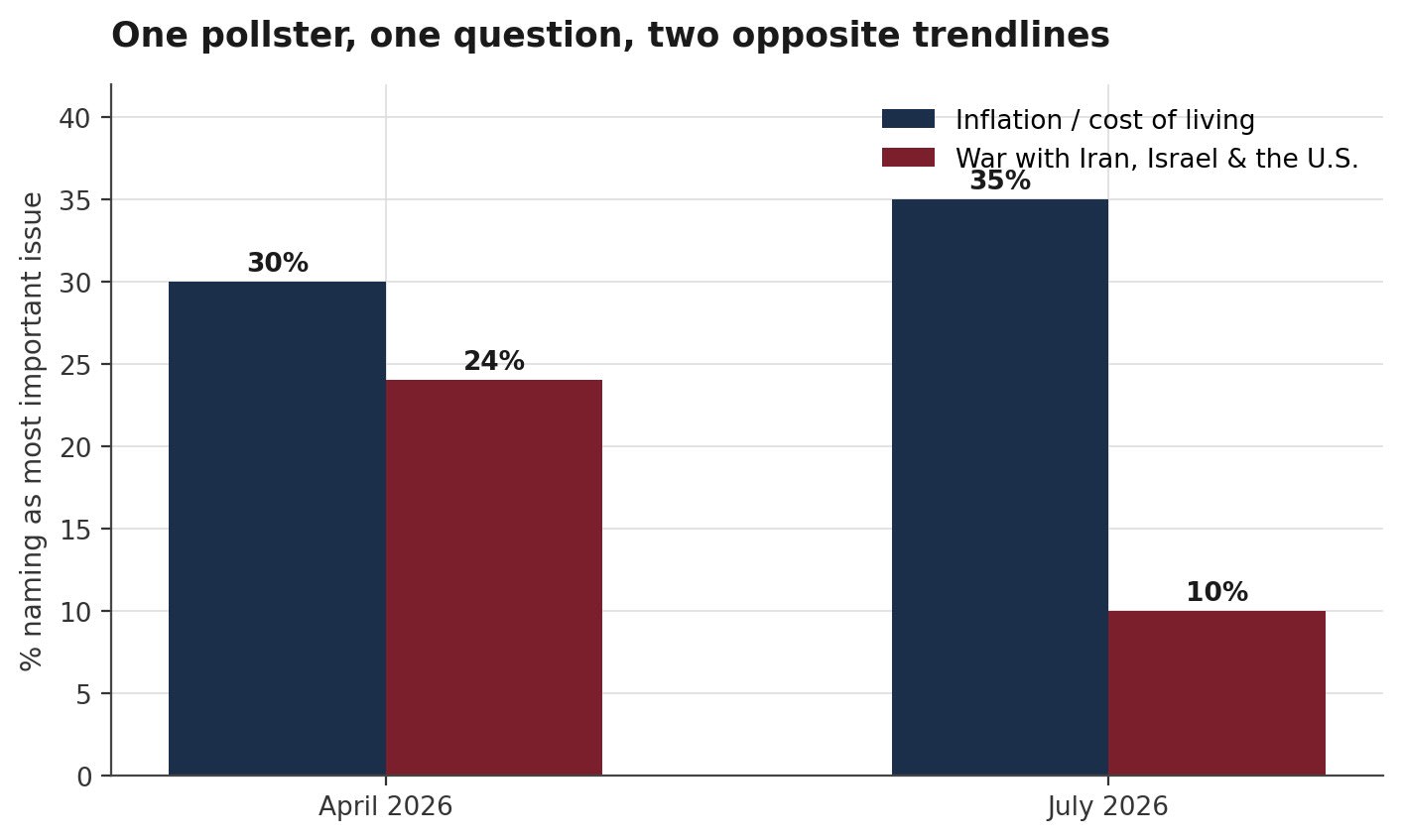
Marquette found the war rise to 24% as a single most important issue in April before falling to 10% in July.
Harvard CAPS/Harris, using a different question, recorded Iran concern rising to 20% in August, while BGSU/YouGov found the Middle East conflict at 10% in September.
The conflict also entered the economic debate through gasoline prices.
Republican Senate candidates Mike Rogers of Michigan and Ashley Hinson of Iowa called for a swift end to the war in September after previously supporting aspects of Trump’s Iran policy.
Healthcare, abortion and other issues
Healthcare was named by only 5% in both Pew and Marquette’s July surveys, but healthcare-related advertising reached $104 million by mid-January, ahead of $76 million for immigration.
The spending focused heavily on ACA subsidies and came largely from outside groups.
Maine’s Senate race illustrates the divide.
Susan Collins Joint Fundraising Committee:
— AdImpact Politics (@AdImpact_Pol) September 1, 2026
"Under Troy Jackson's failed leadership in Augusta, Maine's electricity rates skyrocketed, the highest increase in the nation, so you get shocked with every bill." pic.twitter.com/QlJIKzIEQF
Outside groups have attacked and defended Collins over Medicaid, ACA subsidies and rural hospitals, while her campaign has emphasized property taxes and electricity costs.
Collins’ record includes work on rural healthcare; Jackson has campaigned on healthcare expansion and lower prescription costs.
Abortion was named by just 1% in Marquette’s July survey, despite Democrats holding a 10-point advantage on abortion in Pew’s party-trust measure.
Nancy used to vote for Susan Collins. Not anymore.
— Senate Majority PAC (@MajorityPAC) September 14, 2026
For Nancy, it was Collins’ votes for Medicaid cuts, Trump’s judges, and her role in helping Trump overturn Roe v. Wade.
When it mattered most, Collins caved to Trump. pic.twitter.com/iMxC6qc5z0
Republicans held a 14-point advantage on crime.
What voters care about vs campaigns
Wesleyan found Democratic Senate advertising emphasizing cost of living and healthcare, while Republican Senate advertising leaned toward immigration, crime and taxes.
Both parties also advertised heavily on immigration and policing.
Ohio and Maine show how national issues are being adapted to individual candidates.
Husted and Brown are campaigning around prices, electricity, healthcare and taxes while Collins and Jackson are combining healthcare and affordability with immigration, abortion and their respective records.
Same election, different numbers
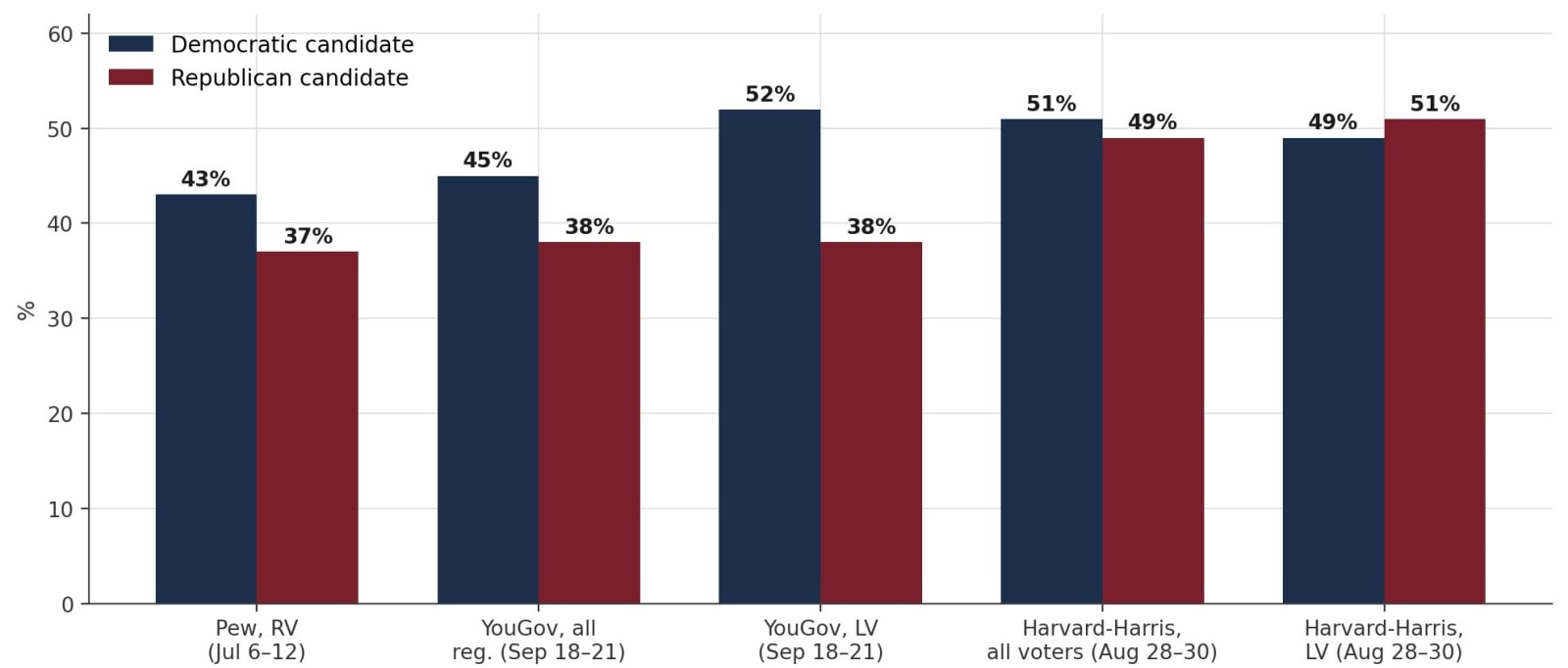
Pew had Democrats ahead by 6 points among registered voters in July.
Economist/YouGov had Democrats ahead by 7 among registered voters in September, widening to 14 points among its likely voters.
Harvard CAPS/Harris produced the opposite movement, with a 2-point Democratic edge among all voters becoming a 2-point Republican edge among likely voters.
The figures are not averaged because each poll uses different samples and turnout models.
The same applies throughout this piece: issue priority, presidential approval, party trust and congressional vote preference are separate measurements.