Trump signs $70B immigration bill passed through budget reconciliation
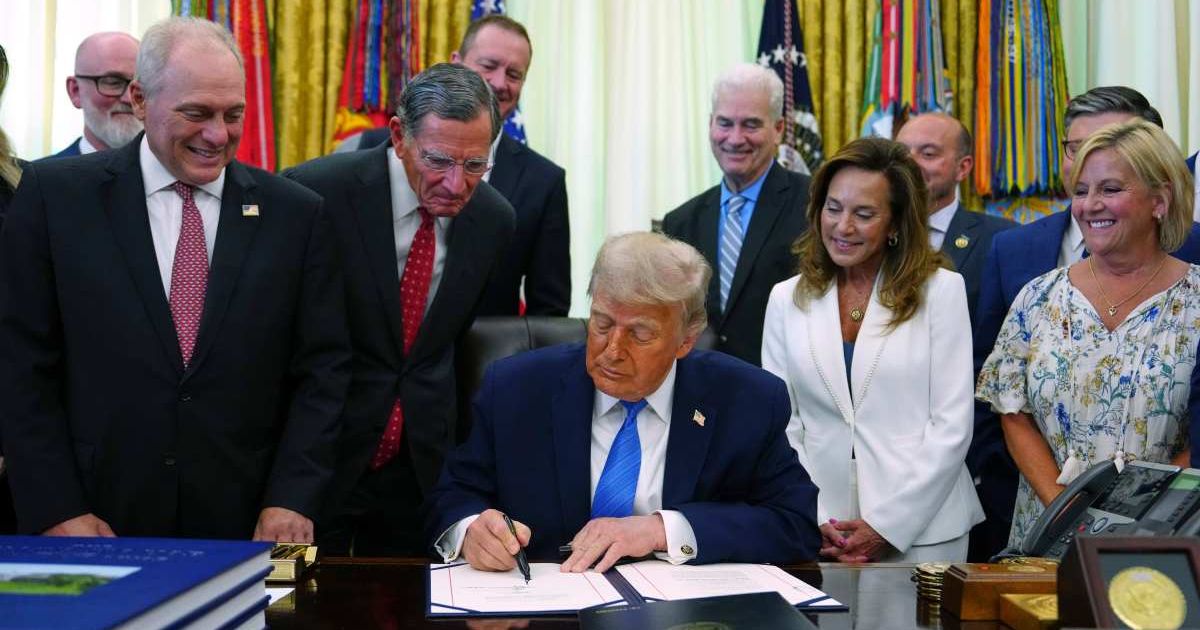
WASHINGTON, DC: President Donald J Trump signed a historic $70 billion immigration funding package in the Oval Office on Wednesday, June 10, culminating a bitter legislative battle that permanently reshapes federal enforcement infrastructure.
Securing total funding for Immigration and Customs Enforcement (ICE) and Customs and Border Protection (CBP) through the end of his term, Trump capitalized on a decisive victory that translates his intense campaign rhetoric into long-term institutional reality.
.@POTUS signs the Secure America Act into law, fully funding @DHSgov through the end of his term, and giving ICE and Border Patrol the necessary resources to continue deporting illegal aliens and keeping Americans safe. pic.twitter.com/VHe44f5lAL
— Rapid Response 47 (@RapidResponse47) June 10, 2026
The mega-bill survived months of unified Democratic resistance, which had paralyzed the Department of Homeland Security subagencies since January.
Opposition lawmakers had completely choked off funding following a highly controversial immigration surge operation in Minneapolis that resulted in the tragic deaths of two United States citizens during a federal raid.
Rather than modifying administration tactics to secure opposition support, the White House worked with congressional leaders to deploy an aggressive procedural maneuver to break the gridlock.
Reconciliation process bypasses democratic blockade

Faced with an unyielding minority opposition, Republicans utilized budget reconciliation to circumvent the traditional 60-vote Senate filibuster threshold.
The strategic maneuver allowed the majority to muscle the massive enforcement package through on a strict party-line vote.
The Senate cleared the measure on Friday with a narrow 52–47 vote, followed by a tight 214–212 confirmation in the House on Tuesday.
Not a single Democrat voted in favor of the package in either chamber, rendering it one of the most partisan spending packages in modern legislative history.
Budget battles absorb internal weaponization disputes
The legislative path was nearly upended by intense internal friction over Trump's parallel $1.8 billion "anti-weaponization" fund, a separate initiative intended to financially compensate political allies.

While the controversial fund provoked widespread anxiety among fiscal conservatives, Republican leadership successfully unified their ranks to defeat an opposition measure designed to eliminate the pool.
With the $70 billion enforcement pipeline officially signed into law, the administration has secured total fiscal insulation for its border personnel.
Senate Budget Chairman Lindsey Graham praised the signing, noting that federal border security infrastructure has transitioned to its most fortified operational baseline in less than two years.