Trump task force chief drops explosive claim on Clinton, origins of Russia probe
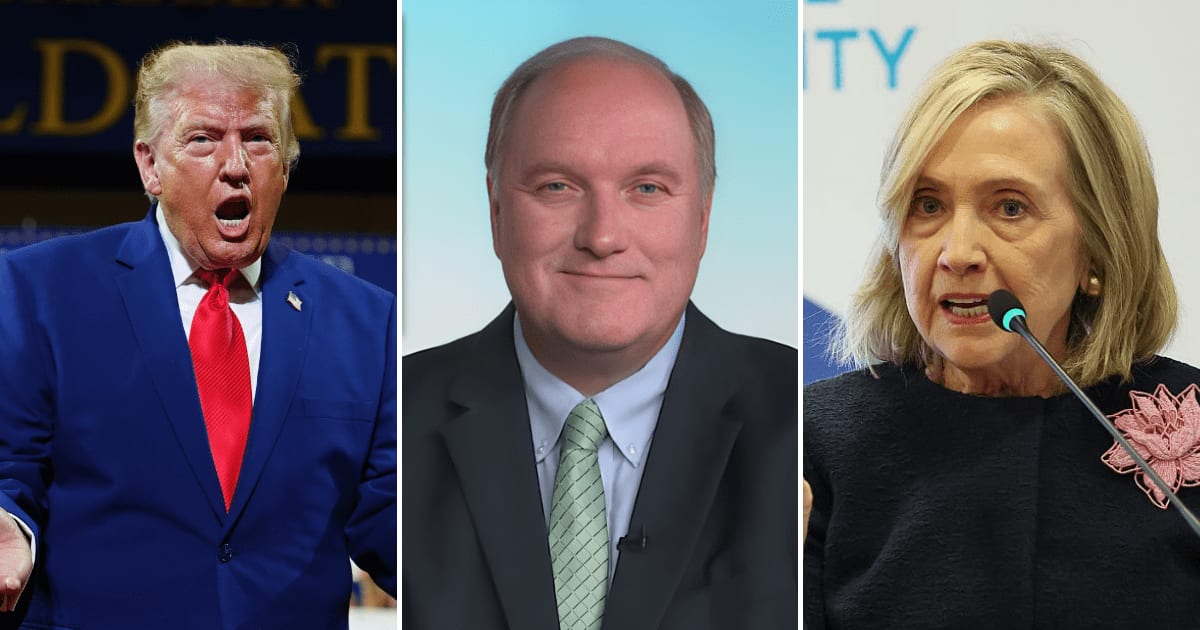
WASHINGTON, DC: John Solomon, chairman of the Trump administration’s Government Transparency Task Force,and a Trump-aly is reigniting the long-running fight over the origins of the Russia investigation. This time, arguing that concerns surrounding Hillary Clinton’s political vulnerabilities in late 2015 helped set in motion the chain of events that eventually engulfed Donald Trump.
Speaking on 'Pod Force One', Solomon said internal Clinton campaign polling identified Russia and the Uranium One controversy as major vulnerabilities before opposition research targeting Trump expanded in 2016.

His account links those developments to Fusion GPS, former British intelligence officer Christopher Steele, attorney Michael Sussmann and the FBI’s subsequent investigation, but his broader claim that they formed a deliberate plan to shift scrutiny onto Trump remains his allegation.
John Solomon points to Clinton campaign polling
Solomon said the story began in November and December 2015, when polling examined which controversies posed the greatest political danger to Clinton.
He identified Uranium One and the Clintons’ Russia-related ties as the concerns that supposedly stood out.
Uranium One involved the 2010 approval of a transaction giving Russian interests control of a company with US uranium assets while Clinton was secretary of state.

Bill Clinton separately received $500,000 for a Moscow speech in 2010.
Solomon argues Clinton’s political operation responded by helping shift the Russia narrative toward Trump.
That interpretation goes beyond what the documented record establishes.
The later investigative chain, however, is well documented.
The Clinton campaign retained Perkins Coie, which hired Fusion GPS for opposition research in 2016; Fusion GPS subsequently retained Steele.
Fusion GPS, Steele and FBI enter
The opposition research produced the Steele reports containing allegations about Trump and Russia.
Separately, Clinton campaign lawyer Michael Sussmann brought information about an alleged communications channel between the Trump Organization and Russia’s Alfa Bank to the FBI in September 2016.
Special Counsel John Durham later prosecuted Sussmann for falsely telling the FBI that he was not acting on behalf of a client.

A jury acquitted him in 2022.
Durham’s investigation nevertheless documented that Sussmann had worked with people connected to the Clinton campaign and that billing records showed campaign payments related to the Alfa Bank matter.
The FBI ultimately found insufficient evidence for the alleged secret communications channel.
The FBI’s broader Crossfire Hurricane investigation began in July 2016 to examine possible links between Trump campaign figures and Russian efforts to interfere in the election.
Robert Mueller’s later investigation examined Russian interference and related contacts but did not establish a criminal conspiracy between the Trump campaign and Russia.
New files revive old Russia fight
Solomon’s comments come as his White House task force continues releasing declassified material involving previous FBI investigations.
In August, the task force publicized documents concerning an FBI investigation code-named Oxferd Comma, opened in 2017 after Trump fired FBI Director James Comey.
The White House said the material showed investigators examined whether Trump had acted as a Russian asset.
Other declassified material released this year has prompted congressional scrutiny of FBI operations during the 2020 election, including the Round River operation.
House Judiciary Chairman Jim Jordan has sought records after documents released by Solomon’s task force described Republicans and conservative organizations as possible “conduits” of Russian disinformation.
Solomon’s account adds a new interpretation of the chain’s origins, while the underlying records provide a timeline that continues to be examined by Congress, the Justice Department and the White House.
.