Trump ties $1B in Homeland Security Grants to election reforms, threatens states that refuse: Sources
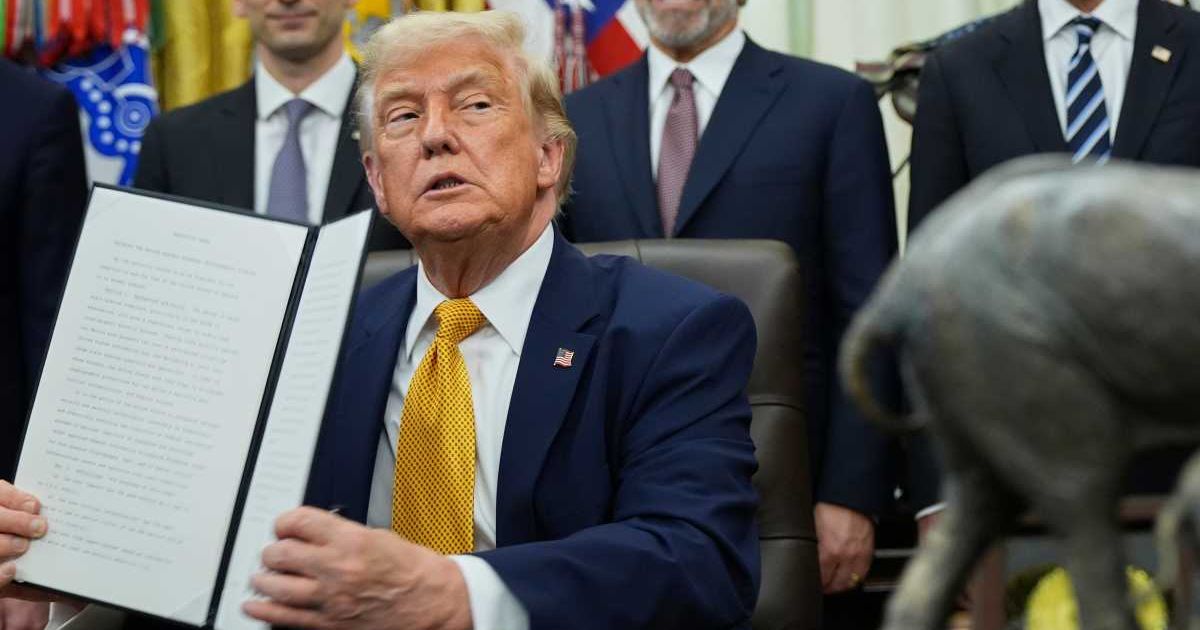
WASHINGTON, DC: States could lose a portion of federal Homeland Security funding unless they adopt a set of election reforms proposed under the Trump administration, according to a CNN report citing multiple sources and internal documents.
The proposal would affect more than $1 billion in annual Homeland Security grant programs. However, states would not lose the entire funding pool if they refuse to comply. Instead, draft guidelines would reduce a state’s grant allocation by 20 percent if it does not implement the required election changes.
The move adds to the administration of President Donald Trump’s broader push to link federal funding with state-level policy compliance, particularly in areas tied to election administration and security.
States would have to adopt three major election changes
According to CNN, the draft guidance would require states receiving certain Homeland Security grants to implement three key election reforms.
First, states would have to phase out some electronic voting systems and switch to hand-marked paper ballots. The plan would impact jurisdictions that mostly use ballot-marking devices or electronic voting machines, including Delaware, Georgia, Nevada, South Carolina, and Los Angeles County.
Second, states would have to check their voter rolls against the Department of Homeland Security’s Systematic Alien Verification for Entitlements (SAVE) database to help identify potential noncitizens on voter rolls.
Third, states would have to verify the citizenship of all poll workers through a federal government system authorized for that purpose.
The SAVE requirement comes shortly after a federal judge temporarily blocked the expanded use of the same database for voter-roll verification, citing concerns that incomplete immigration records could incorrectly flag some naturalized US citizens and risk improper voter removals.
That ruling is separate from the newly proposed grant conditions.
Compliance could cost states millions in federal funding
The Homeland Security grants are primarily used by states and local governments for counterterrorism efforts, infrastructure protection, emergency preparedness, and election security.
For years, states have been required to spend at least 3 percent of those grants on election security. Under the proposed rules, however, compliance with the new election requirements would become mandatory to receive the full amount of funding.
CNN reported that states refusing to comply would forfeit 20 percent of their grant allocation, potentially amounting to millions of dollars depending on the size of their award.
A Department of Homeland Security spokesperson said, "No changes to grant requirements or funding distributions are official until they are formally announced and published through proper, authorized agency channels," adding that the administration considers election security a core national security priority.
"Any recipient of federal funding should expect accountability for how taxpayer dollars are spent," the spokesperson said.
Georgia Secretary of State Brad Raffensperger, a Republican, has previously estimated that switching his state's voting systems to hand-marked paper ballots would cost approximately $66 million, far exceeding the value of many Homeland Security grants available to states.
The proposal also reflects the administration’s broader effort to encourage states to adopt election policies it considers essential to election security.
The administration has taken similar steps to condition federal funding on policy compliance in other areas such as immigration and diversity, equity, and inclusion initiatives. Courts have blocked some of those efforts, and this one could also face legal challenges if implemented.
The new grant plan increases the stakes by using a significant share of Homeland Security funding as leverage.
Still, the cost of compliance may ultimately exceed the funding being withheld from states, though the draft guidelines note that states can request additional support to help implement the changes.
The reported plan could face legal challenges if implemented. Former Justice Department attorney David Becker told CNN he expects the requirements would ultimately be blocked in court, citing prior rulings against similar funding restrictions.
The Trump administration previously attempted to withhold Homeland Security grant funding over immigration-related policies, but that effort was also halted by a federal court.