Why is Kilmar Abrego Garcia voluntarily leaving US for Spain after fighting mistaken deportation
WASHINGTON, DC: Salvadoran migrant Kilmar Abrego Garcia’s long legal battle against the Trump administration’s immigration crackdown came to an end on Tuesday, November 24, when he voluntarily left the United States for Spain.
Abrego Garcia, who was mistakenly deported last year and sent to a notorious prison in his home country, left the country after a judge asked him to self-deport by Tuesday, according to a person familiar with the matter, who spoke on condition of anonymity because they were not authorized to publicly discuss the case.
BREAKING: Kilmar Abrego Garcia, who was returned to the U.S. after being mistakenly deported to a Salvadoran mega-prison, is in the process of self-deporting to Spain, sources familiar with the matter tell ABC News. https://t.co/i6JrbUnShh https://t.co/JCLKPaYspH
— ABC News (@ABC) November 25, 2026
Abrego Garcia’s expected departure, following months of legal battles, could draw a line under one of the most consequential and closely watched cases of the Trump administration’s mass deportation campaign.
Abrego Garcia bids a farewell to the United States
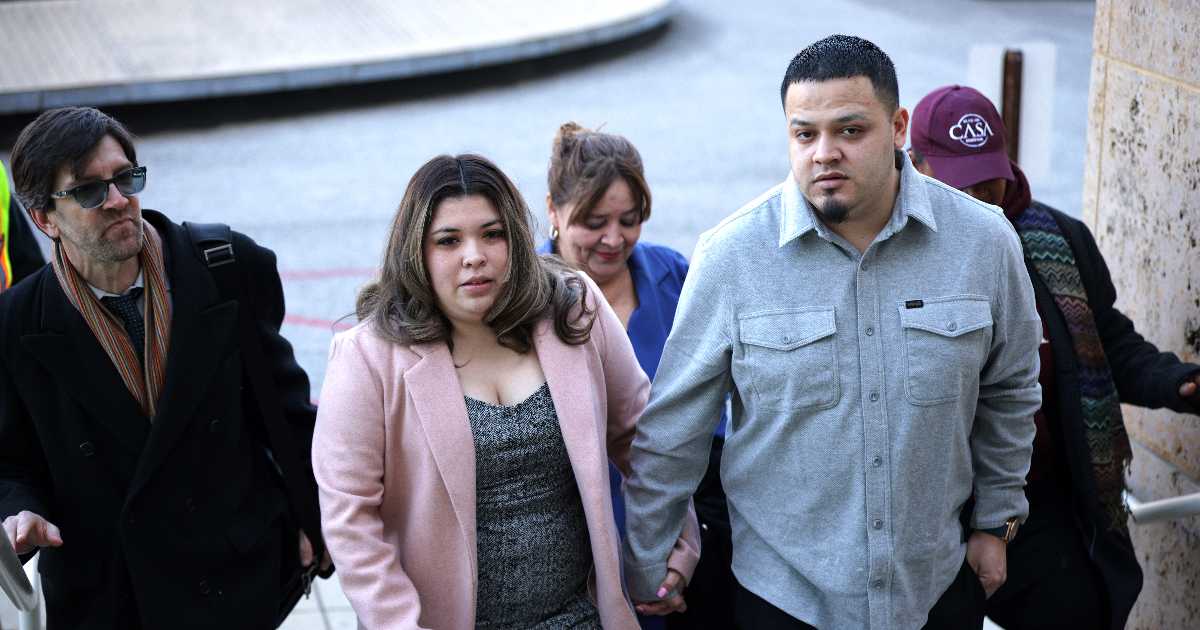
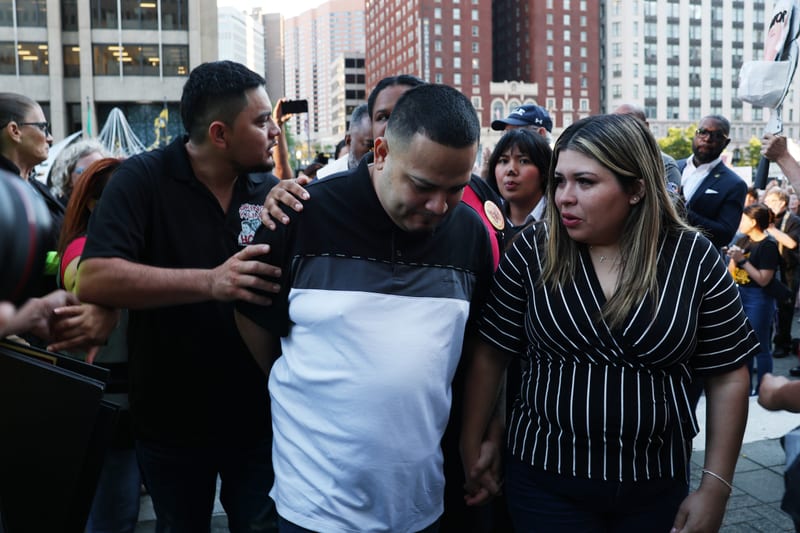
Abrego Garcia, wearing a dark hooded jacket, was seen at the airport with his wife and brother, as well as lawyer Simon Sandoval-Moshenberg, and representatives from immigrant rights group We Are CASA (Central American Solidarity and Assistance).
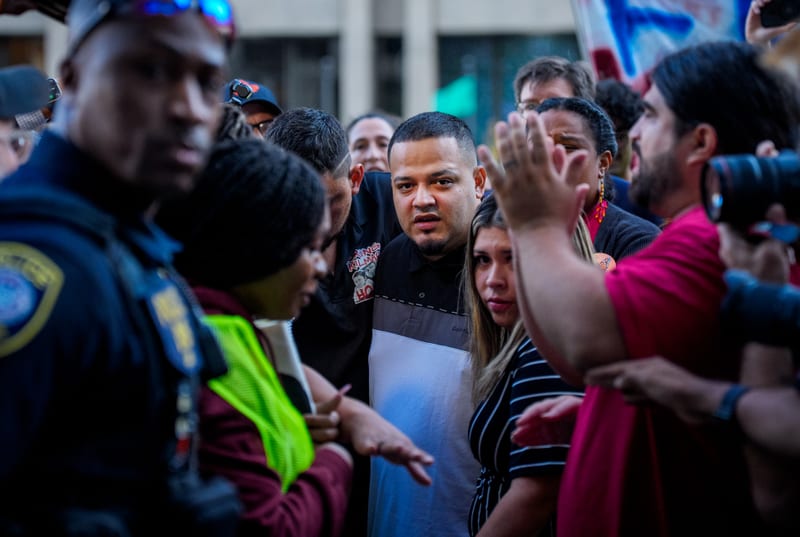
The Washington Post reported earlier that Abrego Garcia had agreed to leave the United States voluntarily under an arrangement with US authorities who had been seeking his deportation. The agreement would bring those proceedings to an end, the newspaper said.
However, Maryland court records do not yet show an order reflecting such an agreement. Several filings in his civil case against the administration have been placed under seal in recent weeks.
Maryland Sen Chris Van Hollen, who met with Abrego Garcia while he was pressing for his release from a Salvadoran mega-prison last year, called him a ‘free man’ as he traveled to the country of his choice.
“I am relieved that he will be safe, in a country of his choosing, and free – including from this Administration’s constant persecution,” he said in a statement.
"I am relieved that he will be safe, in a country of his choosing, and free – including from this Administration's constant persecution," Democratic Senator Chris Van Hollen says on Kilmar Abrego García. "This is a victory for due process and our Constitution." https://t.co/ZFvfb5V8dE
— Benjamin Alvarez (@BenjAlvarez1) November 24, 2026
Secretary of Homeland Security Markwayne Mullin also confirmed Abrego Garcia’s self-deportation, saying "We are delighted to announce that Kilmar Abrego Garcia has self-deported from the United States to Spain.”
He reiterated the Trump administration's allegation that Abrego Garcia belongs to a gang, which his legal team has denied, and said he now "cannot terrorize innocent Americans."
In a social media post late Tuesday night, the Department of Homeland Security wrote: "To be clear: Kilmar Abrego Garcia departed the United States pursuant to a removal order. He paid for his own flight and received no incentives. He will NEVER be allowed back inside the United States."
The beginning of a long legal battle
The 31-year-old Abrego Garcia has spent years in Maryland, living a happy life with his wife and child. But originally, he was an illegal immigrant who came to the United States as a teenager.
In 2019, an immigration judge barred his deportation to El Salvador, finding that he faced danger from a gang that had threatened his family.

He was instead allowed to live and work in the US under the supervision of Immigration and Customs Enforcement, though he was not granted legal residency.
But in 2019, as part of the Trump administration’s immigration crackdown, he was arrested in Baltimore in March 2025 and deported to a Salvadoran prison.
Activists have decried alleged abuses there and described inmates being packed into cells with no time outdoors. Prison officials allowed Abrego Garcia a brief outside meeting with Van Hollen, who told reporters that Abrego Garcia had “experienced trauma” after an “illegal abduction.”
After a brief legal battle, Abrego Garcia returned to the United States, where ICE officials admitted to the court that he was mistakenly deported because of an ‘administrative error’.
But Abrego Garcia’s challenges didn’t end here; soon after his return, he was charged with human smuggling in a case stemming from a 2022 traffic stop for alleged speeding in Tennessee, in which he was driving a van with multiple immigrant passengers.

Abrego Garcia told Tennessee Highway Patrol troopers that he was transporting the nine people to a construction job, but authorities did not bring charges at the time.
A federal judge later dismissed the Justice Department’s 2025 case against him, ruling that the Trump administration had failed to overcome the “presumption of vindictiveness.”
Abrego Garcia’s legal battle continues
After the court’s verdict, the Trump administration vowed to deport Abrego Garcia to a third country, including Uganda, Eswatini, Ghana, and, most recently, Liberia.
But he argued that if he were going to be deported, it should be to Costa Rica, which previously agreed to take him.

Todd Lyons, the former acting director of ICE, argued in a March 2026 memo that deporting Abrego Garcia to Costa Rica would be “prejudicial to the United States.”
Instead, Lyons said Abrego Garcia should be sent to Liberia, arguing that the US had already invested government resources and political capital in negotiating an agreement with the West African nation to accept third-country deportees. The push to send him to Liberia continued even after Washington reached a separate agreement with Costa Rica to take in migrants who cannot legally be returned to their home countries.
The case took an unusual turn on October 6, 2026, when, just five minutes before a hearing expected to determine whether ICE could detain and deport Abrego Garcia to Liberia, attorneys for both sides left the courtroom alongside him.
They returned about 15 minutes later, only for the court to announce that the hearing had been canceled. The two sides then held discussions for another 90 minutes before leaving the courthouse without explaining what had transpired. Abrego Garcia’s attorney offered little detail, saying only that the case was not ready to proceed and directing reporters to monitor the court docket for updates.