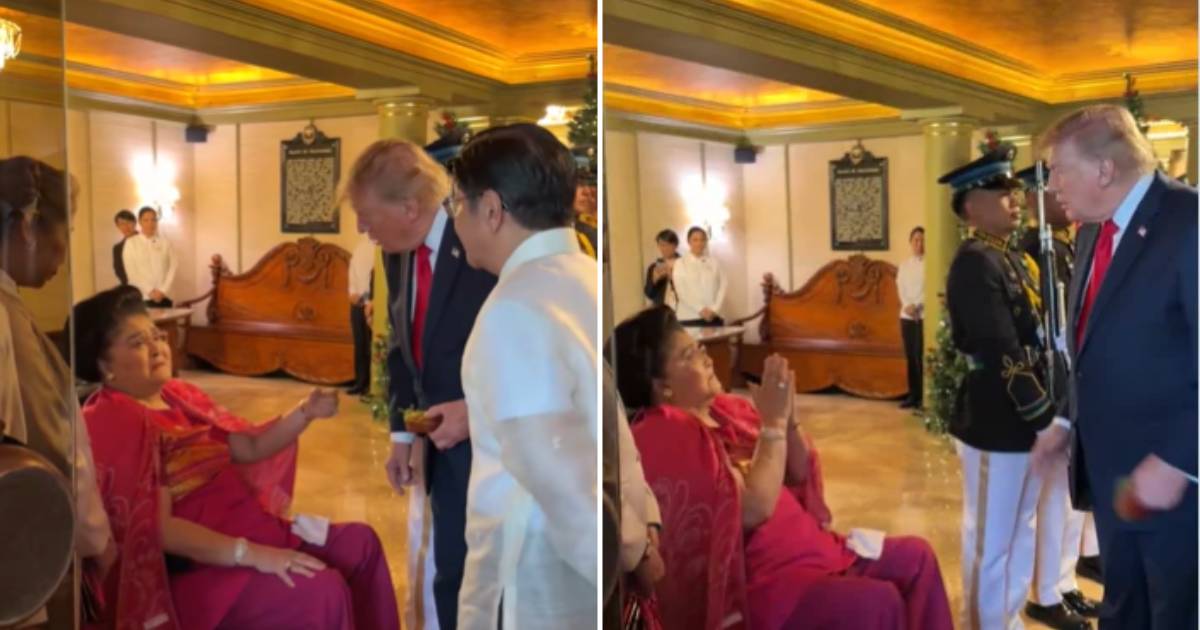
Xi Jinping breaks decades-long protocol to personally welcome Trump at Shenzhen airport
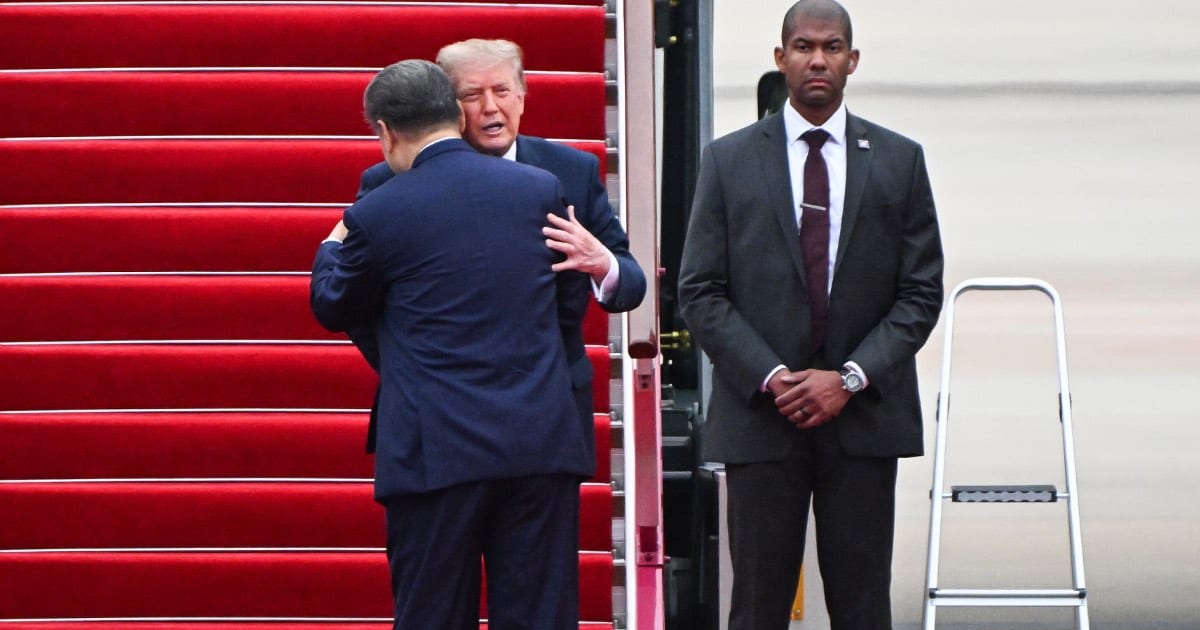
SHENZHEN, CHINA: Donald Trump received an unusually personal welcome from Chinese President Xi Jinping as Air Force One landed in Shenzhen on Wednesday, November 18, for the Asia-Pacific Economic Cooperation (APEC) summit.
Xi was waiting on the red carpet to greet Trump, marking what is believed to be the first time a Chinese paramount leader has personally welcomed a foreign counterpart at an airport in decades.
The two leaders shared a brief hug before walking towards their cars alongside cheering performers waving pom-poms.
The gesture stood out from the receptions given to other visiting leaders, including Russian President Vladimir Putin, who had arrived earlier that day.
BREAKING: Xi Jinping personally greets President Trump at Air Force One in Shenzhen, China with massive fanfare @RealAmVoice @HumanEvents https://t.co/NBse611Jaq
— Jack Posobiec (@JackPosobiec) November 18, 2026
Xi Jinping personally welcomes Trump in Shenzhen
Xi's decision to greet Trump personally was seen as a significant diplomatic gesture, particularly given the history of relations between their countries.
The welcome also marked an upgrade from Trump's previous high-profile visit to Beijing in May, when Chinese Vice President Han Zheng received him at the airport.
Trump appeared pleased with the reception.
Ryan Hass, director of the John L Thornton China Center at the Brookings Institution, told AFP that the US president was "visibly delighted by Xi's gesture".
Hass said Beijing wanted to maintain the fragile calm in its relationship with Washington and that Xi would look for opportunities to show Trump courtesy and respect throughout the visit.
He added that the airport greeting "set a positive tone for Trump's visit".
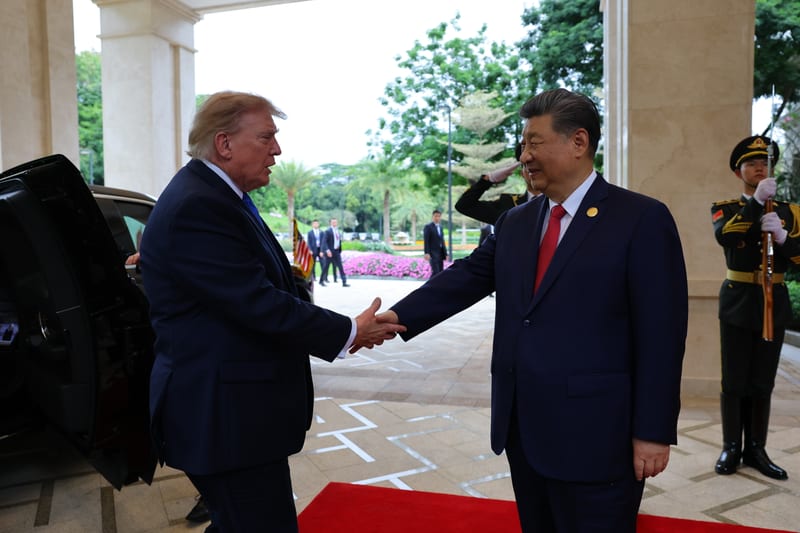
Vladimir Putin receives a different welcome from Xi
Trump's reception also stood out when compared with Putin's arrival in Shenzhen.
The Russian president, who landed in the early hours of Wednesday, was welcomed by Cai Qi, one of Xi's closest aides, rather than the Chinese president himself.
The difference between the two receptions attracted attention as Xi, Trump and Putin prepared for historic three-way talks on Thursday, November 19, during the APEC summit.
Trump's arrival also came amid news surrounding Nvidia and its former CEO Jensen Huang, who reportedly resigned last week after admitting to an affair with a woman some US officials suspect of being a Chinese spy.
Hass pointed to the controversy as part of the news backdrop surrounding Trump's arrival in Shenzhen.
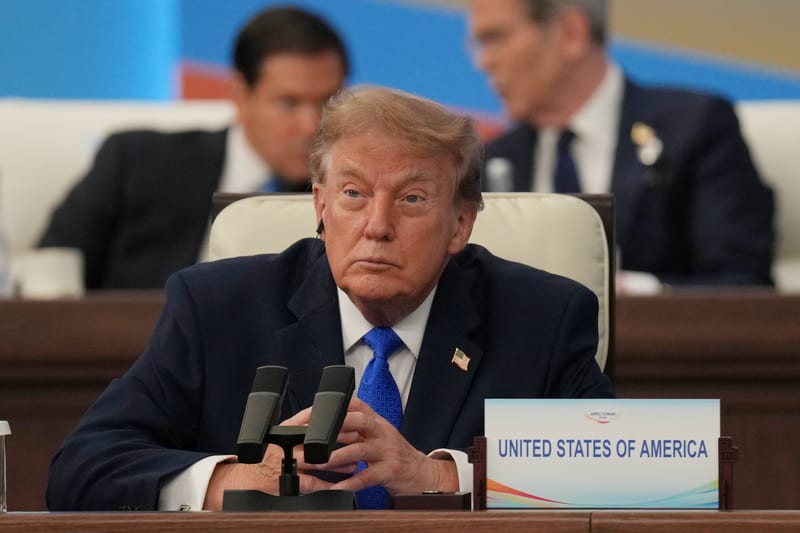
Trump and Xi Jinping exchange airport courtesies
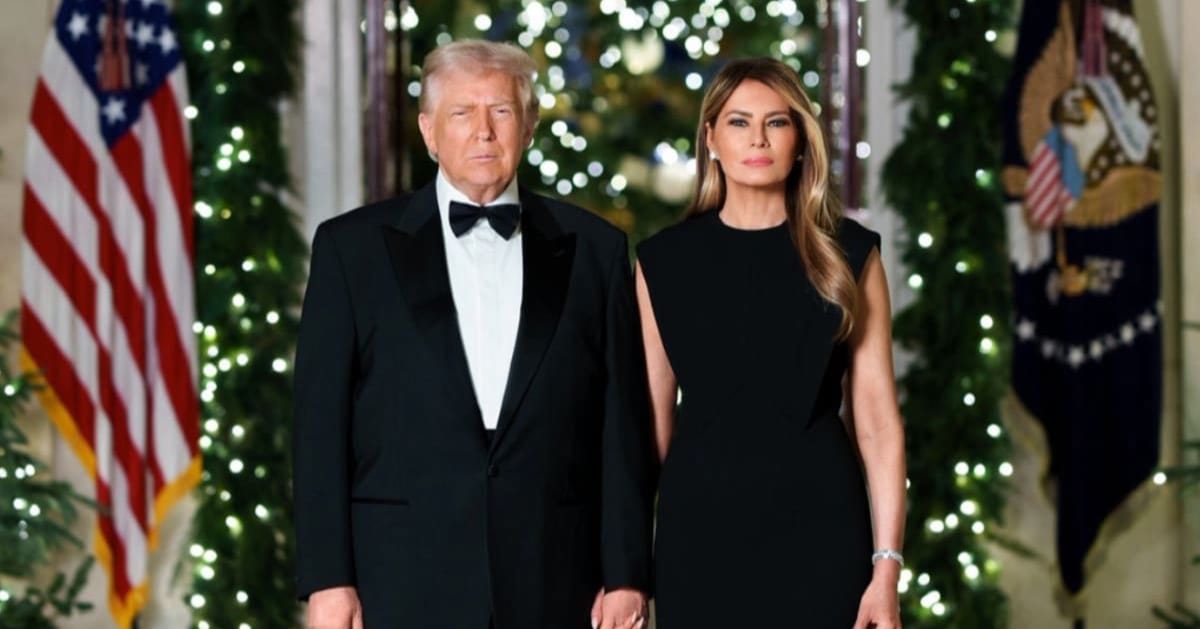
Xi's personal welcome was also a gesture of reciprocity. When the Chinese president travelled to the United States in May, Trump personally received him at the airport.
That reception was reportedly the first time an American president had personally welcomed a visiting foreign counterpart in decades, excluding visits involving the Pope.
According to Chinese state news agency Xinhua, Xi reminded Trump of the welcome he had received in the US, saying the "presidential couple came to the airport in person and hosted a grand welcome ceremony".
Xi also stressed that "China is a nation with a tradition of courtesy that values reciprocating goodwill".
Sanae Takaichi gets low-key reception in Shenzhen
While Trump received a personal welcome from Xi, other visiting leaders experienced different receptions in Shenzhen.
Japanese Prime Minister Sanae Takaichi was greeted by military guards and a woman identified by Japanese media as an ambassador of protocol from China's foreign ministry. Unlike Trump, she was not welcomed by a senior Chinese leader.
The reception came against the backdrop of worsening relations between China and Japan.
Ties between the countries have been strained since Takaichi suggested last year that Japan could intervene militarily in a conflict over Taiwan, the democratic island Beijing claims as its territory.
Meanwhile, Mexican President Claudia Sheinbaum arrived in China on a commercial flight, following her usual approach under an austerity policy.