9/11 at 25: Is America's darkest day losing its power? Expert reveals what's changed
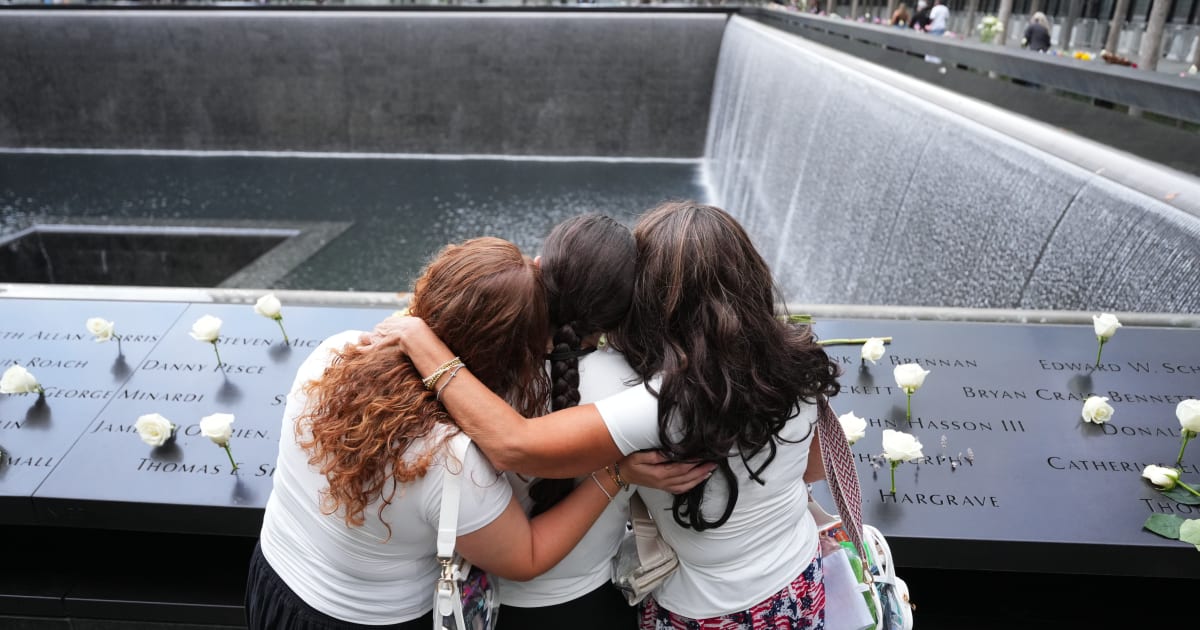
NEW YORK CITY, NEW YORK: Twenty-five years after the September 11 attacks, a generation of Americans is growing up with no personal memory of the day that changed the country forever.
Those who witnessed the attacks are aging, while younger Americans increasingly encounter 9/11 through family stories, classrooms, photographs, museums and memorials.
But does the distance make the tragedy less powerful or simply change how it is remembered?
To understand that shift, MEAWW spoke exclusively to Dr Jacque Micieli-Voutsinas, Associate Professor of Museum Studies and Heritage at the University of Florida, about what happens to collective memory as a defining national tragedy moves from lived experience into history.
Her perspective offers a larger lens to view three personal stories: a daughter who was four months old when her father was killed at the World Trade Center, a 10-year-old who lost her father and now teaches young people about 9/11, and a four-year-old whose understanding of her NYPD father’s response changed as she grew older.
Neva Coleman finds her father in photos
Neva Coleman was just four months old when her father, Keith E Coleman, was killed at the World Trade Center.
She was too young to understand the television images, the frantic phone calls or the weeks her family spent hoping Keith had survived.
Her father had left home that morning for Cantor Fitzgerald. His brother, Scott Coleman, was also at the World Trade Center and was killed.
For Neva, there is no firsthand memory of her father to preserve.
Instead, there are photographs, family stories, and the striking resemblance she sees when she looks at herself.
Neva has shared childhood photographs with Keith and side-by-side images showing how much she resembles him.
She has also remembered Keith and Scott together, writing that she misses her father and uncle “every second.”
Her relationship with 9/11 is therefore an inherited one, built from the memories of people who knew her father, and the photographs left behind.
Micieli-Voutsinas says that distinction will become increasingly important as 9/11 moves further away from living memory.
“For those who lived through September 11, memory is often connected to very specific embodied and emotional experiences, where they were, what they saw on television, whom they called, or how they felt about the uncertainty and fear of that day and the days that followed,” she says.
But as time passes, “those firsthand memories increasingly coexist with and eventually give way to forms of cultural and institutional memory.”
That does not mean the event becomes less meaningful.
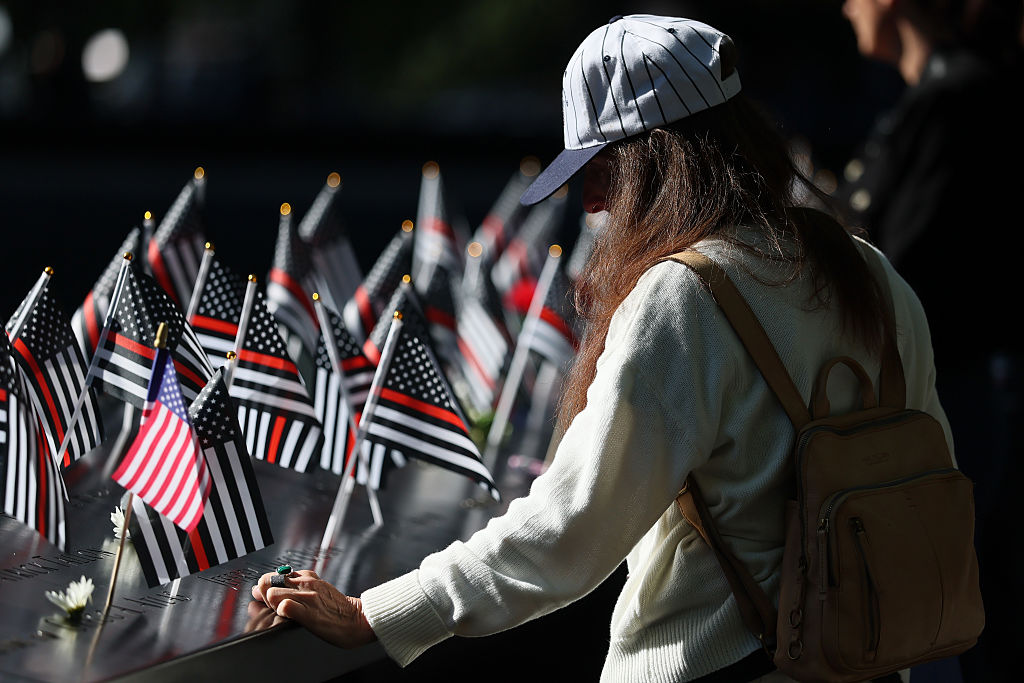
“It means that the mechanisms through which it becomes meaningful change,” she explains.
For someone like Neva, a family photograph can become part of the way a daughter understands a father she was too young to remember.
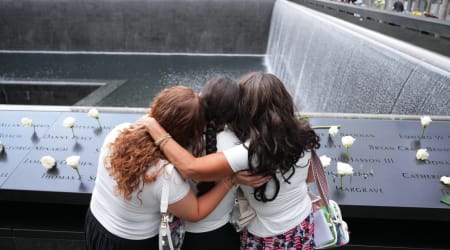
Museums, memorials, oral histories and documentaries perform a similar function for younger Americans who never experienced 9/11.
Micieli-Voutsinas says such places preserve “not simply knowledge about this traumatic event but also something of its emotional force.”
Olivia Perez-Johntry takes 9/11 to her place of work
Olivia Perez-Johntry was 10 when she learned in fifth-grade orchestra class that her father, Anthony Perez, had been killed at the World Trade Center.
Anthony was among 658 Cantor Fitzgerald employees killed that day.
Olivia remembers 9/11, but remembering did not make processing the loss easy. She struggled with nightmares and found it difficult to talk about her father.
In 2006, she attended America's Camp, a program for children who lost parents on 9/11.
Being with other children who understood the loss gave her space to grieve while also allowing her to simply be a child.
As an adult, Olivia has held onto stories about her father from relatives and friends.
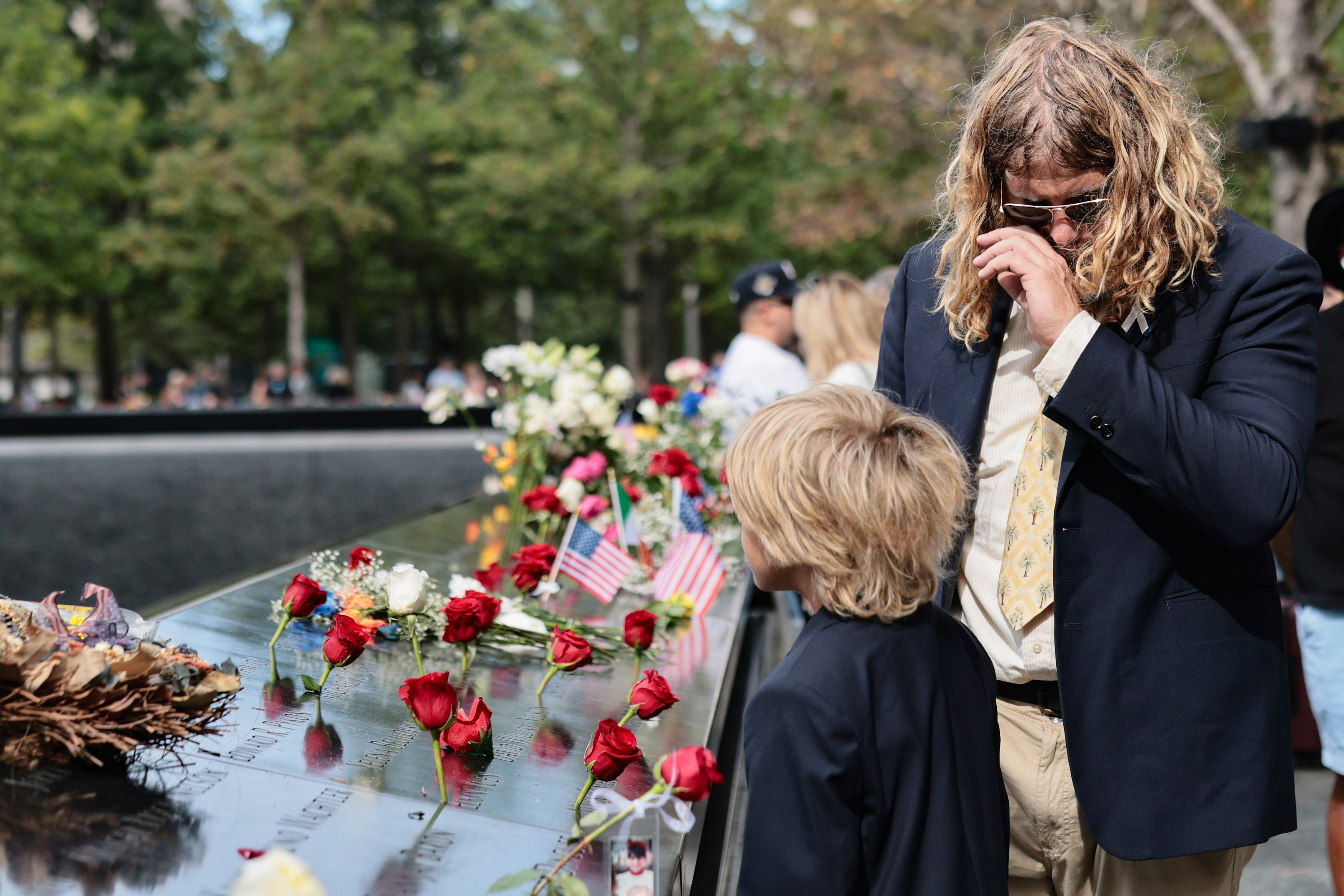
Today, she is a high school science teacher and openly shares her 9/11 experience with students who were born long after the attacks.
She has said young people should learn about 9/11 so they understand its consequences, the importance of their choices and the legacies they leave behind.
Micieli-Voutsinas describes this as part of the changing way younger Americans encounter the attacks.
“For younger Americans, 9/11 is increasingly what we might call an inherited memory,” she says. “They know the event through stories told by parents and grandparents, through school, through media, and through visits to museums and memorials.”
But inherited memory can still carry emotional weight.
“Not having a personal memory does not mean that younger generations cannot develop a powerful relationship to the event,” she says.
That is particularly relevant to Olivia. Her students cannot remember what it was like to lose a parent on September 11, but they can encounter that history through someone who lived it.
Micieli-Voutsinas says younger Americans may also view 9/11 differently because they know what came afterward such as the wars in Afghanistan and Iraq, expanded surveillance, airport security, immigration debates, and rising discrimination.
They may therefore see the attacks “not only as a singular moment of national trauma but as an event embedded within a much longer political and historical story.”
Kiara Badalemente recalls father's survival
Kiara Badalemente was four years old on September 11, 2001.
Her father, now a retired NYPD officer, had planned to take Kiara, her younger sister and their mother to the Native American Museum in Lower Manhattan.
Instead, the family stayed home as the attacks unfolded.
When he realized what was happening, her father prepared to head into New York City. But before leaving, he took Kiara rollerblading because he had promised her.
Years later, he explained why. He believed the world might be ending and did not know whether he would see his daughter again. He wanted one last moment with her.
He then drove from Rockland County to New York in about 17 minutes.
His response continued for months. He worked around Ground Zero, assisted with the bucket brigade and provided security around West Street and Vesey Street.
As a child, Kiara knew her father had responded to 9/11. As she grew older, she learned that he had returned again and again, not knowing whether another attack could happen.

The event had not changed. Her understanding of it had.
That, too, is part of how memory evolves, Micieli-Voutsinas says.
“Anniversaries are not simply moments when societies remember the past,” she explains. “They are moments when societies renegotiate the meaning of the past in the present.”
The 25th anniversary can therefore be about more than looking backward. It can change the questions people ask about the event.
Micieli-Voutsinas also warns that, with time, 9/11 could become “reduced to a simplified historical narrative.”
The Twin Towers, the planes, Ground Zero, and first responders have become powerful symbols of the attacks.
But she says those images can become “shorthand for a much more complicated history.”
What can disappear from that shorthand are the fear and uncertainty of the aftermath, the political decisions that followed, the solidarity of the period and the debates over war, surveillance, civil liberties, and discrimination.

Looking another 25 or 50 years ahead, she expects museums, archives, memorials, oral histories, and recorded testimony to become even more important.
But she does not believe future generations should simply inherit one fixed version of the past.
“We are never simply handing the past intact from one generation to another,” she says. “Every generation inherits institutions, objects, stories, and commemorative practices, but it also reinterprets them based on the needs of the present.”
The challenge, she says, is to “preserve the emotional and human dimensions of 9/11 without freezing the event into a single narrative separate from its ongoing consequences.”
Twenty-five years on, then, the question may not be whether America remembers 9/11 exactly as it did in 2001.
It is whether the next generation can still understand the people behind the images.
Because as 9/11 moves further from living memory, remembering it will depend not only on preserving what happened, but on preserving the human stories that explain why it still matters.