Trump aides seal reporters' China phones aboard Air Force One amid cybersecurity fears
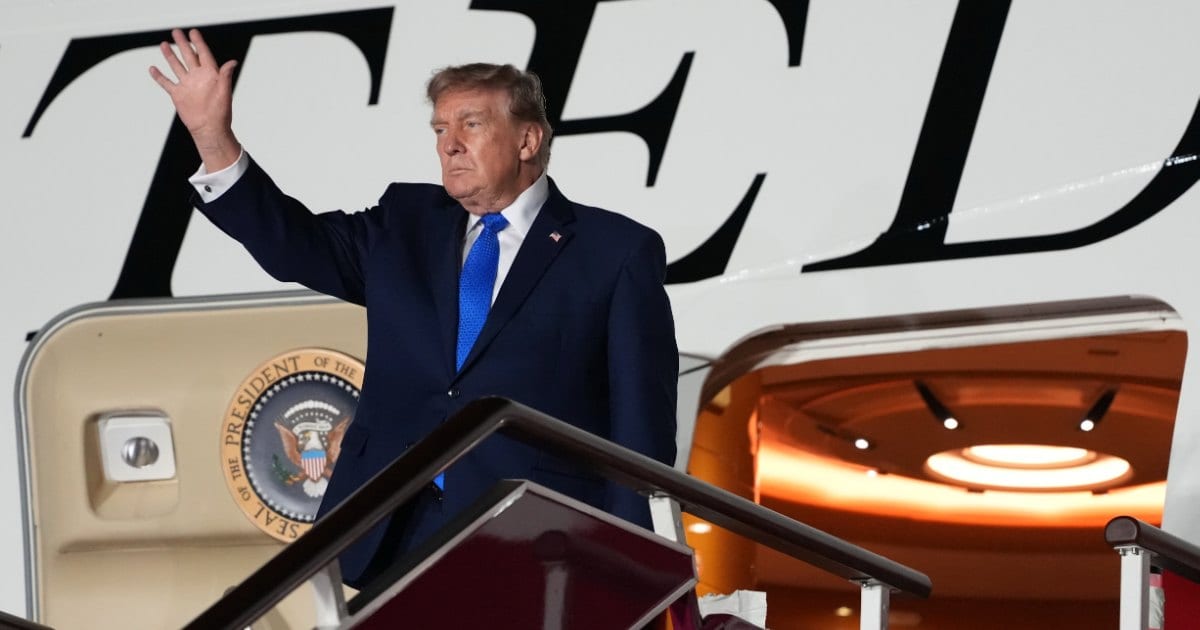
WASHINGTON, DC: The journey home from a high-stakes diplomatic encounter with China took an unusual turn for members of President Donald Trump's traveling press corps, who found themselves temporarily cut off from their mobile devices on Thursday, November 19.
The precaution came after the US president's meetings with Chinese President Xi Jinping and Russian President Vladimir Putin, where concerns over espionage and technological security have remained particularly sensitive.
The unusual arrangement also revived questions about the risks of carrying electronic devices into countries viewed as potential surveillance threats.
Mid-flight explainer from @JenniferJJacobs on what happened with the press pool's phones on AF1 while flying back from China: "For cyber security, an AF1 aide collected White House staffers' burner cellphones for disposal or data wiping as we left Shenzhen and asked that journalists place the phones they'd used in China in a signal-blocking Faraday bag until we landed in the US, saying those phones would be returned then. Not collected were all the devices that journalists had left in Faraday bags on AF1 before we landed in China on Wednesday. Many (but not all) reporters and photographers had placed their regular work phones, personal phones, laptops and smart watches in metal-lined bags to prevent potential spyware, surveillance or data collection and are able to use them on the flight to the US. Those who hadn't opted for burners were left with no cellphone."
— Kaitlan Collins (@kaitlancollins) November 19, 2026
Reporters' phones taken away on Air Force One
Journalists accompanying President Donald Trump were asked to isolate the phones they had used in China as Air Force One prepared to leave Shenzhen on Thursday evening.
The unusual security measure meant reporters could not access those devices during the flight back to the United States.
The first indication came shortly before departure.
An update sent to the White House press pool at 6.45 pm instructed journalists to get ready for takeoff and informed them that their phones would be taken away temporarily for security reasons.
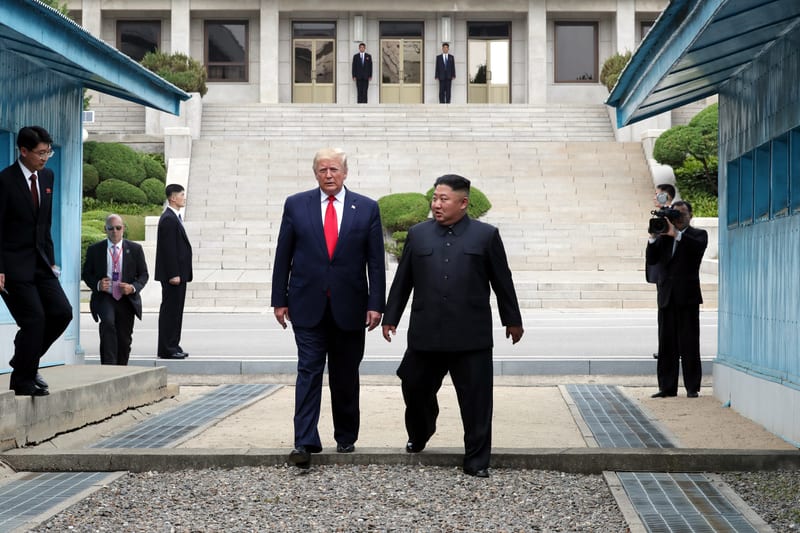
The announcement prompted speculation that Trump’s travel plans had changed, since he had expressed interest in meeting North Korean leader Kim Jong Un during his Asia tour.
However, subsequent details made clear that the restrictions were part of a cybersecurity protocol intended to guard against potential surveillance or data collection through devices used in China.
CBS News reporter Jennifer Jacobs later explained the arrangements from aboard Air Force One.
A White House aide had collected burner phones issued to staff members so they could be disposed of or have their data wiped.
Journalists were given different instructions: place the phones they had used in China inside signal-blocking Faraday bags and keep them there until the aircraft landed in the US.
The reporters' devices were not being permanently seized.
Jacobs said they would be returned after landing.
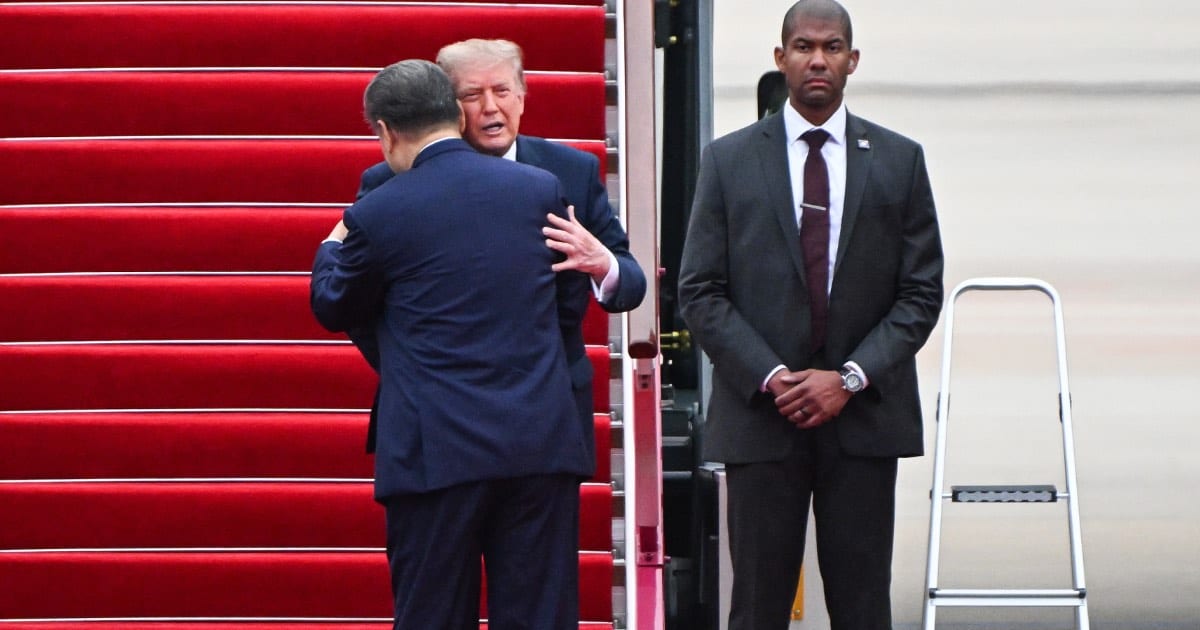
.@POTUS boards Air Force One and prepares to head home after a historic trip to China and the Philippines. This week, @POTUS announced $17B+ in deals for U.S. companies in Manila and held landmark meetings with President Xi and President Putin in Shenzhen. He never stops working for the American people. 🇺🇸
— Rapid Response 47 (@RapidResponse47) November 19, 2026
Devices that many journalists had sealed in Faraday bags aboard the plane before landing in China on Wednesday, including work phones, laptops and smartwatches, were not collected.
Fox News correspondent Jacqui Heinrich, who serves as president of the White House Correspondents' Association, pointed out that reporters had not faced a similar restriction when Trump left Beijing after his state visit in May.
The decision stood out because such controls are not a routine feature of presidential travel.
Comparable precautions have been associated with visits to highly sensitive locations, including Trump's trips to US military bases in Iraq and Afghanistan during his first presidency.
This plus pool phones being taken for security reasons raising suspicion AF1 may not be heading straight home … phones were not taken after Beijing departure in May
— Jacqui Heinrich (@JacquiHeinrich) November 19, 2026
Faraday bags prevent surveillance
Faraday bags are designed to shield electronic devices from wireless signals, making them useful when there are concerns about digital surveillance.
Their interiors contain conductive layers that create a barrier against electromagnetic transmissions, preventing enclosed phones from communicating with cellular networks, Wi-Fi or Bluetooth connections.
Keeping devices inside these pouches can limit opportunities for tracking, remote access and certain forms of data interception.
The measure is particularly relevant when traveling through countries where intelligence agencies may have the capability or interest to monitor foreign visitors' electronic activity.
China has remained a major counterintelligence concern for the US, with American agencies repeatedly highlighting potential risks involving communications technology and connected devices.