Alaska judge rules 'good-faith' requirement unlawful, clearing way for Dan Sullivan's Senate bid

🚨New: An Anchorage Superior Court judge has ruled a challenger to Republican Senator Dan Sullivan also named Dan J. Sullivan is eligible to run for office and appear on the August 18 Republican primary ballot.
— The Calvin Coolidge Project (@TheCalvinCooli1) June 27, 2026
The ruling is expected to be appealed to the Alaska Supreme Court. pic.twitter.com/MXPEzjgiak
ANCHORAGE, ALASKA: An Alaska judge ruled that election officials unlawfully added a "good-faith" requirement to candidate qualifications, clearing Dan J Sullivan to appear on the state's Senate primary ballot alongside incumbent Republican Sen Dan Sullivan.
The decision immediately drew a response from the Alaska Division of Elections, which appealed to the Alaska Supreme Court. With ballots scheduled to begin printing by midday Tuesday, the case is now on an expedited timeline.
Judge rejects Alaska's good-faith ballot standard
Anchorage Superior Court Judge Thomas Matthews overturned the Division of Elections' decision to disqualify Dan J Sullivan, a 70-year-old retired teacher from Petersburg, after finding the agency relied on a qualification that does not exist in law, as per the Anchorage Daily News report.
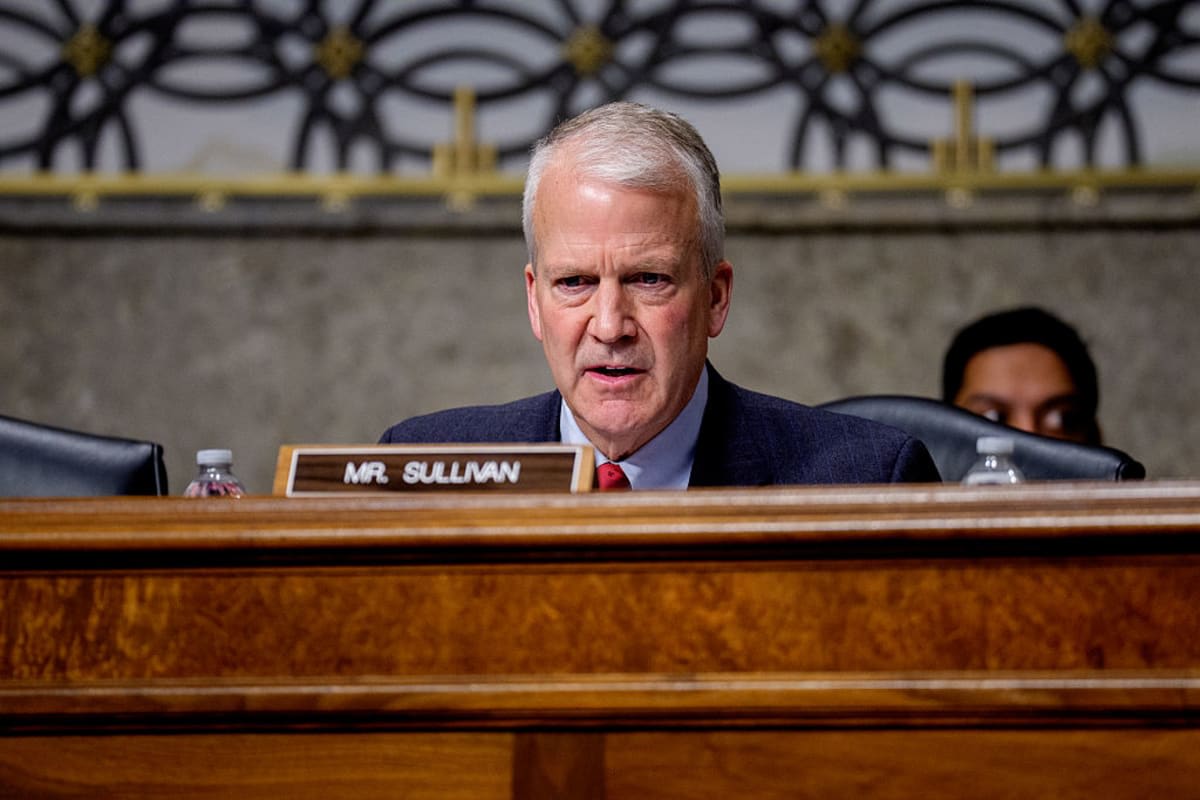
"Because the Court has determined the Division's decision to exclude Mr Sullivan from the primary ballot was based on a 'good-faith' requirement that does not appear in the Constitution, the Alaska Statutes, or the implementing regulations adopted by the Division, the Division's decision must be reversed," Matthews wrote.
Division Director Carol Beecher had concluded Sullivan's declaration of candidacy was not filed in good faith after formal complaints from the Alaska Republican Party and the National Republican Senatorial Committee.
The complaints alleged Democrats had encouraged Sullivan to run in hopes of helping the incumbent senator's leading opponent, former Democratic Rep Mary Peltola.
State argued challenger sought to confuse voters
As per the report, State attorneys told the court it was unprecedented to have two candidates with nearly identical names from the same political party seeking the same office.
They argued Alaska has constitutional authority to administer elections and claimed Dan J Sullivan was attempting "deliberately to confuse voters" by running as a Republican against Sen Dan Sullivan.
The incumbent senator has also argued that the challenger was trying to trick voters. Dan J Sullivan denied that accusation, saying he entered the race because he believes the senator has done a poor job serving Alaskans.

Matthews rejected the state's argument, writing, "The Director's assertion that Mr Sullivan seeks to confuse or misguide voters is not supported by a preponderance of evidence."
He added that election officials "accepted at face-value the assertions of the complaint, and disregarded Mr Sullivan's assertions."
Alaska Supreme Court to hear appeal
Jeffrey Robinson, Sullivan's attorney, argued that his client met every constitutional qualification required to run for the Senate. He also noted that Alaska regulations already provide a solution for candidates with similar names by requiring middle initials on ballots.
The Constitution requires Senate candidates to be at least 30 years old, have been US citizens for at least nine years and live in the state at the time of the election.
Matthews, who earlier cited the case's "great public interest" when expediting proceedings, issued his ruling less than 48 hours after oral arguments.
In his decision, he wrote that Beecher "found that Mr Sullivan lacked a particular quality or fitness, specifically a 'good-faith' intention, and for this reason alone de-certified his candidacy for office."
"Because the Director relied on a qualification outside of the three qualifications specified in Article 1 of the Constitution, the court finds that the Division's 'good-faith' requirement is unlawful," Matthews wrote.
The Alaska Supreme Court has scheduled a hearing for 10 am Monday as the state seeks to overturn the ruling before primary ballots are printed.